

In international shipping, container transportation between ports, depots, factories and warehouses may appear to be a straightforward trucking operation. However, a successful container movement requires careful coordination between shipping lines, terminal operators, container depots, customs authorities, trucking providers and cargo owners.
A delay in collecting an empty container, completing factory stuffing, clearing customs or returning equipment can lead to additional charges, missed vessel departures and disruptions to production schedules.
For manufacturers and import-export businesses, understanding the container haulage process is essential to maintaining reliable delivery schedules and controlling logistics costs.
This guide from KVN Logistics explains the complete export and import container haulage process, including operational requirements, documentation, shipping cut-offs, demurrage and detention, and practical planning strategies.
1. What Is the Container Haulage Process?
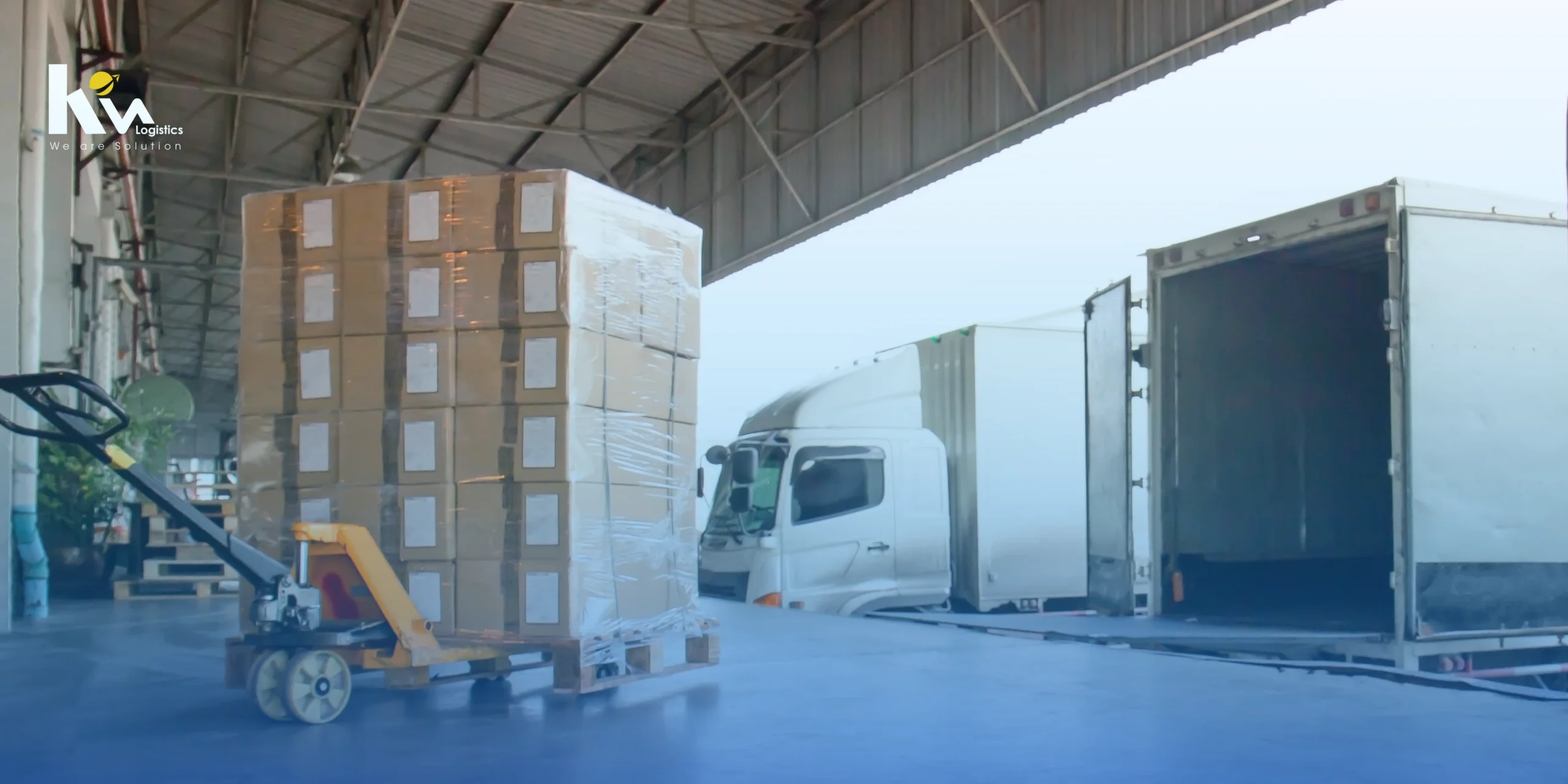
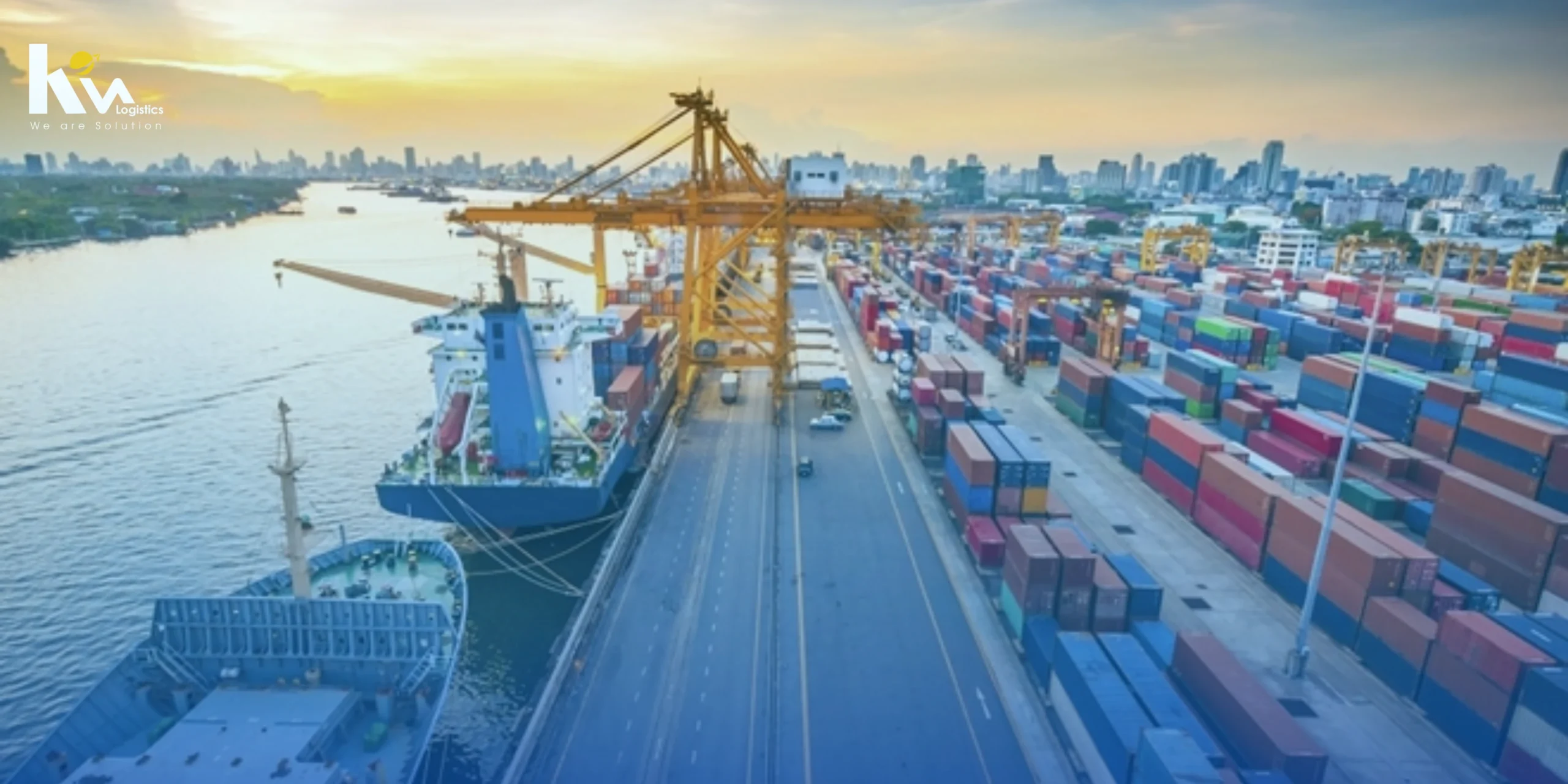
Container haulage refers to the transportation and operational coordination of shipping containers between seaports, inland container depots (ICDs), container yards, factories, warehouses and designated delivery locations.
The process typically involves tractor units and suitable semi-trailers transporting standard containers, such as 20-foot, 40-foot and 40-foot high-cube containers, as well as specialized equipment when required.
Container haulage forms an essential part of inland trucking and multimodal logistics operations, connecting international ocean freight with domestic supply chains.
Businesses can explore KVN Logistics’ Inland Trucking services to learn more about transportation solutions connecting ports, industrial zones, factories and warehouses throughout Vietnam.
Quick Answer: How Does Container Haulage Work?
The container haulage process differs between export and import shipments.
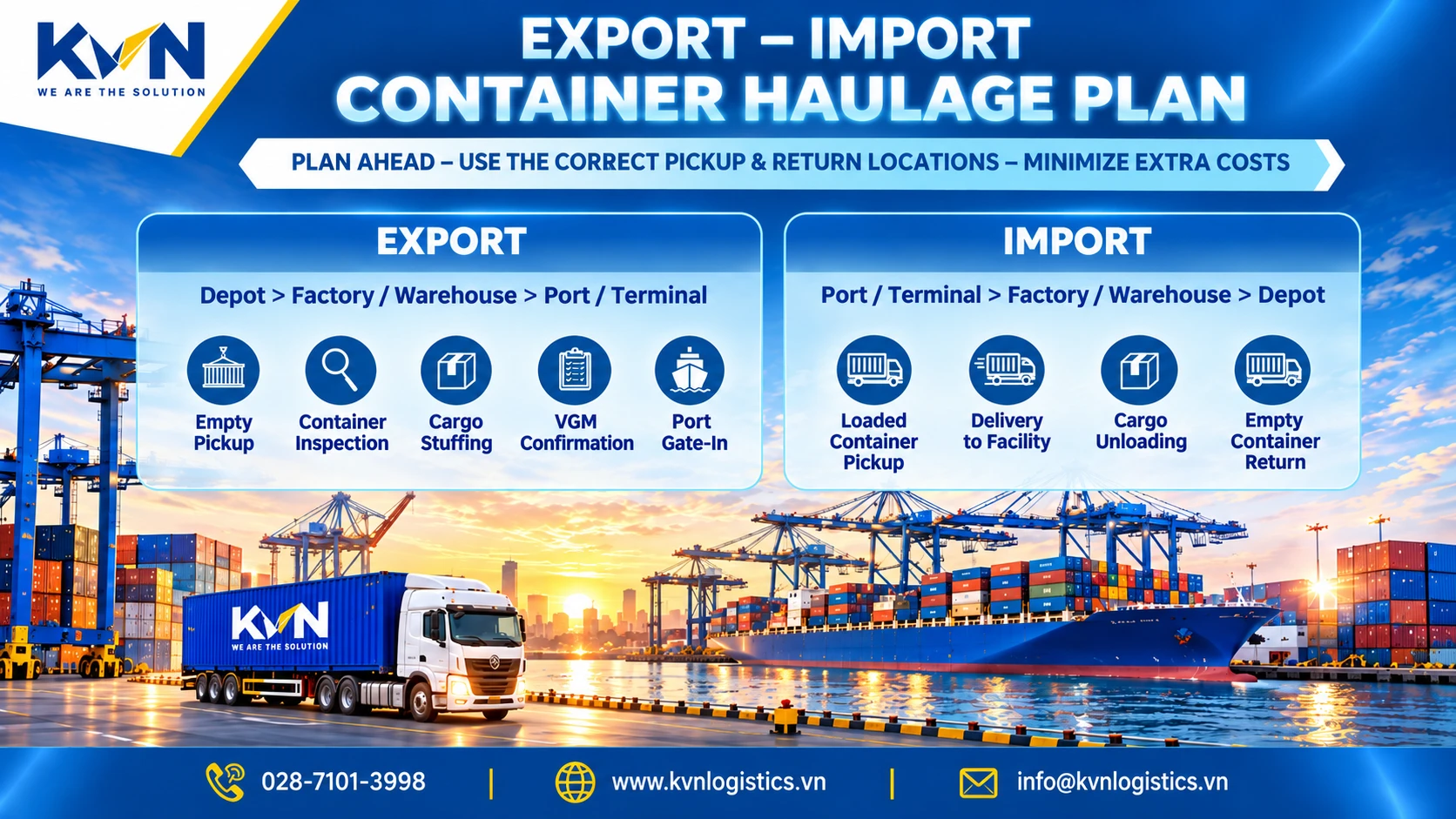
Export Container Haulage:
Booking Confirmation → Empty Container Release → Depot Pickup → Container Inspection → Factory Stuffing → Sealing & VGM → Customs Clearance → Port Gate-In → Vessel Loading
Import Container Haulage:
Vessel Arrival → Container Availability → Delivery Order & Customs Clearance → Port Pickup → Factory Delivery → Cargo Unloading → Empty Container Return
For export shipments, the primary objective is to deliver the loaded container to the designated terminal before the applicable cut-off.
For import shipments, the priority is to collect the container once it becomes available, deliver the cargo, complete unloading and return the empty equipment within the permitted free time.
Export vs. Import Container Haulage
| Criteria | Export Container | Import Container |
|---|---|---|
| Starting point | Empty container depot | Port or terminal |
| Main activity | Empty pickup, stuffing and port delivery | Container pickup, delivery and unloading |
| Final movement | Loaded container gate-in | Empty container return |
| Key documents | Booking Confirmation, VGM, export documents | Delivery Order, customs documents |
| Critical deadlines | CY, SI and VGM cut-offs | Free time, release and return deadlines |
| Common risks | Equipment shortage, missed cut-off | Customs delays, demurrage, detention |
| Main objective | Meet vessel loading requirements | Deliver cargo and return equipment on time |
2. Information Required Before Arranging Container Haulage
An efficient container haulage plan starts with accurate shipment information.
Before dispatching trucks, the shipper, consignee or logistics coordinator should confirm:
- Shipment direction: export or import.
- Commodity and special cargo requirements.
- Container type: 20DC, 40DC, 40HC, reefer, open top or flat rack.
- Number of containers.
- Cargo weight and expected total loaded-container weight.
- Factory, warehouse or industrial zone address.
- Designated terminal, container yard, ICD or depot.
- Cargo-ready date or expected container availability.
- Factory stuffing or unloading schedule.
- Booking Confirmation or Delivery Order, where available.
- Applicable cut-off times and free-time conditions.
- Customs clearance status.
- Special equipment, lifting or handling requirements.
Factory access conditions should also be verified.
Some manufacturing facilities require advance truck registration, restrict container vehicle movements during certain hours or operate within specific loading and unloading windows.
Without proper coordination, trucks may experience unnecessary waiting time, increasing operational costs.
Important: Trucking schedules should not be based solely on vessel ETD or ETA. They must reflect actual container availability, terminal requirements, shipping deadlines and factory readiness.
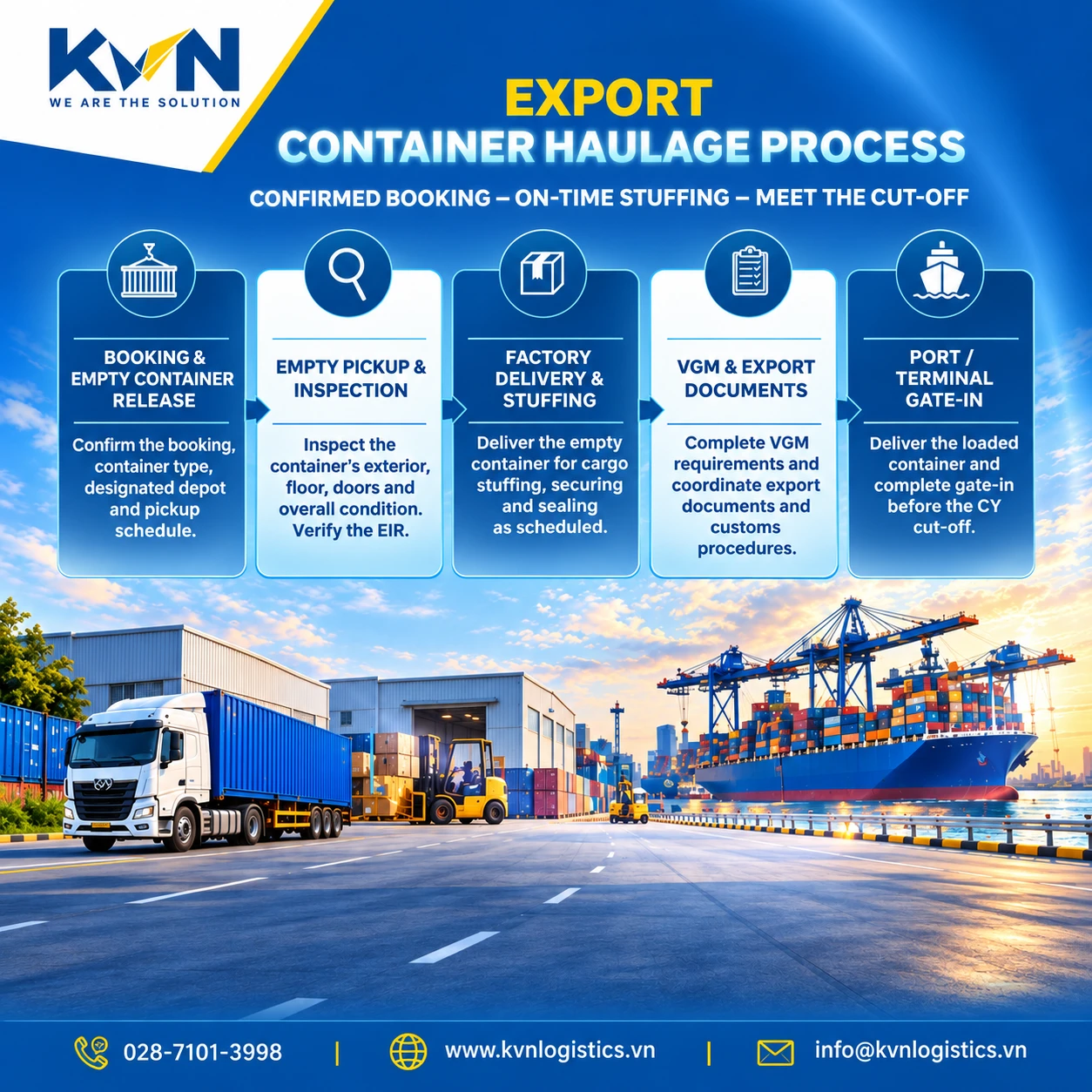
3. Export Container Haulage Process: 8 Essential Steps
For Full Container Load (FCL) exports, container haulage typically involves eight operational stages.
Step 1: Review the Booking Confirmation
Once the ocean freight booking is confirmed, the logistics coordinator should review the shipment details.
Important information includes:
- Booking number.
- Vessel name and voyage.
- Port of Loading (POL).
- Port of Discharge (POD).
- Container type and quantity.
- Empty container pickup instructions.
- Export terminal.
- CY cut-off.
- Shipping Instruction (SI) cut-off.
- Verified Gross Mass (VGM) cut-off.
- Estimated Time of Departure (ETD).
These details determine when the empty container should be collected, when cargo must be ready and when the loaded container needs to reach the terminal.
For a detailed explanation of shipping deadlines, see Sea Freight Booking Process: Cut-Off, SI, VGM & CY/CFS.
Step 2: Arrange Empty Container Pickup
Following booking confirmation, the trucking provider coordinates empty container collection from the designated depot.
The logistics team should verify:
- Empty container release instructions.
- Depot location.
- Equipment availability.
- Container type.
- Pickup validity period.
- Driver and truck registration requirements.
- Expected transportation time to the factory.
An important operational consideration is that empty container availability may change.
The depot closest to the factory may not be the location authorized to release the required equipment.
Therefore, empty pickup must follow the shipping line’s or equipment provider’s instructions.
Step 3: Inspect the Empty Container
Before transporting the empty container to the factory, its physical condition should be checked.
A practical inspection includes:
- Container number and equipment type.
- Floors, walls, roof and doors.
- Door seals and locking mechanisms.
- Visible structural damage.
- Signs of water leakage.
- Cleanliness and unusual odors.
- Moisture or contamination.
- Container suitability for the intended commodity.
The Equipment Interchange Receipt (EIR), or equivalent equipment handover record, should be reviewed and retained where applicable.
For cargo such as food ingredients, cosmetics raw materials, pharmaceutical-related materials or sensitive manufactured products, container cleanliness and suitability are particularly important.
If the equipment is unsuitable, the issue should be reported and resolved before stuffing begins.
Step 4: Deliver the Empty Container to the Factory
Once the empty container is accepted, the truck transports it to the designated stuffing location.
The coordinator should monitor the truck’s departure, estimated arrival and delivery status.
At the factory, the loading team should ensure that personnel, forklifts, loading bays and cargo are ready.
Cargo must be loaded in accordance with applicable weight limits, safe loading practices and securing requirements.
Improper weight distribution or inadequate cargo securing can result in cargo damage, transport safety risks and operational delays.
Step 5: Complete Stuffing, Sealing and VGM
After loading, the shipper completes cargo checks and applies the container seal.
Key details should be recorded:
- Container number.
- Seal number.
- Number of packages.
- Gross cargo weight.
- Stuffing completion time.
- Supporting loading and sealing records.
For packed containers subject to the International Convention for the Safety of Life at Sea (SOLAS), a valid Verified Gross Mass (VGM) is required before vessel loading.
VGM represents the verified gross mass of the packed container, including cargo, packaging, securing materials and the container’s tare weight.
Under the applicable SOLAS requirements, the shipper is responsible for providing the verified gross mass.
A packed container without the required VGM cannot be loaded onto the vessel.
The shipper and logistics provider should coordinate weighing, documentation and submission before the applicable VGM cut-off.
Step 6: Coordinate Export Customs Clearance
Customs procedures should be coordinated alongside container stuffing and port delivery planning.
Depending on the commodity and export requirements, documents may include:
- Commercial Invoice.
- Packing List.
- Sales Contract.
- Export customs declaration.
- Booking Confirmation.
- Container and seal details.
- Certificates or permits, where applicable.
- Specialized inspection documents, if required.
Documentation requirements vary by commodity, customs regime and destination market.
Preparing the necessary information early helps prevent situations in which a container reaches the port but cannot complete the relevant acceptance or clearance requirements.
KVN Logistics provides Customs & Documentation solutions designed to coordinate trade documentation and customs procedures with domestic and international freight operations.
Step 7: Deliver the Loaded Container Before CY Cut-Off
Once loading and relevant preparations are completed, the truck transports the sealed container to the assigned export terminal.
CY cut-off is the deadline by which the loaded FCL container must be accepted at the designated container yard or terminal under the applicable booking requirements.
The trucking schedule should allow sufficient time for:
- Road transportation.
- Traffic conditions.
- Terminal gate procedures.
- Weighing requirements, where applicable.
- Relevant customs procedures.
- Terminal congestion.
- Operational contingencies.
If the container misses the CY cut-off, the shipment may require special acceptance approval, booking amendments or a later sailing.
The fact that a vessel has not yet departed does not mean the terminal will continue accepting containers for that sailing.
Step 8: Confirm Terminal Gate-In
Once the container is accepted at the terminal, the logistics provider should confirm the gate-in status.
The operational record may include:
- Container number.
- Seal number.
- Terminal name.
- Gate-in date and time.
- Relevant handover documents.
This information should be communicated to the shipper and documentation team.
However, it is essential to distinguish two shipment milestones:
Gate-In Confirmed does not mean Loaded On Board.
The container’s actual vessel loading status should be verified separately through the carrier’s or terminal’s available systems and documents.
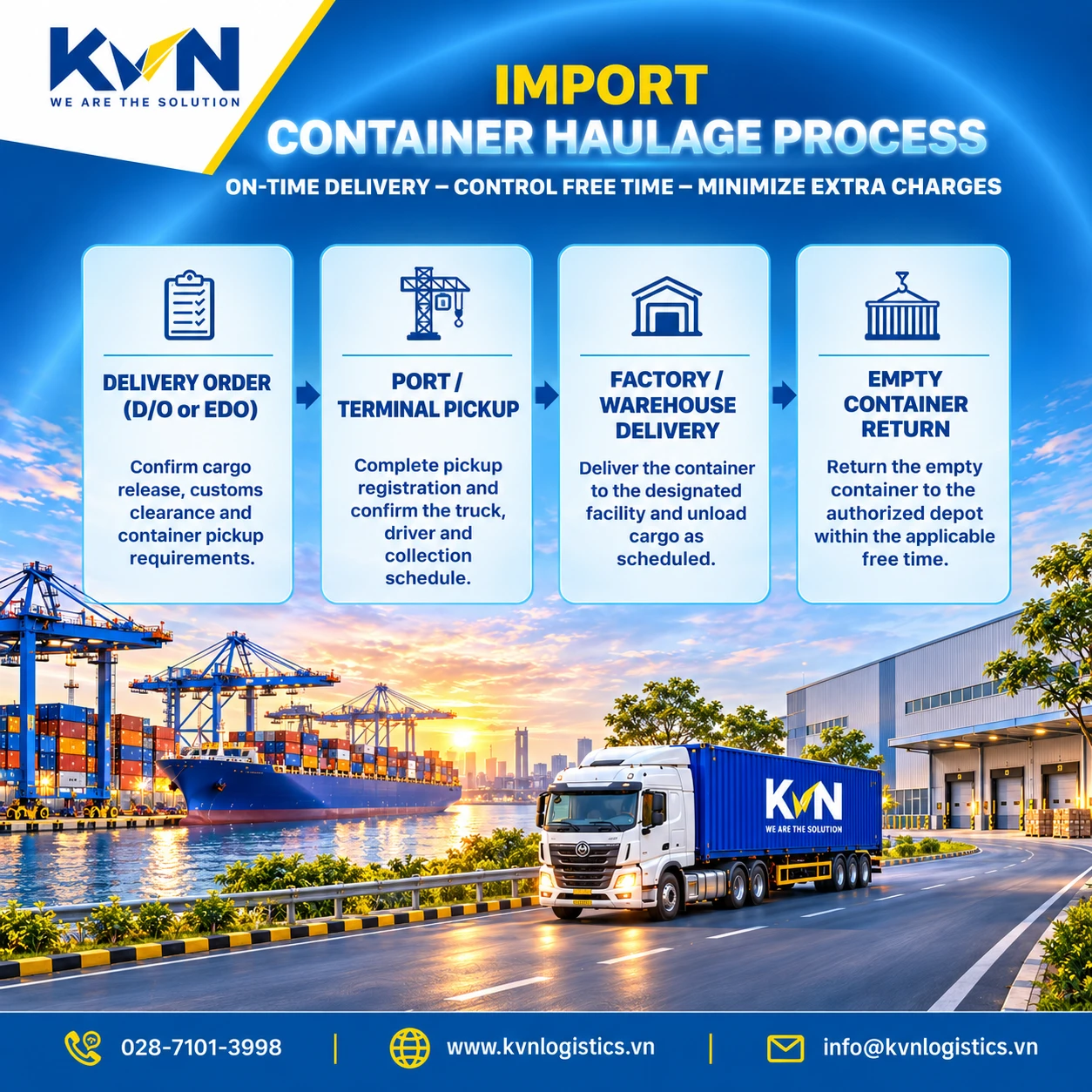
4. Import Container Haulage Process: From Port Pickup to Empty Return
For import shipments, container haulage generally involves six operational steps.
Step 1: Monitor Vessel Arrival and Container Availability
Import planning should begin before the vessel arrives.
The consignee or logistics coordinator should monitor:
- Latest vessel ETA.
- Actual vessel arrival.
- Container discharge status.
- Assigned terminal.
- Container availability.
- Delivery Order status.
- Customs clearance requirements.
A vessel’s arrival does not necessarily mean that a container is immediately available for collection.
Terminal discharge and release procedures must be completed before gate-out can take place.
Step 2: Complete Delivery Order and Customs Requirements
Before arranging container pickup, the consignee should confirm that the relevant release conditions have been satisfied.
These may include:
- Delivery Order availability.
- Shipping line release requirements.
- Applicable local charges.
- Import customs declaration.
- Duties and taxes, where applicable.
- Specialized inspections or permits.
- Terminal pickup conditions.
The trucking provider should receive confirmation that the container can be collected according to the planned schedule.
Step 3: Arrange Port Pickup
The transport coordinator assigns a suitable truck and driver and completes the terminal’s required pickup procedures.
At the point of collection, relevant details should be checked within the receiving party’s operational responsibilities.
These may include the container number, seal condition, equipment condition and available handover documentation.
Any visible discrepancy should be documented and reported promptly.
Step 4: Deliver the Container to the Factory or Warehouse
The loaded container is transported from the port to the consignee’s facility.
Before arrival, the receiving location should prepare:
- Unloading personnel.
- Forklifts or other handling equipment.
- Available loading bays.
- Warehouse receiving documentation.
- Safe access for the container truck.
- Unloading arrangements within the agreed time window.
For manufacturing businesses, inbound materials may be linked directly to production schedules.
A container delivery delay can therefore create consequences beyond the trucking operation itself.
Step 5: Unload the Cargo and Inspect the Container
Cargo unloading should follow suitable safety and handling procedures.
After unloading, the receiving team should inspect the empty container and record any relevant irregularities.
The container should be cleared of remaining cargo, packaging materials and waste as required.
Where damage, contamination or other discrepancies are identified, the parties should document the condition and coordinate the necessary actions.
Step 6: Return the Empty Container to the Designated Depot
Empty container return is a critical final stage of the import haulage process.
After unloading, the truck must return the equipment to the depot or location designated and accepted by the shipping line or equipment provider.
Before dispatching the empty container, verify:
- Authorized return location.
- Depot acceptance conditions.
- Operating hours.
- Equipment type.
- Container condition.
- Remaining free time.
- Return appointment requirements, if any.
The empty return should be confirmed through an EIR or relevant handover record.
A container delivery should not be considered operationally complete until the equipment return obligation has been properly addressed.
5. Critical Shipping Cut-Offs and Deadlines
Efficient container trucking requires a clear understanding of the different deadlines associated with a shipment.
| Milestone | Meaning | Operational Importance |
|---|---|---|
| ETD | Estimated Time of Departure | Overall export schedule |
| ETA | Estimated Time of Arrival | Import receiving plan |
| CY Cut-Off | Deadline for FCL terminal acceptance | Export container delivery |
| SI Cut-Off | Shipping Instructions submission deadline | Bill of Lading preparation |
| VGM Cut-Off | Verified Gross Mass submission deadline | Vessel loading eligibility |
| Cargo Ready Date | Date cargo is ready for stuffing or delivery | Trucking coordination |
| Container Available | Container is available for pickup, subject to release requirements | Import dispatch |
| Free Time Expiry | End of the applicable free period | Container cost control |
These deadlines vary by carrier, terminal, service, equipment and contractual arrangements.
The correct approach is to verify them against the actual Booking Confirmation, carrier notifications and terminal requirements.
6. How to Build an Efficient Container Haulage Schedule
Export: Plan Backward from the CY Cut-Off
For export shipments, a practical approach is to develop the trucking schedule backward from the CY cut-off.
Consider the following hypothetical example.
A shipment has a CY cut-off of 16:00 on November 20.
| Activity | Planned Time |
|---|---|
| Factory stuffing completed | 08:00 |
| Sealing and relevant preparations completed | 09:00 |
| Truck departs factory | 09:30 |
| Estimated terminal arrival | 12:00 |
| Terminal processing buffer | 12:00–14:00 |
| Target gate-in completion | Before 14:00 |
| CY cut-off | 16:00 |
This example illustrates a scheduling method rather than a standard transportation timeline.
Actual timings must be determined according to factory location, road conditions, documentation, customs procedures and terminal requirements.
Import: Plan Around the Empty Return Deadline
For imports, trucking should be planned across the entire cycle:
Container Availability → Port Pickup → Factory Delivery → Unloading → Empty Return.
The schedule should include both the unloading start time and the expected completion of the empty container return.
For example, delivering a container to a factory on time does not necessarily prevent detention charges if unloading is delayed and the equipment is returned after the free period.
Therefore, container return planning should begin before the loaded container is collected from the terminal.
7. Demurrage, Detention and Other Container Haulage Costs
Container haulage costs involve more than the trucking rate itself.
Depending on the shipment, charges may include transportation, terminal handling, road tolls, waiting time, container-related fees and other operational expenses.
| Cost Component | Description |
|---|---|
| Inland Trucking | Container transportation by road |
| Lift-On/Lift-Off | Applicable container lifting and handling charges |
| Road Tolls | Charges for the selected transport route |
| Truck Waiting Time | Additional charges for waiting beyond agreed conditions |
| Terminal Storage | Charges for cargo or container storage at the terminal |
| Demurrage (DEM) | Generally applies when a container remains at the terminal beyond the applicable free period |
| Detention (DET) | Generally applies when equipment remains outside the terminal beyond the applicable free period |
| Other Charges | Shipment-specific handling, equipment or operational costs |
Shipping lines may apply separate demurrage and detention allowances or combined free-time policies.
The exact calculation depends on the applicable tariff and contractual terms.
For a detailed cost breakdown, read Hidden Logistics Surcharges Explained: THC, CIC, D/O Fee, Storage, Demurrage and PSS.
Five Ways to Reduce Unexpected Haulage Costs
- Verify container free time before arranging pickup or delivery.
- Prepare customs documentation as early as possible.
- Confirm factory stuffing and unloading readiness.
- Monitor vessel schedules, cut-offs and terminal updates.
- Establish contingency arrangements for equipment shortages, congestion and unexpected delays.
The goal is not simply to achieve the lowest trucking rate.
It is to minimize the total operational cost of moving the container throughout its complete transport cycle.
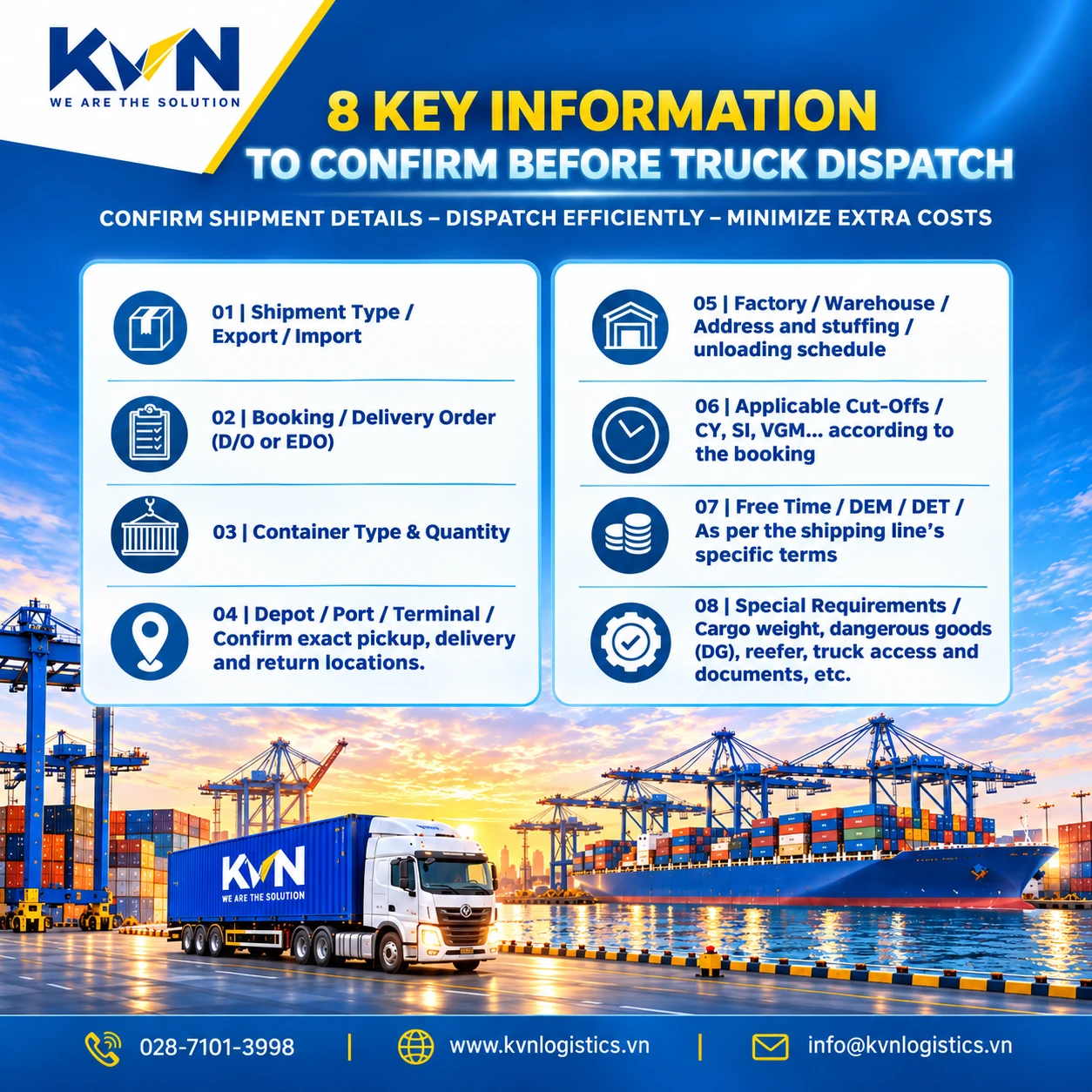
8. Container Haulage Coordination Checklist
The following checklist can support both export and import planning.
| Operational Requirement | Export | Import |
|---|---|---|
| Verify Booking Confirmation / D/O | ✓ | ✓ |
| Confirm container type and quantity | ✓ | ✓ |
| Confirm terminal and depot | ✓ | ✓ |
| Verify cargo readiness or availability | ✓ | ✓ |
| Arrange tractor and trailer | ✓ | ✓ |
| Inspect container condition | ✓ | ✓ |
| Confirm factory stuffing/unloading schedule | ✓ | ✓ |
| Coordinate customs requirements | ✓ | ✓ |
| Verify CY, SI and VGM cut-offs | ✓ | As applicable |
| Monitor equipment free time | As applicable | ✓ |
| Confirm terminal gate-in | ✓ | — |
| Confirm empty container return | — | ✓ |
| Retain EIR and handover records | ✓ | ✓ |
| Review additional charges | ✓ | ✓ |
This checklist should be adapted to the specific equipment, cargo, shipping line and operating conditions of each shipment.
9. Common Container Haulage Problems and Solutions
Problem 1: Empty Containers Are Unavailable
When the required equipment is unavailable at the original depot, the logistics coordinator should contact the shipping line or equipment provider to check authorized alternatives.
The pickup location should not be changed without appropriate confirmation.
Problem 2: Factory Stuffing Is Delayed
If cargo stuffing takes longer than expected, the coordinator should immediately update the departure schedule.
The remaining time before CY cut-off must be reassessed, including transportation and terminal processing.
If the original deadline is at risk, the logistics provider should coordinate with the relevant parties to evaluate possible alternatives.
Problem 3: The Vessel Schedule Changes
A vessel delay or rescheduling can affect container pickup, stuffing, terminal delivery and documentation.
However, a vessel delay does not automatically mean the CY, SI or VGM cut-offs have been extended.
Any deadline changes should be verified with the shipping line or forwarder.
Problem 4: Import Containers Cannot Be Released
Possible causes include incomplete documentation, customs requirements, outstanding fees or terminal operating restrictions.
The logistics team should identify the underlying issue before rescheduling the truck.
Free time and potential storage-related costs should also be reassessed.
Problem 5: The Empty Return Depot Changes
If the original depot no longer accepts the equipment, the coordinator should obtain updated return instructions from the shipping line or equipment provider.
Relevant communications and handover documents should be retained for future reference.
10. Container Haulage in Vietnam: Connecting Ports and Industrial Zones
Vietnam’s manufacturing supply chains depend heavily on inland container transportation linking seaports with industrial production centers.
In Northern Vietnam, Hai Phong serves as a major maritime gateway supporting cargo movements to and from industrial zones in Hai Phong, Bac Ninh, Hung Yen, Hanoi, Ninh Binh, Thai Nguyen and surrounding provinces.
The actual trucking plan depends on the assigned terminal, depot, factory address and shipment requirements.
Businesses can explore Container Trucking from Hai Phong to Northern Industrial Zones for a more detailed overview.
In Southern Vietnam, Cat Lai and Cai Mep are important container gateways connecting international shipping services with industrial and manufacturing areas around Ho Chi Minh City, Dong Nai and neighboring regions.
For these shipments, the choice of terminal, equipment return location and transport schedule can significantly influence overall logistics efficiency.
Learn more through Container Trucking from Cat Lai and Cai Mep to Southern Vietnam Industrial Zones.
Rather than treating every container movement as an isolated truck journey, manufacturers should evaluate how port operations, trucking, customs clearance and factory activities fit into the broader shipment plan.
11. How KVN Logistics Supports Export and Import Container Haulage
At KVN Logistics, inland container transportation is approached as part of an integrated logistics solution rather than a standalone truck movement.
Through its KVN InlandMove service, KVN Logistics supports inland transportation requirements connecting ports, depots, factories and warehouses across Vietnam.
Depending on the shipment, KVN Logistics can coordinate:
- Export and import container trucking.
- Empty container pickup arrangements.
- Factory stuffing and delivery schedules.
- Loaded container transportation to terminals.
- Import container collection and factory delivery.
- Empty container return coordination.
- CY cut-off and shipping deadline monitoring.
- Inland trucking integrated with Sea Freight.
- Customs clearance and trade documentation coordination.
- Operational issue management during transportation.
This integrated approach helps manufacturing and import-export businesses improve shipment visibility, reduce coordination gaps and manage transportation costs more effectively.
For businesses handling regular FCL shipments or multiple container movements, aligning trucking operations with freight forwarding and customs documentation can provide greater control over the complete supply chain.
12. Frequently Asked Questions About Container Haulage
What is container haulage in logistics?
Container haulage is the transportation and coordination of shipping containers by road between ports, depots, factories, warehouses and other designated locations. It supports both export and import logistics operations.
What are the main steps in export container haulage?
The main steps include booking confirmation, empty container pickup, equipment inspection, factory stuffing, sealing, VGM submission, customs coordination and terminal gate-in before the applicable cut-off.
Where are empty containers collected?
Empty containers are generally collected from a depot or equipment release location designated by the shipping line or equipment provider.
What is the CY cut-off in container shipping?
CY cut-off is the deadline by which a loaded FCL container must be accepted at the designated terminal or container yard under the relevant booking conditions.
Is VGM mandatory for export containers?
For packed containers subject to applicable SOLAS requirements, VGM is mandatory before vessel loading, except for any applicable exclusions under the rules.
Where should an empty import container be returned?
Empty containers must be returned to the authorized depot or location specified by the shipping line or equipment provider.
What is the difference between demurrage and detention?
Demurrage generally relates to containers remaining at the terminal beyond the applicable free period. Detention generally concerns containers retained outside the terminal beyond the free period. Actual charging arrangements vary by carrier and contract.
How can businesses reduce container trucking costs?
Businesses can improve cost efficiency by preparing accurate shipment information, coordinating loading and unloading schedules, meeting cut-offs, monitoring free time and reducing unnecessary truck waiting.
Can container haulage be integrated with customs clearance and sea freight?
Yes. Integrating inland trucking with customs documentation and ocean freight planning can improve coordination between factory operations, terminal deadlines and international shipping schedules.
Conclusion: Efficient Container Haulage Starts with Effective Planning
The container haulage process involves far more than transporting cargo between a port and a factory.
Successful operations require accurate scheduling, equipment coordination, customs readiness, documentation control and timely container return.
For export shipments, the focus is on collecting suitable equipment, completing cargo stuffing and meeting the terminal’s cut-off requirements.
For import shipments, the priority is to collect available cargo, complete delivery and unloading, and return the empty container within the applicable free time.
Effective container haulage is not only about moving containers on time. It is about maintaining reliable cargo flows while controlling risks and total logistics costs.
KVN Logistics supports businesses with integrated inland trucking, sea freight and customs documentation solutions tailored to their shipment requirements.
KVN Logistics – We are the Solution.
Website: https://kvnlogistics.vn
Email: info@kvnlogistics.vn
Hotline: (+84) 28 7101 3998