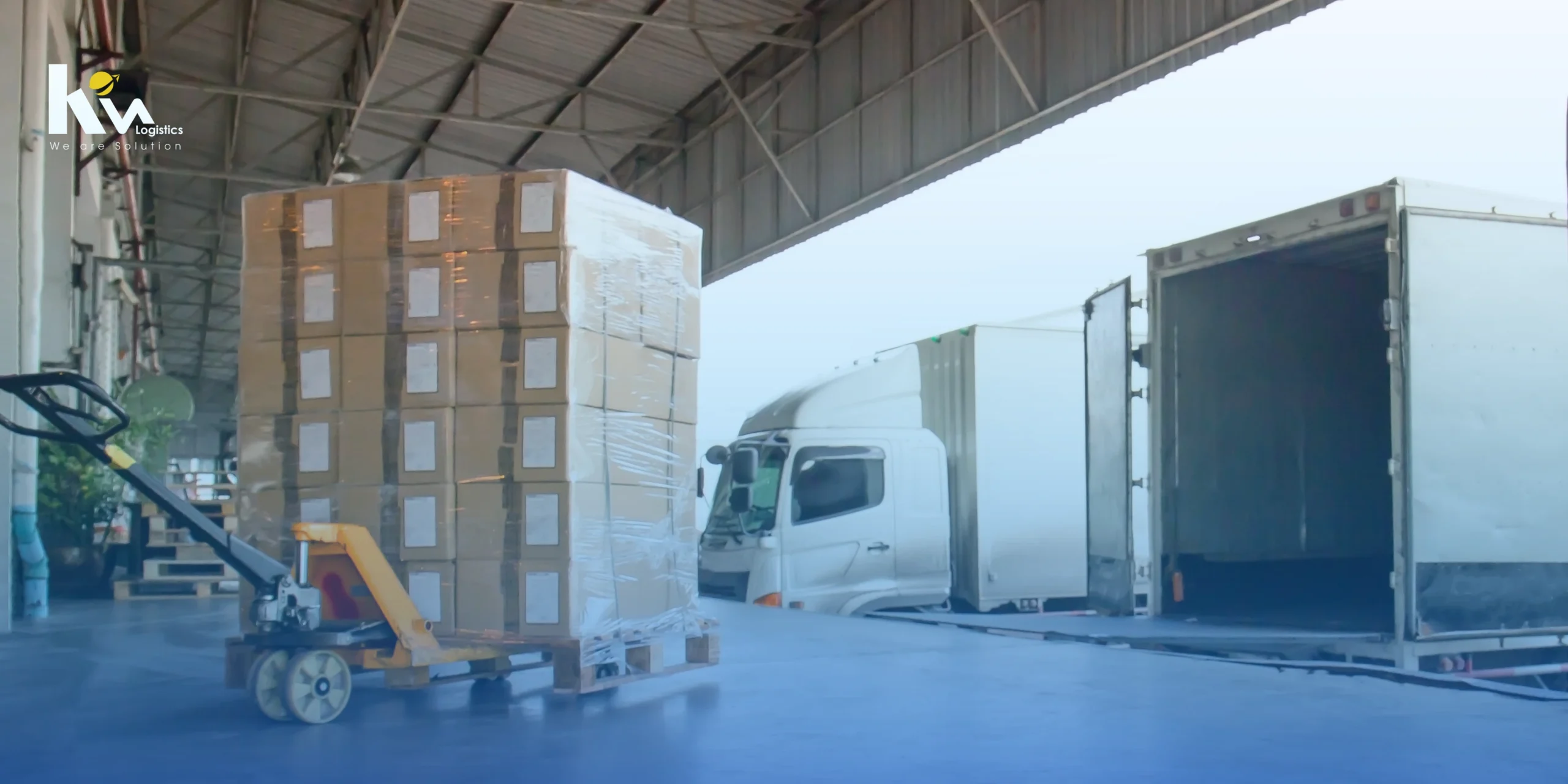


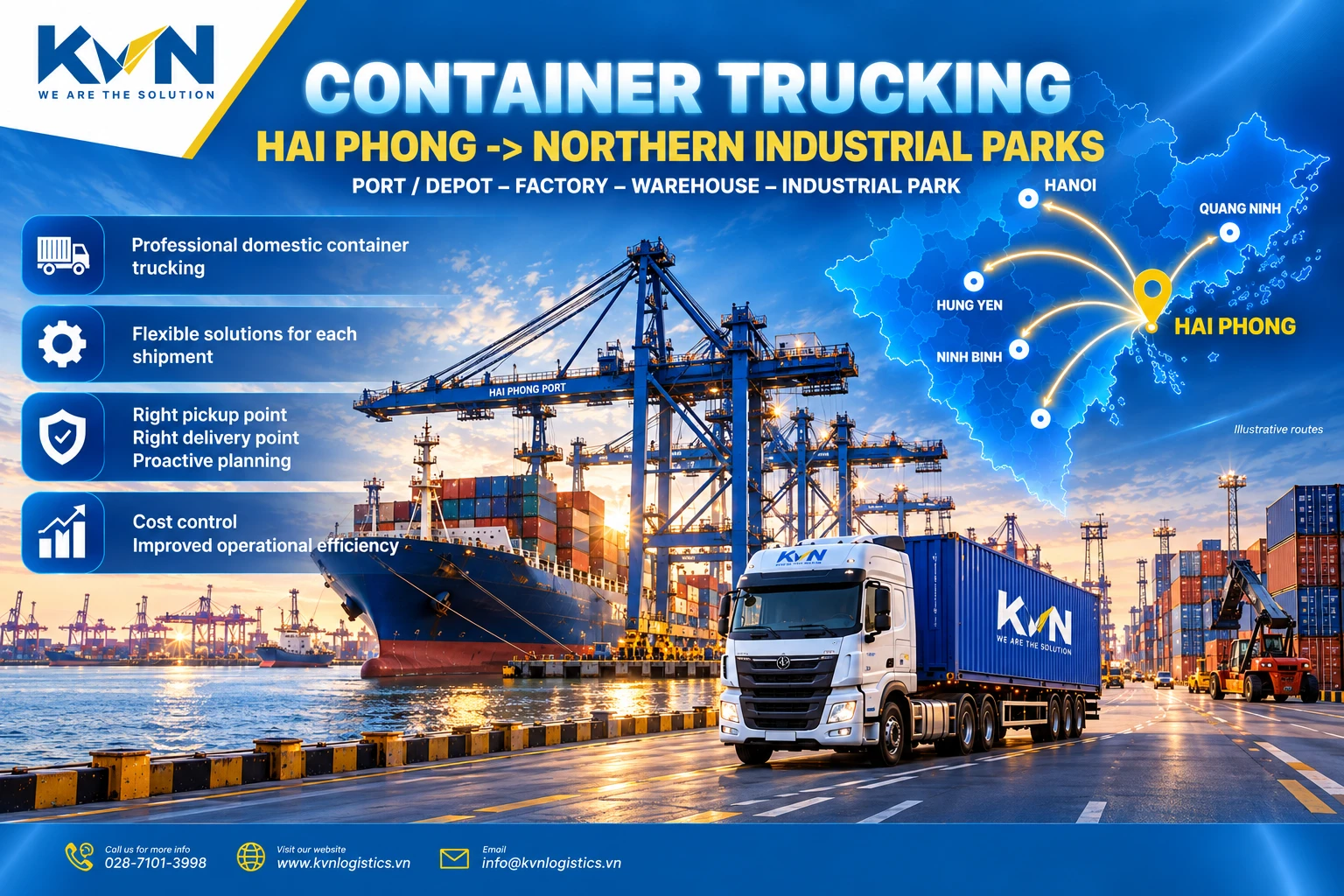
Container trucking in Hai Phong is a critical link between seaports, container depots and ICDs in Hai Phong and factories, warehouses and industrial zones across Northern Vietnam.
For import shipments, the trucking process generally begins once the container is available for collection at the terminal and continues through factory delivery, unloading and empty-container return. For export shipments, the process works in the opposite direction: the empty container is collected, positioned at the factory for stuffing and transported to the designated terminal before the applicable CY cut-off.
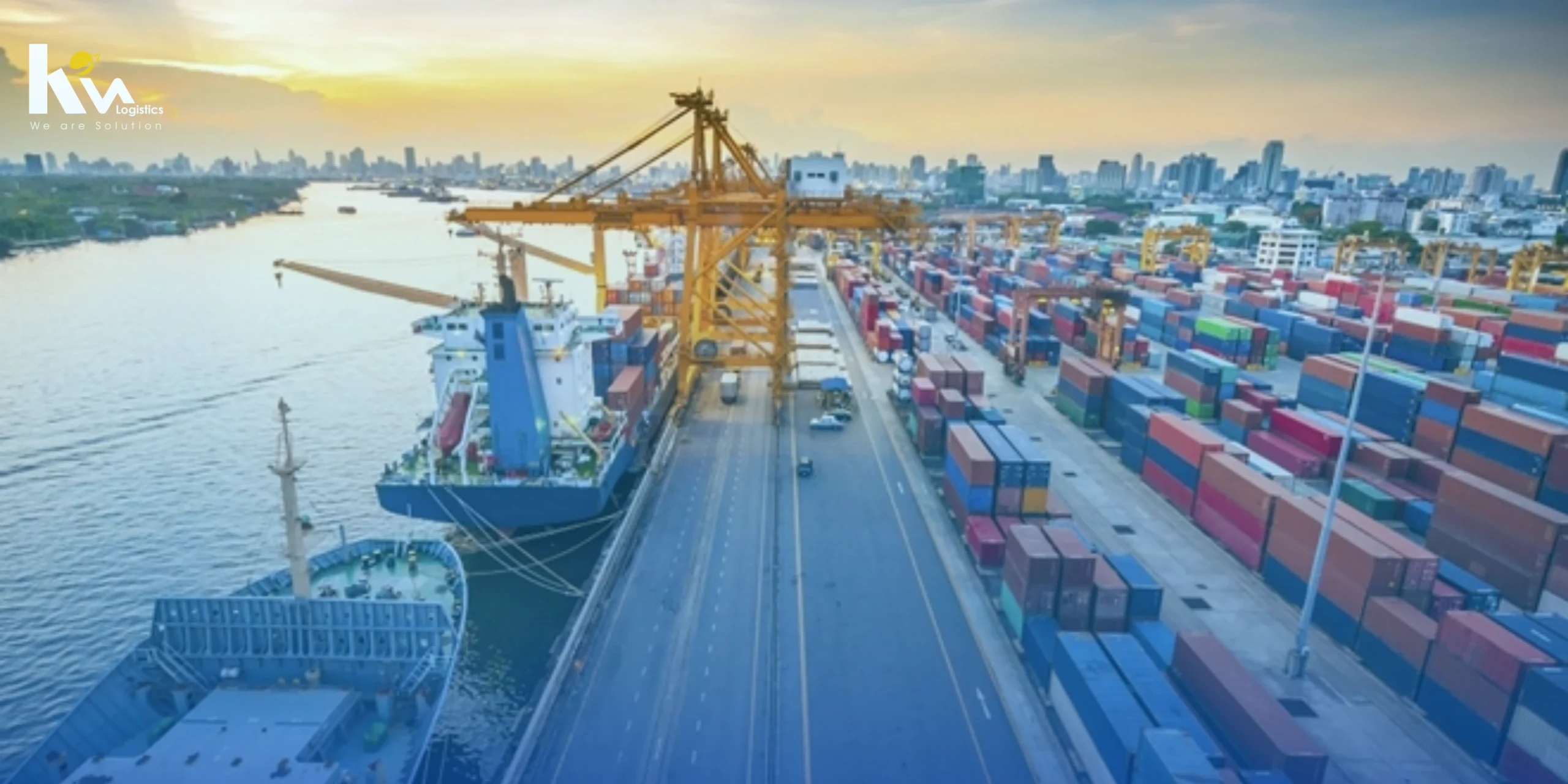
Hai Phong is one of Northern Vietnam’s most important maritime and industrial gateways. Official city information shows that Port of Hai Phong handled its two-millionth TEU of 2025 in December, while additional deep-water capacity in the Lach Huyen area continues to expand the city’s container-handling network. Hải Phòng
As a result, Hai Phong trucking is not simply a matter of assigning a tractor and trailer.
A practical container transport plan needs to coordinate the terminal, depot, equipment, vessel schedule, customs status, factory receiving window, container free time and empty-return arrangement.
For a broader overview of how port–depot–factory movements work, businesses can first review KVN Logistics’ Domestic Container Trucking in Vietnam: Port–Factory–Warehouse Process. Domestic Container Trucking in Vietnam
What Information Is Needed for a Hai Phong Trucking Quotation?
A useful trucking quotation should be based on the actual shipment rather than only a general route such as “Hai Phong to Bac Ninh”.
Businesses should therefore provide the main operational information from the beginning.
| Information | What to Provide |
|---|---|
| Shipment Direction | Export or import |
| Port / Depot | Pickup terminal, gate-in terminal or empty-container depot if available |
| Factory / Warehouse | Full address or industrial zone |
| Container Type | 20DC, 40DC, 40HC, Reefer, Open Top, Flat Rack, etc. |
| Cargo | Commodity and any special handling requirements |
| Weight | Expected cargo/container gross weight |
| Shipment Timing | ETA, Cargo Ready Date or required trucking date |
| Booking / D/O | Booking Confirmation, Delivery Order or related operational information |
| Free Time | Confirmed container free time if available |
| Factory Requirements | Receiving hours, loading/unloading equipment, appointment rules or special access conditions |
For export shipments, businesses should also provide the ETD, CY cut-off, VGM requirements and empty-container pickup depot.
For import shipments, useful information includes customs status, D/O availability, container-release status and the designated empty-return depot.
Accurate information allows the logistics provider to assess not only the distance from port to factory, but also the complete truck cycle, waiting time, equipment positioning and empty-container return.
Businesses that have not yet selected the appropriate equipment can refer to KVN Logistics’ guide to Common Shipping Container Types: Sizes, Uses & Selection Guide. Common Shipping Container Types KVN Logistics
Hai Phong Ports, Terminals and Container Depots
Container movements in Hai Phong do not originate from one single port gate.
The city has multiple port and logistics clusters, including established terminals around Dinh Vu and Tan Vu and the expanding deep-water port area at Lach Huyen.
Tan Vu Terminal, for example, is located within the Dinh Vu–Cat Hai Economic Zone. The Lach Huyen area has continued to expand its role in handling larger container vessels and international services. Hải Phòng
This distinction matters for trucking.
Two shipments may both indicate “Hai Phong” as the origin or destination but require completely different truck movements depending on the actual terminal, empty depot and factory location.
The pickup terminal may also be different from the empty-container return depot.
For this reason, the empty-return location should not be assumed simply from the name of the port. It should be checked against the applicable Delivery Order, Booking Confirmation, equipment release instruction or carrier arrangement for the actual shipment.
Container Trucking from Hai Phong to Northern Vietnam’s Industrial Zones
Hai Phong is both a major seaport gateway and a large industrial production centre.
The Hai Phong Economic Zone Authority identifies industrial areas including Trang Due, VSIP Hai Phong, Dinh Vu, Nam Dinh Vu and other industrial parks within the Dinh Vu–Cat Hai Economic Zone. The broader economic zone covers 22,540 hectares and integrates industrial development with port and logistics infrastructure. Heza Hải Phòng
Beyond Hai Phong, container cargo is regularly connected with manufacturing centres across Northern Vietnam, including Bac Ninh, Hung Yen, Hanoi, Thai Nguyen, Phu Tho, Ninh Binh, Quang Ninh and other industrial locations.
However, businesses should avoid using a fixed assumption such as:
“Hai Phong to Industrial Zone X always takes Y hours.”
Actual trucking time depends on the terminal or depot, factory address, cargo weight, operating time, gate conditions, traffic restrictions, factory receiving window and road conditions at the time of transport.
KVN Logistics’ English Inland Trucking service currently positions its network around flexible domestic transportation connecting ports, warehouses, factories and industrial zones throughout Northern, Central and Southern Vietnam. KVN Logistics Inland Trucking KVN Logistics
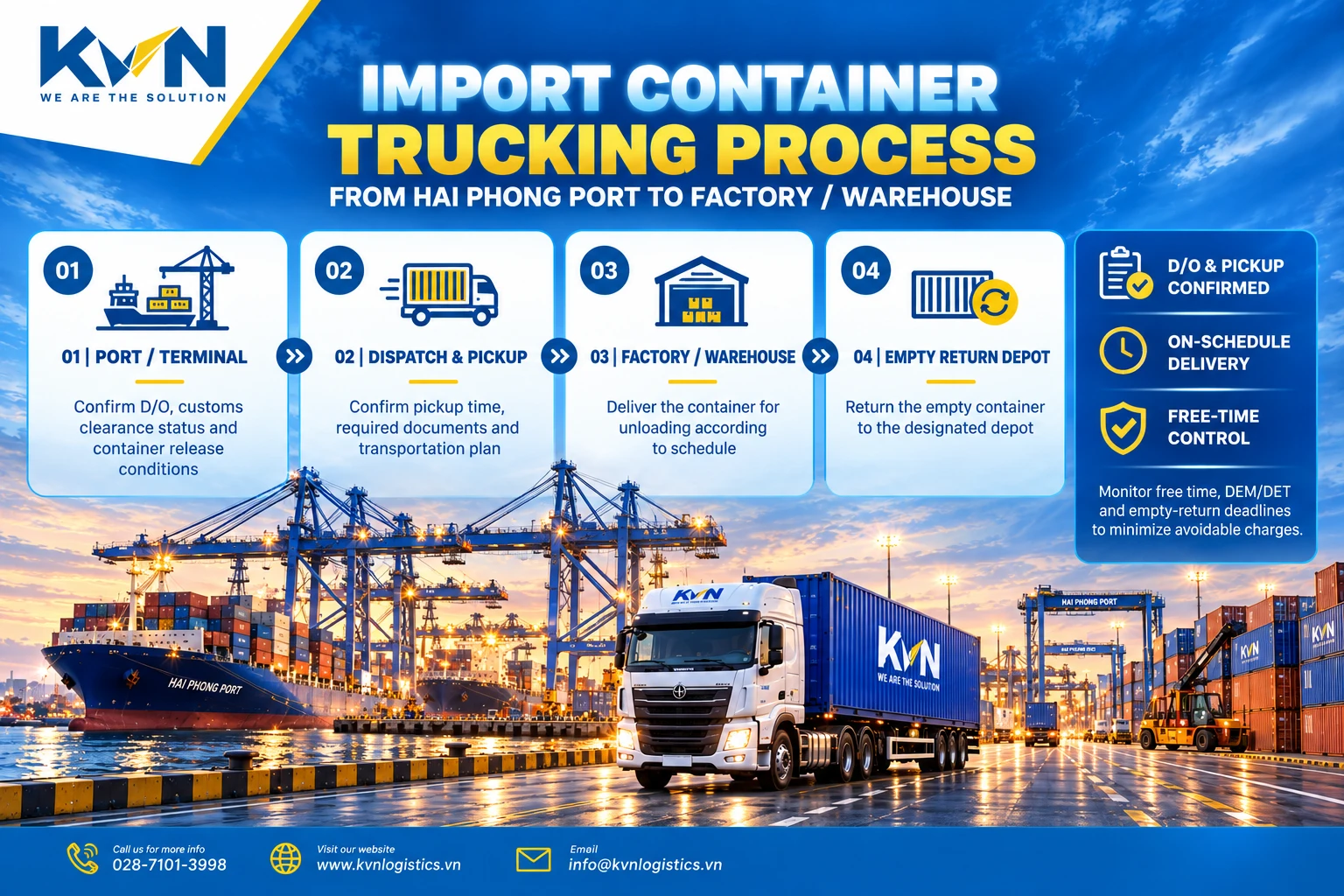
Import Container Trucking Process from Hai Phong Port to Factory
For import cargo, trucking should normally be coordinated only after the shipment status, documentation and receiving plan have been aligned.
Step 1: Confirm Shipment and Container Status
Before dispatching the truck, the logistics team should confirm the latest ETA, container status, Delivery Order, customs status and expected release timing.
A vessel arriving at Hai Phong does not necessarily mean that the container can immediately be collected.
The container still needs to be discharged, processed through terminal operations and meet the relevant release requirements before gate-out.
Step 2: Confirm the Pickup Terminal and Empty-Return Depot
This step is important for both transport planning and pricing.
After the laden container is delivered to the factory and unloaded, the truck may need to return the empty equipment to a different location.
A trucking quotation should therefore consider the complete operating cycle, rather than only the distance from the port to the factory.
Step 3: Coordinate Customs Clearance and Cargo Release
The trucking schedule needs to match the cargo-release process.
Dispatching a truck too early may result in unnecessary waiting time if customs procedures or release documentation are not yet completed.
Businesses requiring customs-clearance and import-export documentation support can connect the shipment with KVN Logistics’ Customs & Docs services. KVN Logistics Customs & Docs KVN Logistics
Step 4: Arrange Truck Pickup at the Port
Once the container can be released, the transport team coordinates the vehicle, pickup documentation and factory delivery schedule.
For time-sensitive shipments, truck dispatch should be based on a realistic container-release time rather than sending the vehicle to the terminal too early.
Waiting at the port does not make a container available faster and may reduce transport efficiency or create additional waiting charges.
Step 5: Deliver the Container to the Factory
Before the truck leaves the port, the receiving facility should be ready for the container.
The factory may need to prepare workers, forklifts, loading bays or other unloading equipment.
Some industrial facilities also require advance vehicle registration, driver information or delivery appointments.
These conditions should be checked before dispatch.
Step 6: Unload and Return the Empty Container
After unloading is completed, the empty container needs to be returned to the correct depot within the applicable time allowance.
This is why container free time and empty-return instructions should be reviewed when the delivery plan is prepared, rather than after the cargo has already been unloaded.
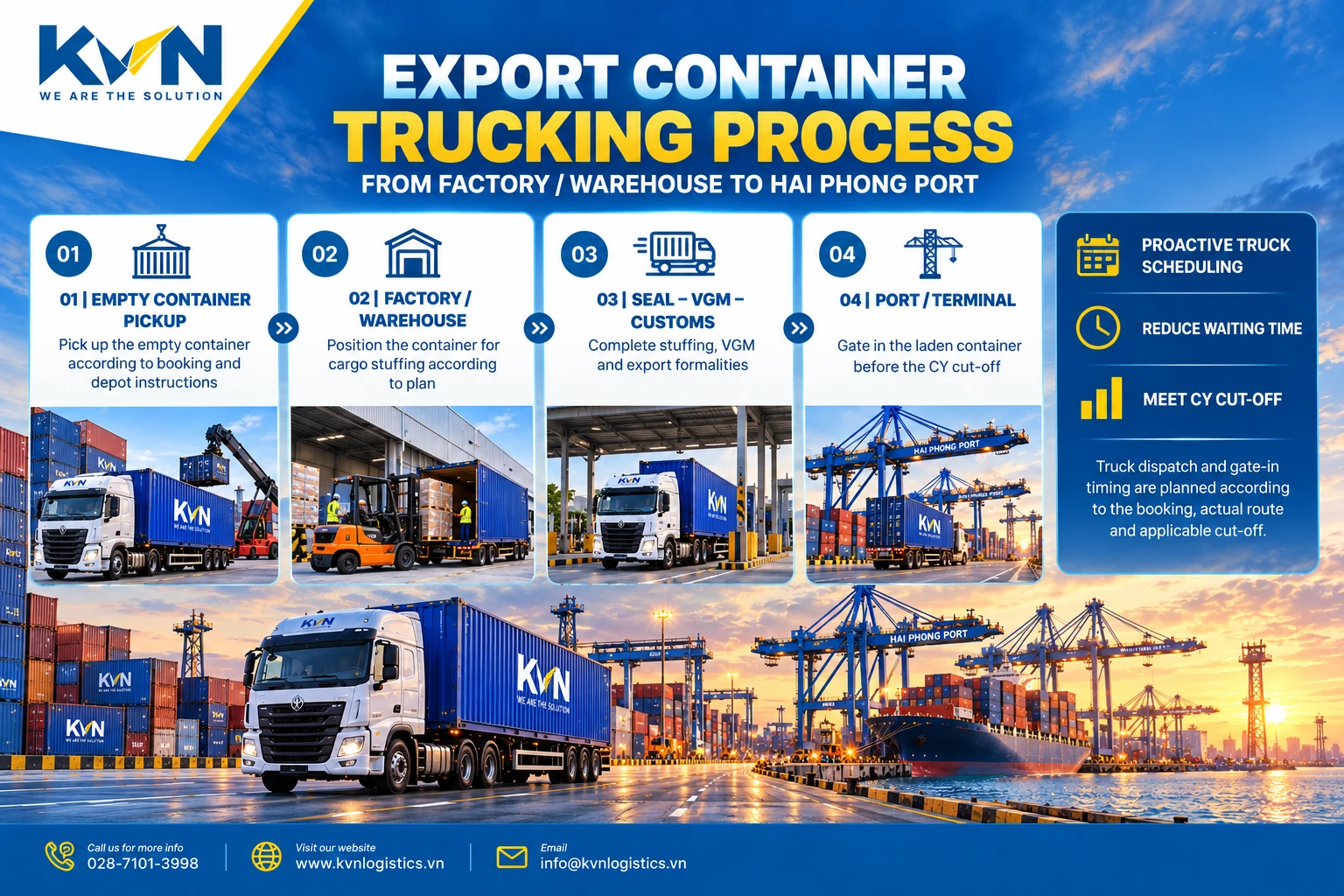
Export Container Trucking from Factory to Hai Phong Port
For export shipments, the most important operational deadline is often not the vessel ETD itself.
It is the CY cut-off.
An export trucking plan usually begins with the Booking Confirmation and works backward from the terminal deadlines.
Step 1: Review the Booking and Cut-Offs
The logistics team should verify the vessel ETD, CY cut-off, SI cut-off, VGM cut-off, export terminal and empty-container pickup instruction.
KVN Logistics explains these milestones in detail in its Sea Freight Booking Process: Cut-Off, SI, VGM & CY/CFS guide. Sea Freight Booking Process KVN Logistics
A critical principle is:
ETD is not the same as cut-off time.
A container may need to complete stuffing, VGM, customs procedures and terminal gate-in well before the vessel’s planned departure.
Step 2: Pick Up the Empty Container
The truck collects the container from the depot indicated in the booking or equipment-release instruction.
Before stuffing, the container should be checked for suitability.
Depending on the cargo, inspection may include the floor, walls, roof, doors, cleanliness, odour, signs of water ingress and overall structural condition.
Step 3: Position the Container at the Factory
Truck arrival should be coordinated with the factory loading plan.
The factory should be ready with the cargo, labour, forklift or other loading equipment before the vehicle arrives.
For multiple-container shipments, using planned loading slots may be more efficient than sending all trucks to the factory at the same time.
Step 4: Stuff, Seal, Complete VGM and Customs Procedures
Once loading is completed, the container is sealed and the required VGM and export documentation are processed according to the shipment requirements.
Container number, seal number, cargo weight and shipment documents should remain consistent.
Errors discovered after the laden container has already left the factory can create unnecessary amendments or delays.
Step 5: Gate In Before the CY Cut-Off
The export container must reach the correct terminal within the applicable gate-in deadline.
A container may physically arrive in Hai Phong before the vessel departs and still miss the planned sailing if it fails to meet the CY cut-off.
This is why inland trucking and sea freight booking should be planned as connected operations rather than independent services. KVN Logistics
How Should Businesses Plan the Trucking Timeline?
A useful Hai Phong container trucking plan should not begin only with the question:
“How many hours does the truck need?”
A better starting point is:
“Which shipment milestone must be completed, and by when?”
For imports, the timeline can be planned around:
Container Available → Customs Release → Port Pickup → Factory Delivery → Unloading → Empty Return
For exports:
Empty Pickup → Factory Stuffing → Seal/VGM → Customs → Terminal Gate-In → CY Cut-Off
The trucking schedule should also take into account gate operations, traffic conditions, road restrictions, vehicle weight, factory working hours and the expected loading or unloading time.
Because these operating conditions can change, KVN Logistics does not recommend relying on a single fixed transit-time assumption or vehicle-restriction schedule for every shipment without checking the actual transport date and route.
What Affects Container Trucking Rates from Hai Phong?
Hai Phong container trucking rates are influenced by more than distance.
The actual pickup terminal and delivery address affect both mileage and operating time. A shipment collected from Tan Vu, the Dinh Vu area or Lach Huyen may require a different transport plan even when all three are described generally as “Hai Phong”.
Container type also matters.
A 20DC, 40DC, 40HC, Reefer, Open Top or Flat Rack shipment may involve different operational requirements.
Cargo weight is another important factor because equipment selection and route feasibility need to reflect the actual laden-container weight and applicable road operating conditions.
The empty-container return depot can also materially affect the truck cycle.
A relatively short port-to-factory trip may still require a longer overall movement if the designated empty-return depot is located in a different logistics cluster.
Waiting time may also affect the final cost when the vehicle needs to wait for customs clearance, factory unloading, loading completion or receiving appointments.
Special cargo such as dangerous goods, reefer cargo, oversized equipment, heavy machinery or shipments requiring lifting arrangements may involve additional operational requirements.
For this reason, a shipment-specific quotation is generally more useful than a generic kilometre-based rate.
DEM, DET and Container Free Time
Container free time is an important planning factor, particularly for import shipments.
Depending on the carrier and booking conditions, the importer may have a defined period in which to collect, unload and return the equipment before relevant container-related charges can begin to apply.
The transport cycle should therefore not be viewed only as:
Port → Factory
It should be planned as:
Port → Factory → Unloading → Empty-Container Return
Pulling the container from the terminal too early when the factory is not ready may simply move the timing pressure from the port to the container.
Waiting too long to collect the container, however, may reduce the remaining time available for delivery, unloading and equipment return.
The applicable free time should always be confirmed against the specific carrier, booking and shipment conditions rather than assuming that every container receives the same number of free days.
Why Connect Inland Trucking with Sea Freight and Customs Documentation?
In international logistics, container trucking is normally one part of a wider transportation chain:
Factory → Inland Trucking → Port → Sea Freight → Destination Port → Inland Trucking → Factory / Warehouse
When each stage is managed independently, a vessel schedule change can require multiple teams to separately rearrange truck bookings, factory appointments, customs procedures and receiving schedules.
KVN Logistics currently focuses on three closely connected capabilities: Sea Freight, Inland Trucking and Customs & Documentation. Its English website positions Inland Trucking as the connection between ports, factories and warehouses, while Sea Freight covers FCL, LCL, Master Consolidation, Bulk Cargo and Project Cargo. KVN Logistics
Manufacturing companies requiring broader coordination can also refer to KVN Logistics’ guide to Door-to-Door Logistics for Manufacturing Companies: From Factory Pickup to Final Delivery. Door-to-Door Logistics for Manufacturing Companies KVN Logistics
For international container shipments originating in Hai Phong, businesses can also explore KVN Logistics’ Sea Freight service or the current guide to Sea Freight from Vietnam to Asia. KVN Logistics Sea Freight Sea Freight from Vietnam to Asia
How KVN Logistics Supports Hai Phong Container Trucking
KVN Logistics approaches inland trucking as a shipment coordination function, rather than simply arranging a vehicle.
Depending on the shipment, the scope may include container transportation between ports, depots, warehouses and factories; empty-container positioning; export-container delivery to terminals; import-container pickup; empty return coordination; multi-container dispatch planning; coordination with Sea Freight; coordination with Customs & Docs; and broader Door-to-Door logistics planning.
For individual shipments, suitable transport capacity can be coordinated through KVN Logistics’ partner network according to the route, container type, cargo condition and delivery requirements. This is consistent with the company’s current Inland Trucking positioning on its English website. KVN Logistics
KVN Logistics also maintains a Hai Phong office at P740, Thanh Dat 3 Building, No. 4 Le Thanh Tong Street, Ngo Quyen Ward, Hai Phong City, supporting logistics activities in one of Northern Vietnam’s key port regions. KVN Logistics
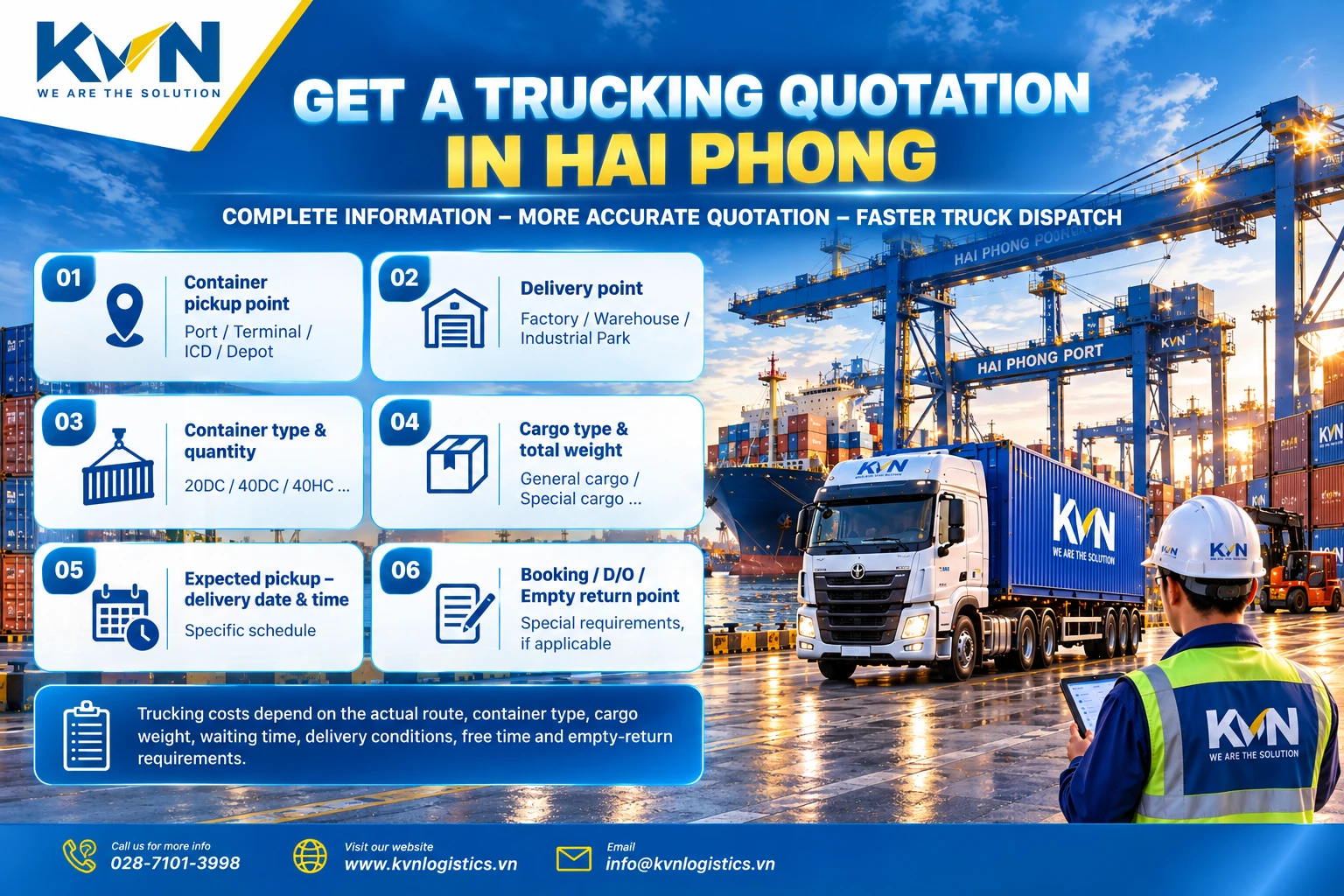
Request a Container Trucking Quotation from Hai Phong
For KVN Logistics to assess an appropriate trucking solution, businesses should provide the core shipment information:
Pickup / Port or Depot → Factory or Delivery Location → Container Type → Cargo Weight → Quantity → Required Date
For export shipments, providing the Booking Confirmation, CY cut-off and empty-depot information will help improve transport planning.
For import shipments, the Delivery Order, customs-release status, receiving location and empty-return depot are particularly useful.
KVN Logistics can then coordinate the relevant trucking requirements with Sea Freight and Customs & Documentation where required.
KVN Logistics – We are the Solution.
Frequently Asked Questions about Hai Phong Container Trucking
What is container trucking from Hai Phong to Northern industrial zones?
It refers to the road transportation and operational coordination of containers between Hai Phong ports or depots and factories, warehouses or industrial zones across Northern Vietnam. Depending on the shipment, the process may also include empty-container pickup or return, terminal gate-in and coordination with customs and vessel schedules.
What information is required for a Hai Phong trucking quotation?
Businesses should normally provide the pickup terminal or depot, delivery address, container type, cargo weight, number of containers, export or import status and required transportation date. Booking Confirmation or Delivery Order information can further improve the accuracy of the quotation.
How long does container trucking from Hai Phong to a factory take?
There is no universal transit time. Actual transportation time depends on the specific terminal or depot, factory location, cargo weight, gate conditions, road conditions, receiving hours and loading or unloading requirements.
Can container trucking rates be calculated only by distance?
Distance is an important factor, but it does not determine the full trucking cost. Container type, weight, empty-container positioning, empty-return location, waiting time and special handling conditions may also affect the final quotation.
What should importers check after the container reaches the factory?
Importers should monitor unloading time, remaining free time and the designated empty-container return depot. The trucking cycle is not fully completed until the empty equipment has been returned according to the applicable carrier instructions.
Should export trucking be scheduled based on vessel ETD?
Not by ETD alone. Exporters should work backward from the CY cut-off while also considering VGM, customs procedures, factory stuffing time and empty-container pickup arrangements. KVN Logistics
Can Hai Phong trucking be combined with Sea Freight and customs clearance?
Yes. Coordinating Inland Trucking, Sea Freight and Customs & Documentation under one shipment plan can reduce gaps between port operations, factory schedules, shipping deadlines and documentation requirements. KVN Logistics currently provides all three capabilities through its English service portfolio.