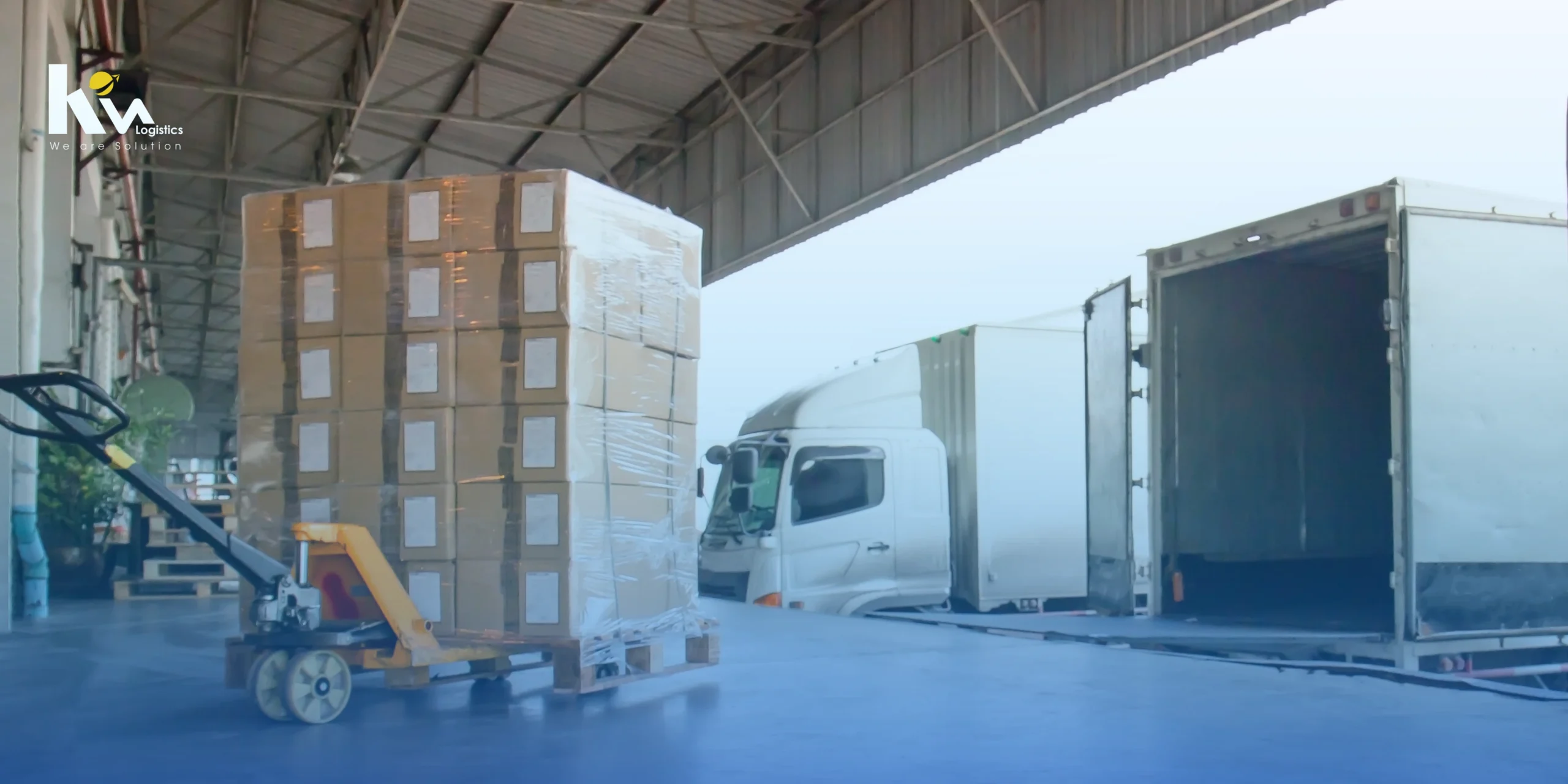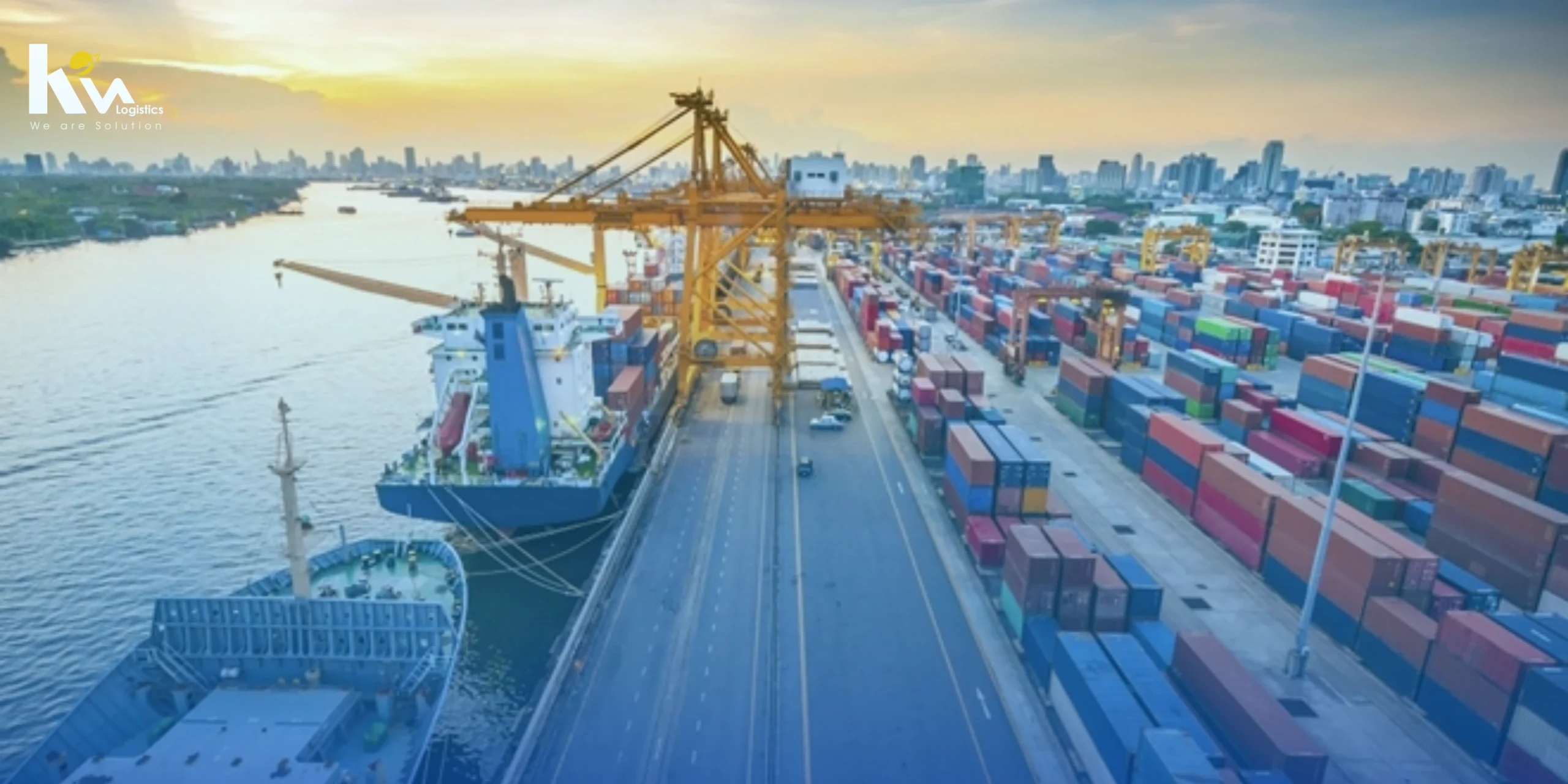


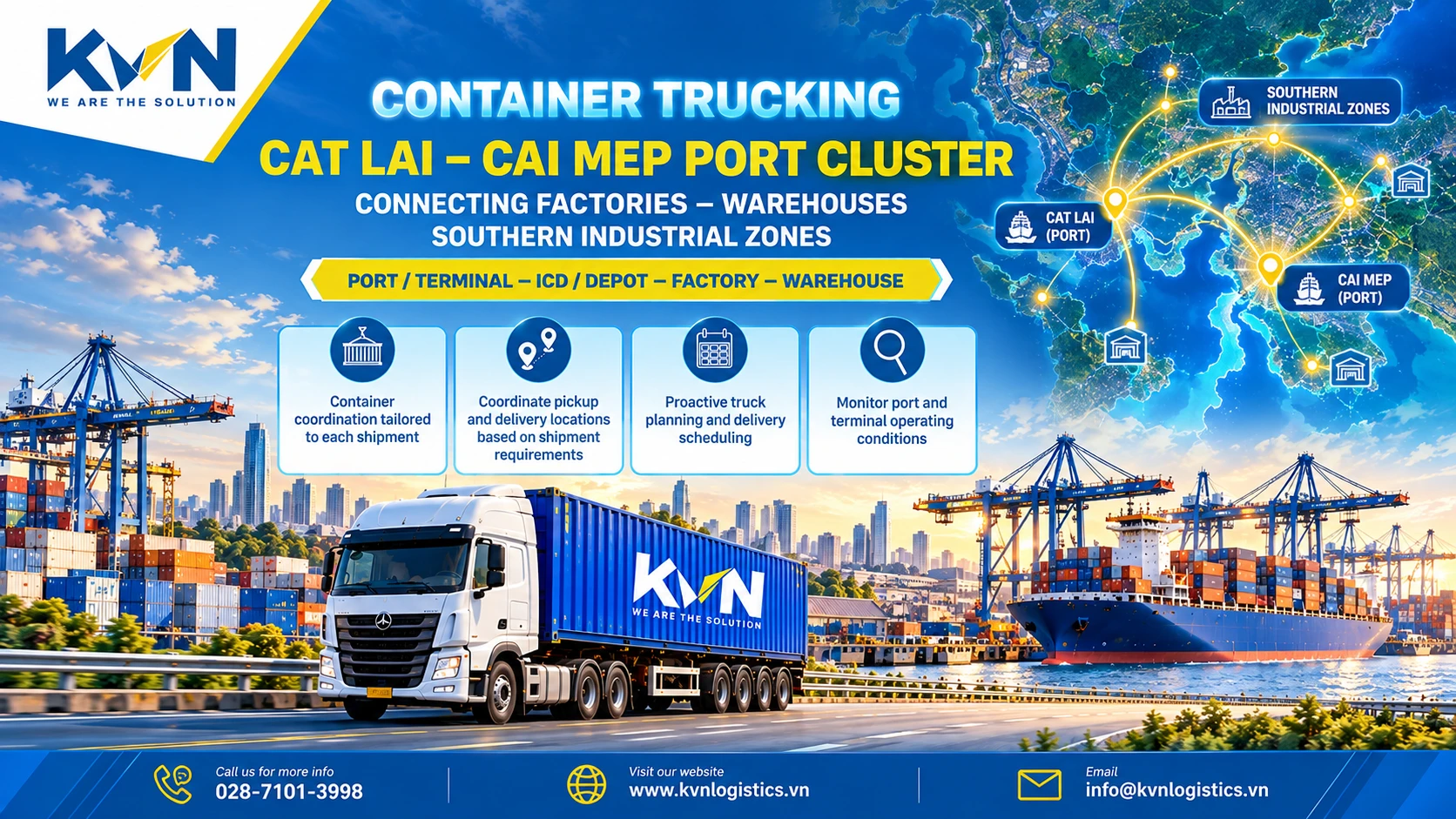
Container trucking from Cat Lai and Cai Mep to industrial zones in Southern Vietnam is a critical part of the region’s import-export supply chain. These major port gateways connect international shipping services with manufacturing facilities, warehouses, inland container depots (ICDs), and distribution centers across Ho Chi Minh City, Dong Nai, and surrounding industrial areas.
For import shipments, container transportation typically involves collecting a loaded container from the port, delivering it to the factory or warehouse, unloading the cargo, and returning the empty container to the designated depot.
For export shipments, the process operates in the opposite direction: collecting an empty container, positioning it at the factory for stuffing, completing customs and shipping requirements, and delivering the loaded container to the terminal before the CY cut-off.
However, efficient container trucking involves more than arranging a truck.
Port selection, terminal availability, customs clearance, factory receiving schedules, container free time, empty-return instructions, and vessel cut-offs must all be coordinated.
For a broader understanding of domestic container transportation, businesses can explore KVN Logistics’ guide to Domestic Container Trucking in Vietnam: Port–Factory–Warehouse Process.
Quick Answer: How Does Container Trucking from Cat Lai and Cai Mep Work?
Container trucking from Cat Lai and Cai Mep refers to the road transportation of shipping containers between these port gateways and industrial facilities across Southern Vietnam.
The two most common operating flows are:
Import Container Flow:
Vessel Arrival → Container Availability → Customs Clearance → Port Pickup → Factory Delivery → Unloading → Empty Container Return
Export Container Flow:
Empty Container Pickup → Factory Stuffing → Seal & VGM → Customs Clearance → Port Gate-In → Vessel Loading
The actual sequence may vary according to the carrier, terminal, customs status, and individual shipment requirements.
The objective is to ensure containers move between ports and factories while meeting operational deadlines and controlling overall logistics costs.
Cat Lai vs. Cai Mep: Understanding Southern Vietnam’s Container Gateways
Cat Lai and Cai Mep play complementary roles in Southern Vietnam’s container logistics network.
Although both handle international containerized cargo, their shipping connections, terminal characteristics, and inland transport requirements differ.
Cat Lai Port: A Major Container Gateway in Ho Chi Minh City
Cat Lai is one of Vietnam’s most important container-handling facilities.
Located in the eastern part of Ho Chi Minh City, the port serves a wide network of importers, exporters, logistics providers, distribution facilities, and industrial manufacturers.
Its location makes it a significant gateway for container movements connecting:
-
Industrial facilities within Ho Chi Minh City.
-
Manufacturing zones in Dong Nai.
-
Warehouses and distribution centers across the metropolitan area.
-
Industrial parks in surrounding southern provinces.
-
ICDs and container depots serving regional supply chains.
For businesses located near Ho Chi Minh City and neighboring manufacturing clusters, Cat Lai may provide a practical connection between international shipping and inland distribution.
However, trucking schedules still need to account for terminal operations, road traffic, depot instructions, and factory receiving capacity.
Cai Mep–Thi Vai: Southern Vietnam’s Deep-Water Port Gateway
The Cai Mep–Thi Vai port cluster plays a particularly important role in international long-haul container shipping.
Its deep-water terminals can accommodate large container vessels, supporting international services connecting Vietnam with major global markets, including Europe and North America.
Major terminals within the broader port cluster include facilities such as CMIT, TCIT, and other specialized container terminals.
For manufacturers exporting large volumes of cargo, Cai Mep can offer an attractive port option depending on the carrier’s service network, vessel schedule, and origin location.
However, the chosen terminal must always match the actual Booking Confirmation.
Cai Mep is a port cluster, not a single interchangeable container pickup or delivery location.
A shipment booked through one terminal cannot automatically be delivered to another without the appropriate carrier and terminal arrangements.
Companies should therefore confirm the precise terminal, depot, vessel schedule, and inland transportation requirements before planning trucking operations.
For additional context on international routes, refer to Sea Freight to Europe: Transit Time, Costs and Risks.
Cat Lai vs. Cai Mep: Key Logistics Considerations
| Criteria | Cat Lai | Cai Mep |
|---|---|---|
| Main role | Major urban and regional container gateway | Deep-water international container gateway |
| Shipping connections | Regional, intra-Asia and connecting services | Major international long-haul services |
| Industrial access | Ho Chi Minh City and neighboring industrial areas | Cai Mep area, Dong Nai and wider Southern Vietnam |
| Trucking planning | Traffic, terminal congestion, depots, delivery slots | Factory distance, terminal selection, depot and cut-offs |
| Suitable shipments | Depends on booking, cargo origin and carrier routing | Depends on deep-sea service and total transport requirements |
The most appropriate port is not necessarily the one offering the lowest ocean freight rate.
A more useful comparison considers:
Ocean Freight + Inland Trucking + Terminal Charges + Container Free Time + Operational Risk
Major Container Trucking Corridors from Cat Lai and Cai Mep
Southern Vietnam’s manufacturing network creates regular demand for container transportation between ports, industrial zones, warehouses, and logistics centers.
The following corridors represent important operating areas for import-export businesses.
1. Cat Lai to Ho Chi Minh City Industrial Zones
Cat Lai connects with industrial and warehouse facilities throughout the Ho Chi Minh City metropolitan area.
Relevant manufacturing and logistics locations include industrial areas such as Cat Lai, Hiep Phuoc, Tan Thuan, and other surrounding industrial clusters, depending on the destination.
Despite relatively short distances on some routes, transportation performance may be affected by heavy traffic, factory receiving hours, terminal congestion, and restricted access conditions.
Therefore, a short-distance container movement is not always the cheapest or fastest operation.
For example, a truck traveling only a limited distance may still incur waiting costs if the factory cannot unload the container at the scheduled time.
2. Cat Lai to Dong Nai Industrial Zones
Dong Nai is one of Southern Vietnam’s most important manufacturing centers, with strong demand for containerized imports and exports.
Common industrial destinations include:
-
Amata Industrial Park.
-
Long Thanh Industrial Park.
-
Long Duc Industrial Park.
-
Nhon Trach industrial park clusters.
-
Bien Hoa industrial areas.
These routes frequently serve manufacturers importing raw materials, industrial components, machinery, and packaging materials, as well as exporters shipping finished products.
For export cargo, the trucking schedule should be built around:
Cargo Ready Date → Empty Container Pickup → Factory Stuffing → Customs Clearance → CY Cut-Off
For imports, the sequence should include unloading and empty-container return, not simply port-to-factory delivery.
3. Cat Lai to Northern and Western Ho Chi Minh City Industrial Areas
Container trucking from Cat Lai also supports industrial and logistics facilities located toward the northern and western parts of the metropolitan region.
These movements may serve manufacturing facilities, consumer goods warehouses, logistics parks, and distribution centers.
Operational considerations include road restrictions, truck access, warehouse receiving appointments, and the positioning of empty-container depots.
For shipments involving multiple containers, staggered truck arrivals may help avoid congestion at factory loading bays.
4. Cai Mep to Nearby Industrial Zones
Industrial facilities located near the Cai Mep–Thi Vai port cluster may benefit from shorter inland transport distances to deep-water terminals.
This can be particularly useful for exporters shipping directly through Cai Mep or businesses importing materials for nearby manufacturing operations.
However, shorter trucking distance does not eliminate the need to coordinate equipment release, customs clearance, terminal access, and empty-container returns.
Port proximity should be considered together with vessel connectivity and total logistics costs.
5. Cai Mep to Dong Nai Industrial Zones
The Cai Mep–Dong Nai corridor is an important connection between deep-water terminals and manufacturing operations.
For factories in Long Thanh, Nhon Trach, Long Duc, and other Dong Nai industrial areas, Cai Mep may be a relevant export gateway when supported by the selected carrier’s shipping service.
The appropriate trucking plan depends on the exact factory address, terminal, container type, cargo weight, and relevant cut-offs.
Rather than relying on a fixed transit-time estimate, businesses should evaluate:
Factory Location + Terminal + Cargo Weight + Road Conditions + Truck Availability + Delivery Deadline
This approach provides a more realistic basis for container trucking planning.
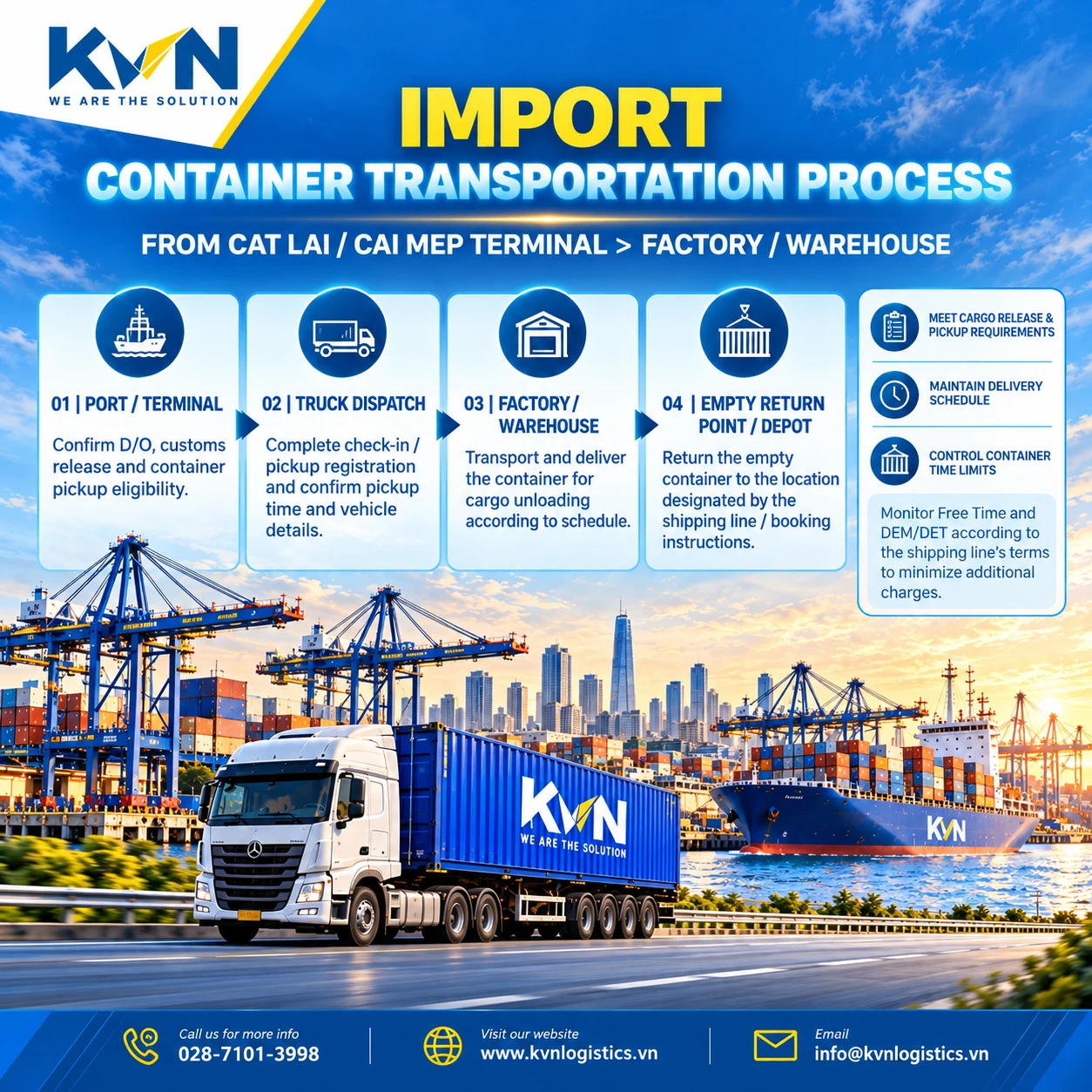
Import Container Trucking Process from Cat Lai and Cai Mep
Import container transportation must be coordinated with vessel arrivals, customs clearance, port pickup conditions, factory receiving schedules, and empty-container return deadlines.
Step 1: Confirm Vessel Arrival and Container Availability
Before dispatching a truck, the consignee or logistics coordinator should verify whether the container is available for collection.
Important information includes:
-
Actual vessel arrival and discharge status.
-
Container number.
-
Assigned terminal.
-
Delivery Order (D/O) status.
-
Customs release status.
-
Applicable terminal pickup procedures.
The vessel’s ETA alone does not mean the container can immediately be collected.
Step 2: Complete Customs Clearance Requirements
Customs clearance may involve document verification, customs declarations, applicable tax procedures, permits, or specialized inspections.
The exact requirements depend on the imported commodity and Vietnamese regulations.
If clearance is incomplete, dispatching a truck too early may result in unnecessary waiting time.
For coordinated customs and shipping documentation, businesses can refer to KVN Logistics’ Customs & Documentation services alongside inland transport planning.
Step 3: Arrange Container Pickup
Once the necessary release conditions are satisfied, the transport coordinator schedules container pickup at the designated terminal.
The trucking arrangement should reflect container type, gross weight, route conditions, factory receiving time, and any additional handling requirements.
Step 4: Deliver the Container to the Factory or Warehouse
The receiving facility should prepare its unloading operation before the truck arrives.
This includes confirming loading-bay availability, warehouse personnel, unloading equipment, and anticipated unloading duration.
For factories with strict vehicle registration procedures, driver and vehicle information may need to be submitted in advance.
Step 5: Unload Cargo and Return the Empty Container
After unloading, the empty container must be returned to the location designated by the carrier or equipment provider.
The return process should be completed within the applicable free-time conditions to minimize detention charges.
An import trucking job is not operationally complete simply because the loaded container has arrived at the factory.
Empty-container return remains an essential part of the shipment.
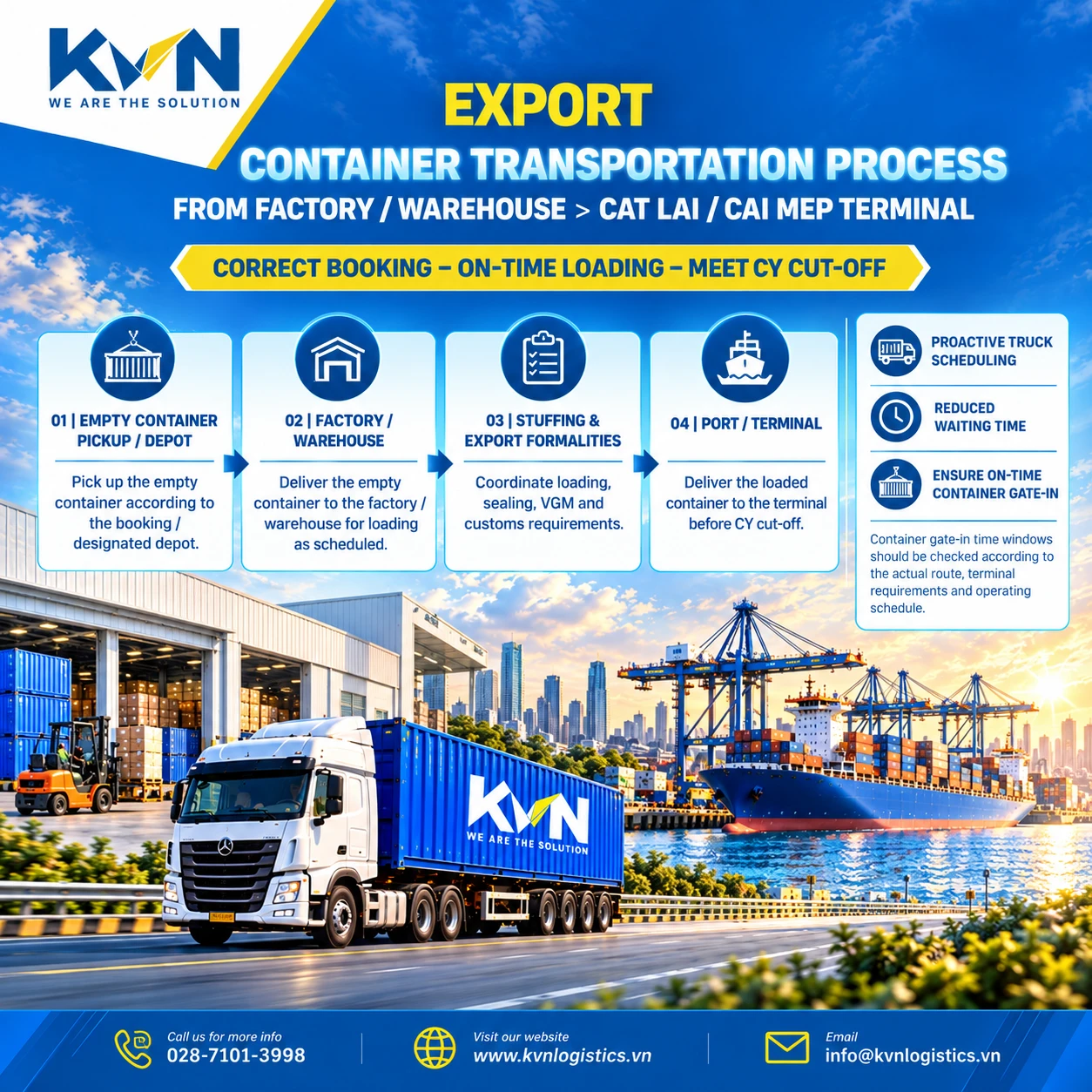
Export Container Trucking Process to Cat Lai and Cai Mep
For export shipments, trucking must be synchronized with the vessel booking, factory production schedule, and terminal acceptance deadlines.
Step 1: Review the Booking Confirmation
The Booking Confirmation should be checked for:
-
Booking number.
-
Vessel and voyage.
-
Port of loading.
-
Export terminal.
-
Container type and quantity.
-
Empty-container pickup instructions.
-
CY cut-off.
-
SI cut-off.
-
VGM cut-off.
These deadlines may differ by carrier, terminal, and sailing.
Step 2: Collect the Empty Container
The logistics coordinator arranges empty-container pickup from the designated depot.
The depot should be verified against the carrier’s release instructions rather than selected solely based on proximity to the factory.
Step 3: Inspect the Container Before Stuffing
Before loading cargo, the container should be inspected for its suitability.
Typical checks include the container floor, walls, roof, doors, visible damage, cleanliness, moisture, odors, and sealing condition.
Additional checks may be necessary for food products, chemical materials, sensitive equipment, or other specialized cargo.
Step 4: Complete Factory Stuffing
Cargo stuffing should be arranged according to factory capacity and the available trucking schedule.
A delay at the loading stage can affect the entire export operation.
For example, if loading takes six hours instead of the expected two hours, the container may have insufficient time to complete customs formalities and reach the export terminal.
Step 5: Finalize Customs, SI and VGM
Shipping Instructions, Verified Gross Mass, and customs procedures must be completed according to the applicable deadlines.
The physical movement of a container and the preparation of shipping documents should run in parallel.
Step 6: Deliver the Container Before CY Cut-Off
The loaded container must be accepted at the designated terminal within the applicable CY cut-off and meet any other loading conditions.
Arriving at the port before the vessel’s ETD is not necessarily sufficient.
For the full sequence, read Sea Freight Booking Process: Cut-Off, SI, VGM & CY/CFS.
Container Free Time, Demurrage and Detention: What Businesses Should Know
Container free time is an important cost-control factor in both import and export operations.
The relevant terms commonly include:
Demurrage: Charges that may apply when a container remains within the terminal beyond the applicable free-time allowance under the carrier’s tariff.
Detention: Charges that may apply when a container remains outside the terminal or designated return point beyond the allowed period.
Storage: Terminal or facility charges associated with cargo or container storage, which may be separate from carrier demurrage.
Actual charging structures vary by shipping line, terminal, equipment type, contractual terms, and shipment.
Some carriers also use combined demurrage and detention arrangements.
Businesses should therefore confirm the applicable rules for each booking.
Import Shipment Planning
Container Available → Customs Cleared → Pickup → Factory Delivery → Unloading → Empty Return
The objective is to complete these activities within the applicable free time wherever operationally possible.
Export Shipment Planning
Empty Container Released → Factory Stuffing → Documentation → Customs → Terminal Gate-In
Collecting an empty container too early may also affect detention calculations, depending on the carrier’s terms.
The key principle is to manage the entire container cycle rather than treating each transport activity independently.
What Determines Container Trucking Costs from Cat Lai and Cai Mep?
Container trucking rates depend on operational requirements rather than mileage alone.
The main cost factors include:
| Cost factor | Explanation |
|---|---|
| Port and terminal | Actual pickup or delivery terminal |
| Route distance | Distance between port, depot and factory |
| Container type | 20DC, 40DC, 40HC, reefer or special equipment |
| Cargo weight | Gross cargo weight and transport requirements |
| Depot location | Empty-container collection or return point |
| Road tolls | Applicable highway and road charges |
| Loading time | Time required for stuffing or unloading |
| Waiting time | Delays at port, depot or factory |
| Shipment volume | Number of containers and dispatch planning |
| Special requirements | Heavy cargo, reefer or additional handling |
| Delivery schedule | Time-sensitive or restricted delivery conditions |
This explains why two factories within the same industrial park may receive different trucking quotations.
Their shipment details, equipment requirements, and operating schedules may not be identical.
Why the Lowest Trucking Rate May Not Be the Best Option
Consider two hypothetical trucking arrangements.
Option A offers a lower base trucking rate but limited flexibility for schedule changes.
Option B has a slightly higher base rate but can better coordinate factory loading, container availability, terminal gate-in, and empty return.
If Option A results in additional waiting charges, detention, missed cut-offs, or a rolled shipment, its total cost may exceed that of Option B.
The more relevant performance indicators are:
Total Logistics Cost + On-Time Performance + Operational Reliability
Rather than simply:
Lowest Trucking Rate
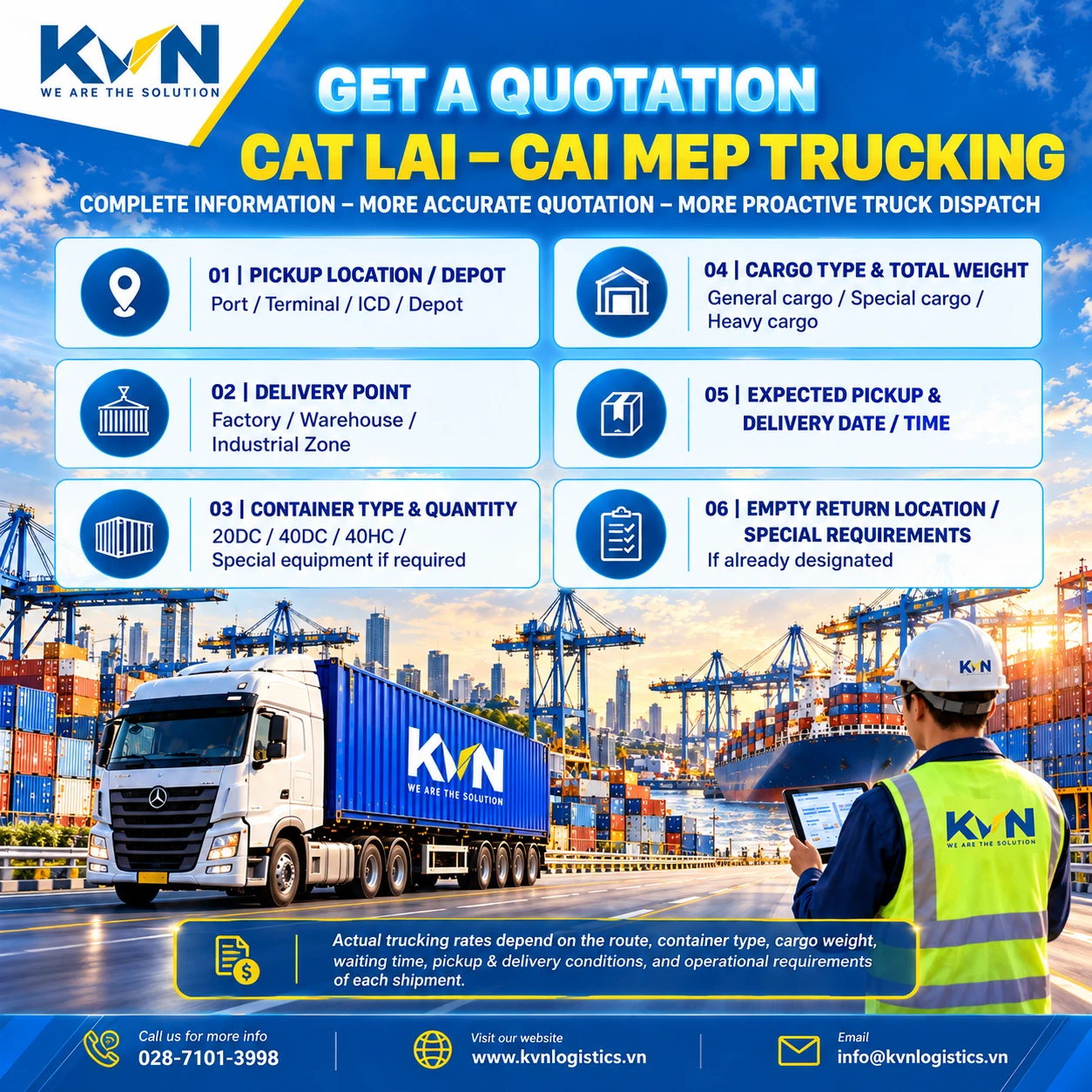
What Information Is Required for a Container Trucking Quotation?
A complete quotation request allows the logistics provider to evaluate the actual transport requirements.
| Required information | Details |
|---|---|
| Shipment type | Import or export |
| Port/terminal | Cat Lai or specific Cai Mep terminal |
| Pickup location | Full address or designated depot |
| Delivery location | Factory or warehouse address |
| Commodity | Cargo description |
| Container type | 20DC / 40DC / 40HC / Reefer / Other |
| Cargo weight | Gross weight |
| Quantity | Number of containers |
| Required date | Cargo-ready date or delivery date |
| Booking | Booking number or confirmation, if available |
| Cut-offs | CY, SI and VGM deadlines for exports |
| Free time | Applicable import free-time conditions |
| Customs status | Clearance or documentation status |
| Factory schedule | Loading/unloading window |
| Additional requirements | Special equipment or handling needs |
Example of a Container Trucking Quotation Request
A well-prepared request may look like this:
We require trucking for 1 × 40HC import container, approximately 18 MT of industrial materials. Pickup at the designated Cat Lai terminal, delivery to a factory in Long Thanh Industrial Park, Dong Nai. Expected container availability: October 20, 2026. Factory receiving window: 08:00–17:00. Estimated unloading time: 3 hours. Please quote the trucking charge, applicable waiting-time conditions, and empty-container return arrangements.
Providing this information helps the transport coordinator prepare a more accurate quotation and identify operational risks in advance.
How KVN Logistics Supports Container Trucking in Southern Vietnam
KVN Logistics provides inland transportation coordination connecting seaports, container depots, factories, warehouses, and industrial zones across Vietnam.
Through its Inland Trucking services, KVN Logistics supports domestic container movements as part of a broader logistics solution.
For shipments moving through Cat Lai and Cai Mep, KVN Logistics can evaluate and coordinate suitable solutions based on individual shipment requirements.
The scope may include:
-
Import-container pickup from designated terminals.
-
Export-container transportation from factories to ports.
-
Empty-container collection and return.
-
Coordination of factory loading and receiving schedules.
-
Trucking arrangements based on cargo and equipment requirements.
-
Coordination with sea freight bookings.
-
Customs clearance and import-export documentation support.
-
Multi-container transport planning.
-
Monitoring of critical shipment milestones.
Transportation capacity can be arranged through suitable logistics and trucking partners according to route, cargo type, equipment availability, and delivery conditions.
This flexible model allows KVN Logistics to support manufacturers and import-export businesses without positioning every shipment around a fixed transport fleet.
Connecting Sea Freight, Trucking and Customs Documentation
For international shipments, inland trucking should not be managed separately from the broader freight movement.
A typical end-to-end export chain includes:
Factory → Inland Trucking → Export Port → Sea Freight → Import Port → Destination Delivery
KVN Logistics focuses on three closely connected service capabilities:
Sea Freight – Inland Trucking – Customs & Documentation
Coordinating these stages helps businesses build shipment plans around production schedules, terminal requirements, customs procedures, and vessel deadlines.
The objective is not simply to move containers between locations, but to improve coordination across the entire shipment.
Frequently Asked Questions About Cat Lai and Cai Mep Container Trucking
What is container trucking from Cat Lai Port?
Container trucking from Cat Lai refers to transporting shipping containers by road between Cat Lai’s container terminals and factories, warehouses, ICDs, or depots in Southern Vietnam. It includes both import-container deliveries and export-container movements.
What is the difference between Cat Lai and Cai Mep?
Cat Lai is a major container gateway serving Ho Chi Minh City and nearby industrial regions. Cai Mep is a deep-water port cluster with an important role in international long-haul shipping. The best choice depends on the carrier’s route, terminal, factory location, and total logistics costs.
Which industrial zones are connected to Cat Lai and Cai Mep?
Common trucking destinations include industrial zones in Ho Chi Minh City, Dong Nai, Long Thanh, Nhon Trach, Bien Hoa, and surrounding manufacturing areas. Actual transport availability and pricing depend on the specific pickup and delivery locations.
How much does container trucking from Cat Lai cost?
There is no universal rate. Pricing depends on the container type, weight, destination, depot, road tolls, loading time, waiting conditions, and shipment requirements. A detailed quotation should be requested for the actual route.
How long does trucking from Cai Mep to Dong Nai take?
Transit time varies by terminal, factory location, traffic, route restrictions, container weight, and operational conditions. Businesses should confirm the estimated schedule for their actual shipment rather than relying on a single fixed transit time.
Where should empty import containers be returned?
Empty containers must be returned according to the carrier’s or equipment provider’s instructions. The return location is not necessarily the depot closest to the factory.
How many free days are available for containers?
Free time depends on the carrier, booking, trade lane, equipment type, and applicable contractual terms. Businesses should check the actual free-time allowance rather than assume a standard number of days.
Does a container arriving before vessel departure meet the deadline?
Not necessarily. Export containers normally need to comply with CY cut-off, documentation deadlines, customs requirements, and relevant terminal procedures before loading.
Can KVN Logistics coordinate trucking, sea freight and customs documentation?
Yes. KVN Logistics provides services covering Sea Freight, Inland Trucking, and Customs & Documentation, allowing these activities to be coordinated according to shipment requirements and operational feasibility.
KVN Logistics – Connecting Southern Vietnam’s Ports and Industrial Supply Chains
As Southern Vietnam’s manufacturing and port infrastructure continue to develop, the connection between major container gateways and industrial zones is becoming increasingly important.
For importers and exporters, efficient container trucking requires coordinated decisions across port selection, terminal operations, inland transport, factory scheduling, customs documentation, and container free time.
Instead of asking only:
“How much does it cost to move a container from the port to the factory?”
Businesses should also consider:
Which terminal? Which depot? Which route? Which vessel? Which cut-off? What total logistics cost?
KVN Logistics supports businesses in evaluating these questions through coordinated Sea Freight, Inland Trucking, and Customs & Documentation solutions.
Whether your shipment involves container pickup at Cat Lai, export transportation to Cai Mep, or inland delivery to an industrial zone in Southern Vietnam, KVN Logistics can assess the operating requirements and coordinate an appropriate transport solution.
KVN Logistics – We are the Solution.
Explore our Inland Trucking Solutions or visit KVN Logistics to discuss your shipment requirements.