

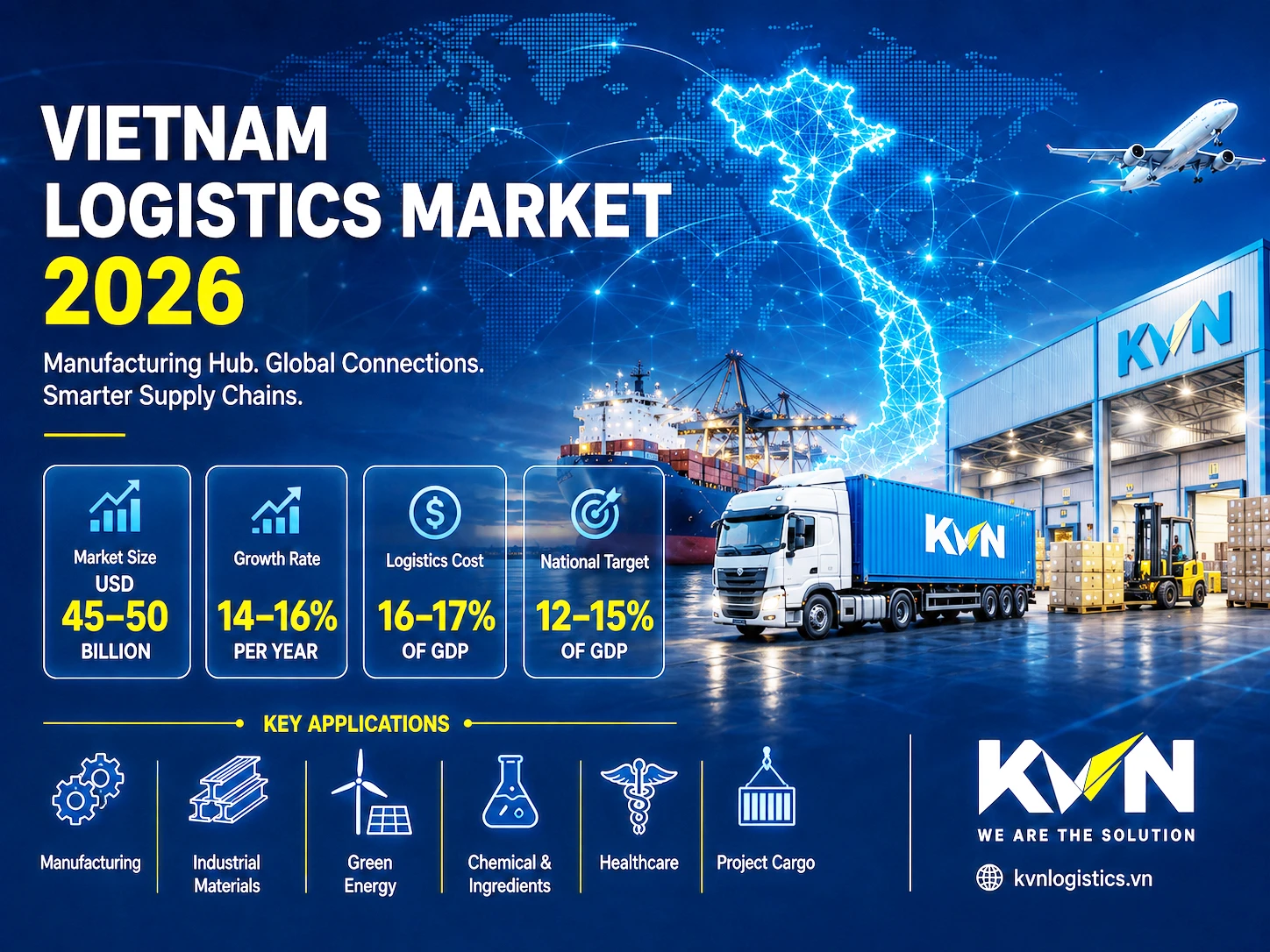
Vietnam’s logistics market is entering a new stage of development as manufacturing, international trade, infrastructure investment and supply chain requirements continue to expand. The domestic logistics market is currently valued at approximately USD 45–50 billion, while the sector has recorded annual growth of around 14–16% in recent years.
However, strong growth also comes with a major challenge: logistics costs in Vietnam remain equivalent to approximately 16–17% of GDP. Under the Vietnam Logistics Services Development Strategy for 2025–2035, the Government aims to reduce this ratio to 12–15% of GDP, while accelerating digitalization, green transition and infrastructure connectivity.
This means that competition in Vietnam’s logistics market will increasingly go beyond freight rates. The ability to connect transportation modes, control total logistics costs, manage documentation, improve supply chain visibility and design solutions around specific cargo requirements will become increasingly important.
Vietnam Logistics Market 2026 at a Glance
Key indicators include:
- Current market size: approximately USD 45–50 billion
- Recent annual growth: approximately 14–16%
- Logistics costs: approximately 16–17% of GDP
- 2035 logistics cost target: 12–15% of GDP
- Target industry growth for 2025–2035: 12–15% per year
- Digital transformation target: 80% of Vietnamese logistics service providers using digital solutions by 2035
The market-size and recent growth figures were announced by Vietnam’s Ministry of Industry and Trade at the Vietnam Logistics Forum 2025, while the 2035 targets are defined under Decision No. 2229/QD-TTg on Vietnam’s Logistics Services Development Strategy.
These indicators are closely connected. Reducing logistics costs will depend on better infrastructure, stronger multimodal connectivity, more efficient operations and wider adoption of technology across the supply chain.
1. How Large Is Vietnam’s Logistics Market?
At the Vietnam Logistics Forum 2025, the Ministry of Industry and Trade stated that Vietnam’s domestic logistics market is valued at approximately USD 45–50 billion, equivalent to around 10% of GDP. The sector has maintained annual growth of approximately 14–16% in recent years.
This provides a substantial foundation for continued development during the 2026–2035 period.
It is important to note that logistics market estimates can vary between reports because different methodologies may include different activities, ranging from core logistics services to transportation, warehousing and supporting services.
For this article, KVN Logistics uses the USD 45–50 billion figure announced by the Ministry of Industry and Trade as the main reference point.
A large market, however, does not mean that every part of the supply chain is already optimized.
On the contrary, the gap between strong industry growth and relatively high logistics costs creates significant opportunities for more integrated, efficient and technology-enabled logistics solutions.
2. International Trade Continues to Drive Logistics Demand
Logistics demand is closely linked to the movement of goods.
As Vietnam imports more raw materials, machinery and production inputs while expanding exports of manufactured products, demand also grows for international freight, inland transportation, warehousing, customs documentation and supply chain coordination.
According to Vietnam’s National Statistics Office, during the first six months of 2026:
- Merchandise exports reached USD 266.52 billion, up 21.0% year on year;
- Imports reached USD 283.17 billion, up 33.4%;
- Total import-export turnover reached approximately USD 549.69 billion, increasing 27.1% year on year.
For manufacturers, this means logistics can no longer be treated simply as the process of finding transportation at the lowest available freight rate.
Transportation planning increasingly needs to connect with production schedules, inventory levels, customer delivery commitments, procurement cycles and working capital.
This is one reason why integrated Door-to-Door Logistics for Manufacturing Companies is becoming increasingly relevant.
Instead of managing factory pickup, inland trucking, customs clearance, international freight, warehousing and final delivery separately, businesses can coordinate the entire shipment under a unified logistics plan. KVN’s existing Door-to-Door solution is structured around this end-to-end approach.
3. Vietnam’s Trade Network Creates Long-Term Logistics Opportunities
Vietnam benefits from a strategic position in the Asia-Pacific region and deep integration into international trade networks.
As of August 2026, the Ministry of Industry and Trade states that Vietnam has joined and implemented 17 free trade agreements, while negotiations for the Vietnam–EFTA Free Trade Agreement were recently concluded.
This extensive trade network creates opportunities for Vietnamese businesses to reach markets across ASEAN, Europe, Asia and other major trading regions.
FTAs, however, do not only provide tariff advantages.
Greater international trade also creates increasingly complex logistics requirements involving:
- Rules of origin;
- Certificates and commercial documents;
- Customs procedures;
- Specialized inspections;
- Delivery lead times;
- Product traceability;
- Sustainability requirements;
- Supply chain transparency.
Businesses therefore need to consider logistics as part of their international market strategy rather than waiting until an order has already been confirmed before planning transportation.
4. What Does Vietnam’s Logistics Ecosystem Include?
A complete logistics chain can involve multiple services depending on the cargo, origin, destination, Incoterms and delivery requirements.
Sea Freight
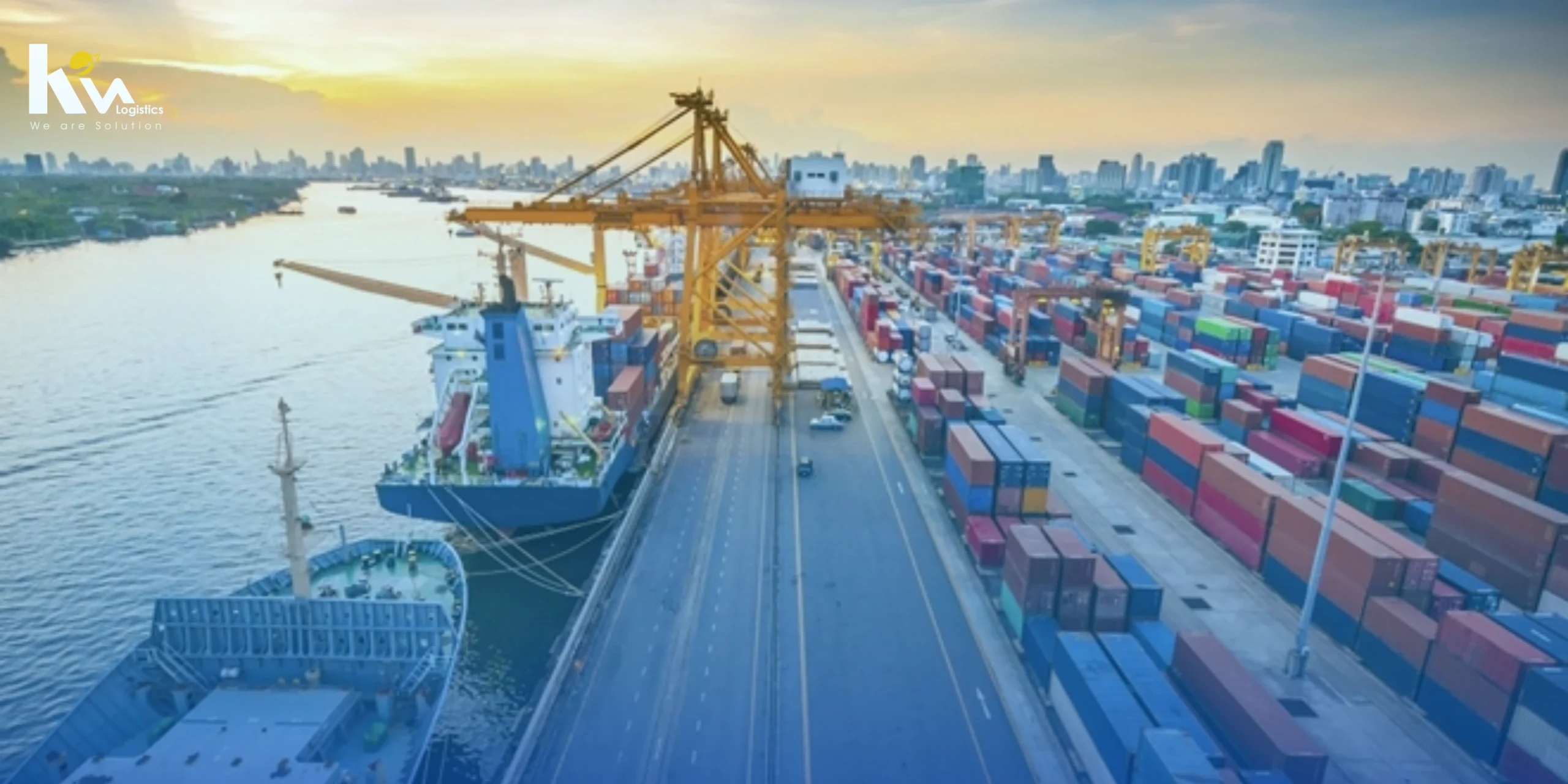
Sea freight remains one of the most important transport modes for containerized goods, industrial raw materials, machinery and large-volume import-export cargo.
Businesses need to evaluate more than whether to choose FCL or LCL.
Important factors include:
- Shipping line and service;
- Direct or transshipment routing;
- Transit time;
- Vessel frequency;
- Container availability;
- Free time;
- Origin and destination charges;
- Schedule reliability.
KVN Logistics provides Sea Freight solutions covering FCL, LCL, Master Consolidation, bulk cargo and project cargo.
Businesses shipping to European markets may also review KVN Logistics’ guide to Sea Freight to Europe: Transit Time, Costs and Risks for more detailed planning considerations.
Inland Trucking
A container arriving at the right port does not automatically guarantee an efficient shipment if inland transportation is not coordinated with the vessel schedule.
Inland trucking connects:
Ports → Warehouses → Factories → Industrial Zones → Final Delivery Points
For manufacturers, this first-mile and last-mile connection can directly affect cut-off compliance, container turnaround time and production schedules.
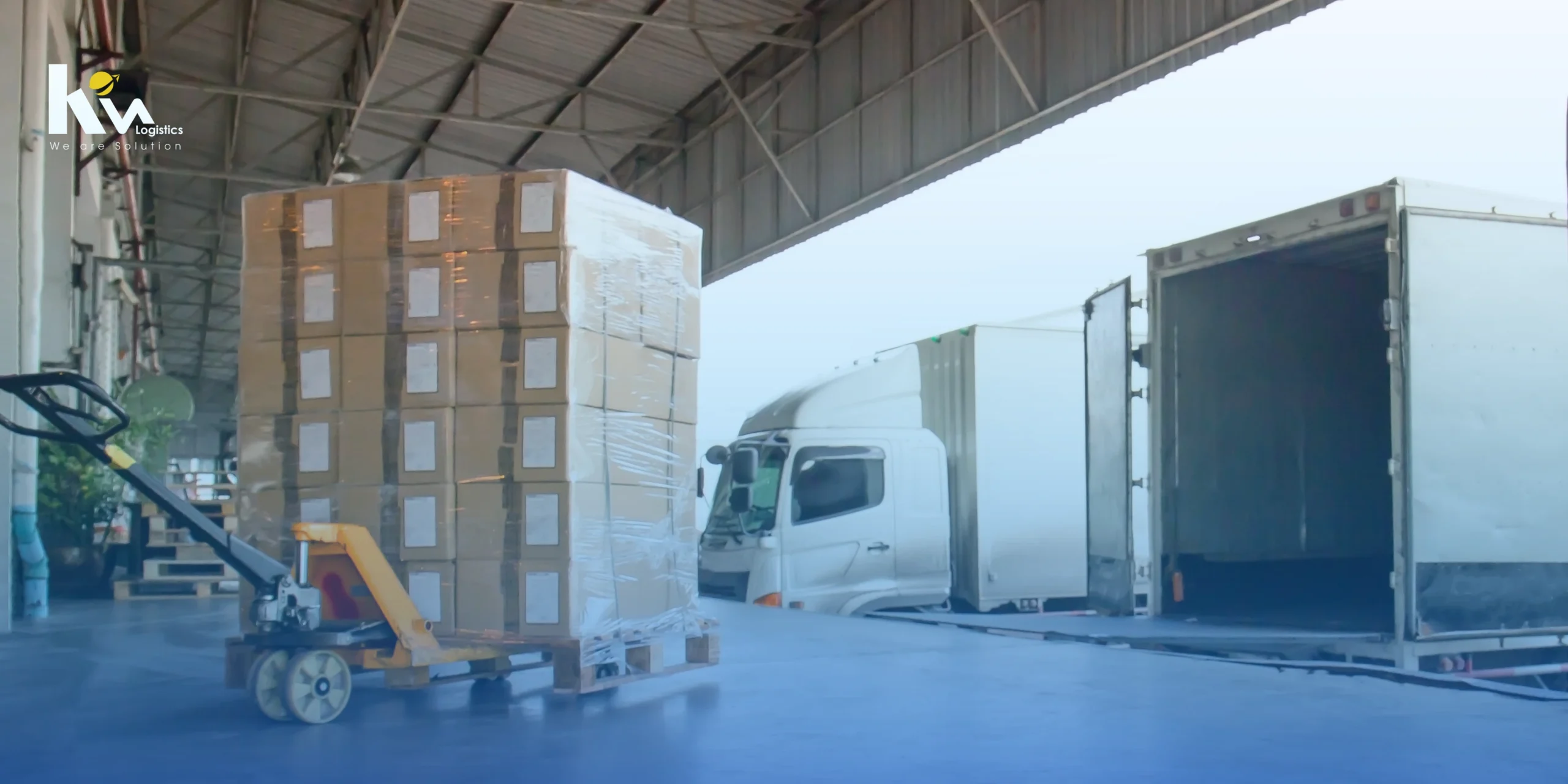
KVN Logistics’ Inland Trucking portfolio includes nationwide transportation connecting ports, warehouses and factories across Northern, Central and Southern Vietnam, together with dedicated options for project and heavy cargo.
Customs Clearance & Documentation
Documentation errors can create delays even when transportation has been arranged correctly.
Incorrect HS codes, inconsistent invoice and packing-list information, missing permits or late document preparation may result in customs delays, missed cut-offs or additional costs.
Documentation should therefore be reviewed in parallel with transport planning, particularly for machinery, medical devices, chemicals, industrial materials and goods subject to specialized inspections.
KVN Logistics’ Customs & Docs services cover customs clearance, import-export documentation review and related compliance support.
Air Freight
Air freight is typically considered for:
- Urgent shipments;
- High-value cargo;
- Samples;
- Critical spare parts;
- Production components;
- Time-sensitive deliveries.
Although the cost per kilogram is higher than sea freight, air transportation may be economically justified when the financial impact of a production stoppage or missed delivery deadline is greater than the additional freight cost.
KVN Logistics provides Air Freight solutions for time-critical, priority and specialized cargo requirements.
Warehousing & Supply Chain
A warehouse is no longer simply a place where goods wait before delivery.
Modern warehousing can support:
- Inventory control;
- Inbound and outbound planning;
- Order preparation;
- Packaging;
- Distribution;
- Cargo visibility;
- Integration with transport operations.
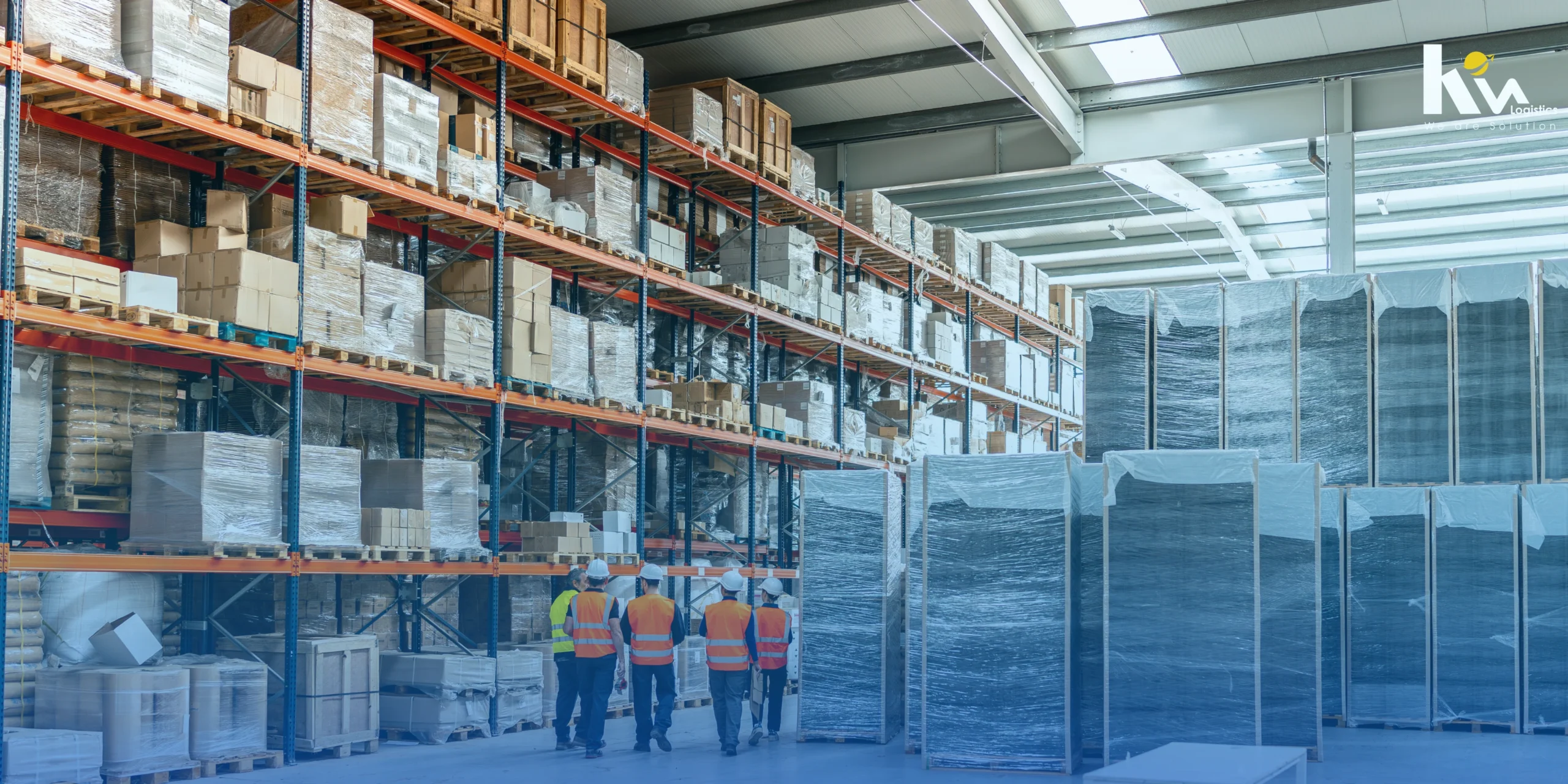
Connecting Warehousing & Supply Chain operations with transportation planning can help businesses respond more effectively when factory schedules, vessel schedules and customer delivery requirements do not perfectly align.
5. Logistics Costs Remain One of Vietnam’s Biggest Challenges
Despite the industry’s rapid expansion, logistics costs remain relatively high.
Vietnam’s logistics costs are currently estimated at approximately 16–17% of GDP.
For individual businesses, however, total logistics cost extends far beyond the international freight rate.
It may include:
- International freight;
- Inland trucking;
- Terminal handling charges;
- Documentation charges;
- Warehousing;
- Demurrage and detention;
- Container-related charges;
- Inventory financing costs;
- Additional costs caused by schedule changes;
- Failed delivery or production-delay costs.
Therefore:
The lowest ocean freight rate does not necessarily create the lowest total logistics cost.
For example, a cheaper routing involving multiple transshipment points may result in a longer transit time, greater schedule uncertainty and higher inventory requirements.
Businesses should therefore compare logistics options based on total logistics cost, lead time and operational reliability, rather than comparing freight quotations alone.
For current short-term market developments, businesses can also follow KVN Logistics’ Logistics Market Update August 2026, which tracks freight rates, schedules, blank sailings, surcharges and booking risks by trade lane.
6. Five Trends Shaping Vietnam Logistics from 2026 to 2035
6.1. From Standalone Transportation to Integrated Logistics Solutions
Manufacturers increasingly need logistics partners capable of understanding the entire supply chain rather than handling individual transport stages independently.
Sea Freight, Inland Trucking, documentation, warehousing and destination delivery need to operate according to the same timeline.
This is especially important for companies with:
- Continuous production;
- Regular raw-material imports;
- Fixed customer delivery commitments;
- Project-based machinery shipments;
- Complex import-export documentation.
The competitive advantage will increasingly come from coordination, not simply transportation capacity.
6.2. Greater Multimodal Connectivity
Road, sea, inland waterways, rail and air each have different strengths.
Future logistics optimization will increasingly involve combining transport modes according to:
- Cargo characteristics;
- Lead-time requirements;
- Cost;
- Origin and destination;
- Infrastructure;
- Risk tolerance.
Vietnam’s national logistics strategy specifically calls for more synchronized logistics and transport infrastructure, stronger regional connectivity and development across road, waterway, rail and air transport.
KVN Logistics also provides Railway Freight and multimodal solutions that can be evaluated alongside sea and road transportation for suitable shipments.
6.3. Digital Logistics and Real-Time Visibility
Digital transformation in logistics goes far beyond replacing paper documents.
Importers, exporters and manufacturers increasingly want answers to questions such as:
- Where is the shipment now?
- Has the ETD or ETA changed?
- Has the container gated in?
- What is the customs status?
- How much inventory remains?
- What is the actual cost of each shipment?
- Is the shipment likely to affect production?
Under Vietnam’s Logistics Services Development Strategy, the Government aims for 80% of logistics service providers to use digital transformation solutions by 2035.
This indicates that data visibility and digital coordination will increasingly become part of normal logistics service expectations rather than optional technology features.
6.4. Green Logistics Is Moving from Trend to Operational Requirement
Green logistics is increasingly connected with broader supply chain decarbonization requirements.
Potential approaches include:
- Optimizing transportation distances;
- Improving container utilization;
- Reducing empty trips;
- Optimizing inventory;
- Selecting more suitable transport modes;
- Digitalizing documentation;
- Improving warehouse efficiency;
- Measuring and managing logistics-related emissions.
Vietnam’s national logistics strategy explicitly identifies digital and green transition, emission reduction and green energy adoption as key priorities for the sector.
For businesses participating in international supply chains, logistics efficiency and environmental performance are likely to become increasingly interconnected.
6.5. More Industry-Specific Logistics Solutions
Not every cargo should be handled under the same logistics model.
A shipment of plastic resin has different operational requirements from:
- Medical equipment;
- Pharmaceutical or cosmetic ingredients;
- Industrial machinery;
- Solar-energy equipment;
- Oversized project cargo.
Industry-specific logistics may require deeper understanding of:
- HS-code classification;
- Product characteristics;
- Storage requirements;
- Container selection;
- Loading and securing;
- Specialized inspections;
- Import documentation;
- Lifting requirements;
- Delivery conditions at factories or project sites.
The ability to understand the cargo and the customer’s operating environment reduces the gap between logistics design and real-world execution.
7. Vietnam’s Logistics Strategy for 2025–2035
Decision No. 2229/QD-TTg, issued on October 9, 2025, approved Vietnam’s Logistics Services Development Strategy for 2025–2035, with a vision to 2050.
By 2035, Vietnam aims to achieve:
- Logistics value added equivalent to 5–7% of GDP;
- Average logistics industry growth of 12–15% per year;
- Logistics outsourcing rates of 70–80%;
- Logistics costs reduced to 12–15% of GDP;
- A position among the world’s top 40 economies in the World Bank’s Logistics Performance Index;
- 80% of logistics service providers using digital transformation solutions;
- At least five modern international-standard logistics centers.
The strategy also emphasizes infrastructure investment, regional connectivity, technological innovation, digital transformation, green logistics and the development of integrated 4PL and 5PL services.
By 2050, the Government targets logistics costs of approximately 10–12% of GDP and 100% adoption of digital transformation solutions among logistics service providers.
This suggests that the period beginning in 2026 represents more than a simple expansion in market volume.
It is also a period in which the structure and operating model of Vietnam’s logistics industry are expected to evolve significantly.
8. What Should Importers, Exporters and Manufacturers Prepare For?
1. Manage Total Logistics Cost, Not Freight Rates Alone
Businesses should calculate:
International freight + Inland transportation + Local charges + Warehousing + Inventory cost + Delay risks + Documentation costs.
A cheaper freight quotation can become more expensive once the complete supply chain is considered.
2. Connect Logistics Planning with Production Planning
For imported raw materials and production components, ETA should be connected directly with inventory levels and production requirements.
Transport planning should therefore involve procurement, production, logistics and warehouse teams rather than operating as an isolated function.
3. Review Documentation Before Cargo Is Ready
HS codes, permits, certificates of origin and specialized inspection requirements should ideally be reviewed before booking or factory loading.
Early documentation review can reduce the risk of cargo reaching the port before the necessary paperwork is ready.
4. Maintain Contingency Options
Important shipments should not depend entirely on a single vessel, carrier or transport mode.
Depending on urgency and cargo characteristics, contingency planning may include:
- Alternative vessel schedules;
- Different carriers;
- Different ports;
- Rail alternatives;
- Air freight for critical components;
- Temporary warehousing.
5. Choose Logistics Partners Based on Problem-Solving Capability
A freight forwarder does more than provide transportation quotations.
For complex supply chains, the logistics provider should understand:
- Required delivery dates;
- Cargo characteristics;
- Cost targets;
- Documentation requirements;
- Production constraints;
- Possible operational risks.
The relevant question becomes not simply:
“What is the freight rate?”
but:
“Which logistics solution provides the best balance of cost, time and operational reliability?”
9. KVN Logistics and the Solution Mindset
As logistics chains become more complex, KVN Logistics approaches each shipment through a Solution Mindset — beginning with the customer’s actual operational requirements rather than applying one standard transportation model.
KVN’s core capabilities focus on three areas:
Sea Freight – FCL, LCL and international ocean freight solutions designed around cargo characteristics, routing, cost and required lead time.
Inland Trucking – connecting ports, warehouses, factories and industrial zones across domestic logistics chains.
Customs Clearance & Documentation – supporting import-export documentation, customs procedures and compliance requirements to reduce operational risks at critical handover points.
Depending on shipment requirements, KVN Logistics can also assess and coordinate Air Freight, Railway Freight, multimodal transportation, warehousing and Project Cargo solutions through its wider logistics ecosystem.
The objective is not simply to move cargo from Point A to Point B.
It is to identify the right balance between:
Cost → Transit Time → Cargo Safety → Compliance → Operational Control
KVN LOGISTICS – WE ARE THE SOLUTION
FAQ: Vietnam Logistics Market 2026
How large is the Vietnam logistics market?
Vietnam’s domestic logistics market is currently valued at approximately USD 45–50 billion, according to the Ministry of Industry and Trade at the Vietnam Logistics Forum 2025.
How fast is Vietnam’s logistics industry growing?
Vietnam’s logistics industry has recorded growth of approximately 14–16% annually in recent years. Under the 2025–2035 national strategy, the target average annual growth rate is 12–15%.
How high are logistics costs in Vietnam?
Vietnam’s logistics costs are currently estimated at approximately 16–17% of GDP. The national target is to reduce this ratio to 12–15% by 2035 and 10–12% by 2050.
What are the main logistics trends in Vietnam from 2026 onward?
Major trends include integrated logistics, multimodal transportation, digital supply chain visibility, green logistics, smarter warehousing and more specialized logistics solutions for specific industries.
Why does Vietnam have strong logistics growth potential?
Vietnam combines strong manufacturing and trade activity with a strategic Asia-Pacific location and extensive international trade integration. Total merchandise trade reached approximately USD 549.69 billion in the first half of 2026, while Vietnam currently participates in and implements 17 FTAs.
Should businesses choose Sea Freight or Air Freight?
Sea Freight is generally more suitable for high-volume, heavy or less time-sensitive shipments, while Air Freight is better suited to urgent, high-value or production-critical cargo.
The right choice depends on cargo value, volume, weight, required delivery date and total logistics cost.
What is Door-to-Door Logistics?
Door-to-Door Logistics is an integrated solution that coordinates cargo movement from the original pickup location to the final delivery point.
Depending on the agreed scope, this may include factory pickup, Inland Trucking, customs clearance, international freight, warehousing and final delivery.
Conclusion
Vietnam’s logistics market in 2026 presents significant growth opportunities, but the next stage of development will not be determined by shipment volume alone.
The ability to reduce logistics costs, improve connectivity, digitalize operations, support greener supply chains and design solutions around specific industries will increasingly shape competitiveness for both logistics providers and import-export businesses.
With a domestic logistics market currently valued at approximately USD 45–50 billion, double-digit recent growth and a national development strategy extending through 2035 and 2050, logistics is becoming an increasingly strategic part of Vietnam’s economic and supply chain competitiveness.
For businesses, the key question is therefore shifting from:
“How much does transportation cost?”
to:
“Which logistics solution will make the entire supply chain more efficient?”
KVN LOGISTICS – WE ARE THE SOLUTION