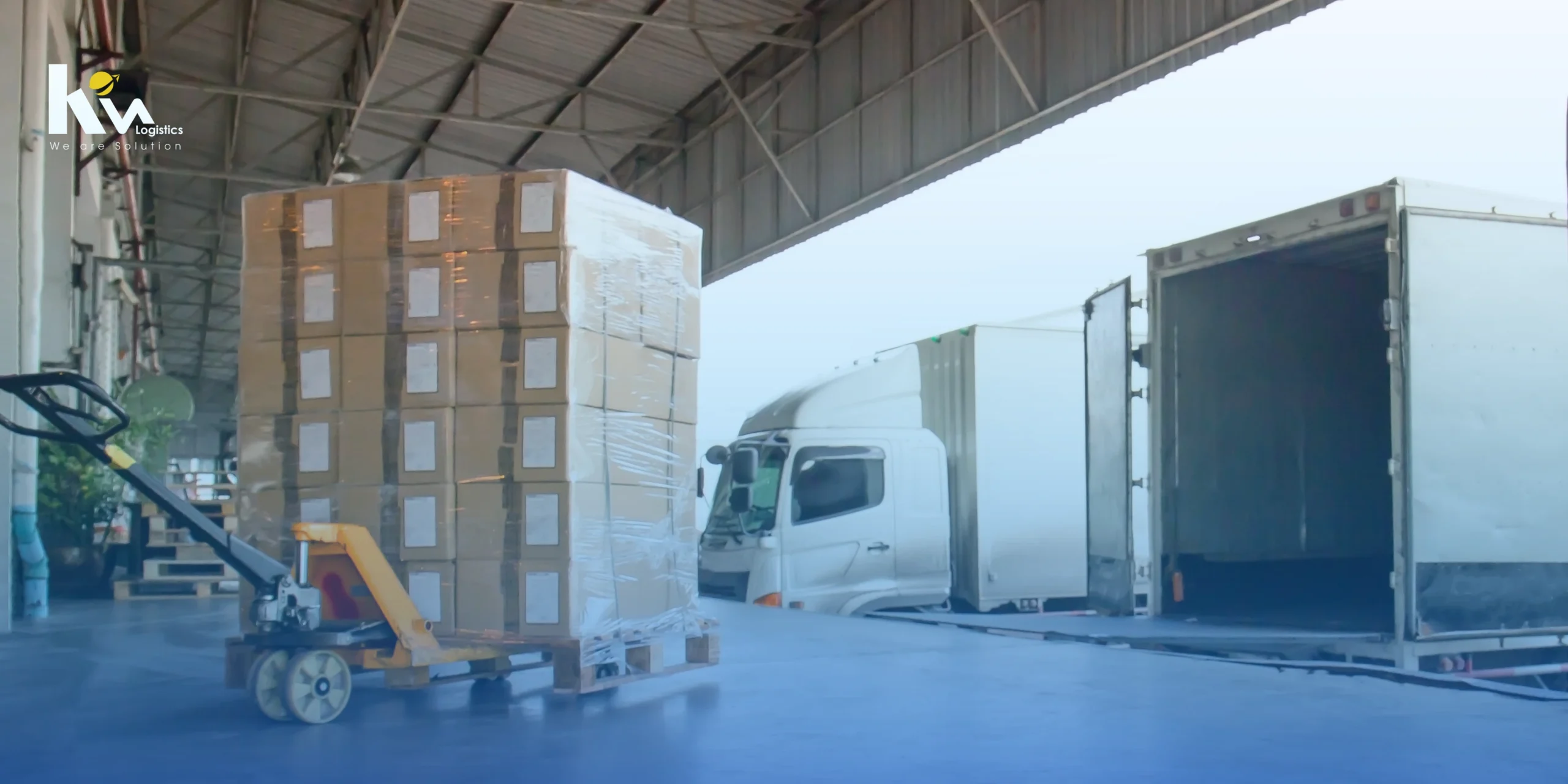


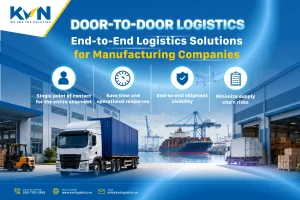
For manufacturing companies, logistics involves much more than moving a container from one port to another.
A single shipment may require factory pickup, container positioning, cargo loading, export documentation, customs clearance, international transportation, import procedures, warehousing and final delivery to a factory, distribution centre or project site.
When these activities are handled separately, even a small delay at one stage can affect the entire supply chain.
A truck arriving late may cause the container to miss the vessel cut-off. An incorrect document may delay customs clearance. A booking may change without the factory being informed. Cargo may arrive at the destination port before the receiving warehouse is ready.
These coordination gaps are why many manufacturers are shifting from individual freight services to integrated Door-to-Door Logistics solutions.
Door-to-door logistics connects the shipment’s entire journey from the original collection point to the final delivery location. Depending on the agreed scope and Incoterms, the service may include inland trucking, customs clearance, international freight, warehousing, cargo tracking, insurance and last-mile delivery.
KVN Logistics defines Door-to-Door as an integrated solution connecting cargo collection, inland transport, customs clearance, international shipping, warehousing and final delivery through sea, air, road and rail transportation.
Quick Answer: What Is Door-to-Door Logistics?
Door-to-door logistics is an end-to-end transportation solution in which a logistics provider coordinates the movement of goods from the shipper’s premises to the consignee’s final delivery location.
The collection point may be:
- A manufacturing plant
- A supplier’s warehouse
- A raw material warehouse
- An industrial zone
- A consolidation warehouse
- A bonded warehouse
- A container freight station
The final destination may be:
- The buyer’s warehouse
- A production facility
- A distribution centre
- A construction or project site
- A retail warehouse
- An installation location
- An e-commerce fulfilment centre
A door-to-door solution may combine several services under one operational plan:
Factory pickup → Inland trucking → Export customs clearance → International freight → Import customs clearance → Destination trucking → Final delivery
The main advantage is not simply convenience. It is the ability to manage multiple logistics stages through one coordinated plan and one primary point of contact.
Does Door-to-Door Shipping Include Duties and Taxes?
Door-to-door shipping does not automatically mean that import duties, VAT or all destination charges are included.
The actual scope depends on:
- The agreed Incoterms
- The freight quotation
- The responsibilities of the exporter and importer
- Customs regulations in the destination country
- Whether the shipment is arranged under DAP, DDP, EXW, FCA, FOB or another trade term
Before confirming a shipment, businesses should clarify:
- The exact pickup and delivery locations
- Who handles export customs clearance
- Who handles import customs clearance
- Whether duties and taxes are included
- Whether origin and destination trucking are included
- Whether terminal handling and local charges are included
- The applicable container free time
- Which possible surcharges are excluded
This distinction is especially important when comparing quotations from different logistics providers.
Why Manufacturing Companies Need Door-to-Door Logistics
Manufacturing logistics is closely connected to production schedules, raw material planning, machinery utilisation and customer delivery commitments.
Unlike an isolated commercial shipment, delays in a manufacturing supply chain may affect an entire production line.
1. Keeping Raw Materials Aligned With Production Plans
When raw materials, components or replacement parts arrive late, a factory may be forced to reduce output or temporarily suspend production.
A coordinated door-to-door plan allows manufacturers to monitor:
- Supplier cargo readiness
- Factory pickup schedules
- Container loading times
- Export customs clearance
- Vessel or flight schedules
- Estimated arrival dates
- Import customs clearance
- Final delivery appointments
This visibility helps procurement, production and warehouse teams prepare for the cargo before it arrives.
2. Reducing Responsibility Gaps Between Service Providers
When every transport stage is assigned to a different provider, the shipper may need to communicate separately with:
- A trucking company
- A freight forwarder
- A customs broker
- A shipping line
- A warehouse operator
- A destination agent
- A final-mile carrier
When a problem occurs, identifying which party is responsible can take considerable time.
With an integrated door-to-door solution, one logistics coordinator manages the handovers between these parties, helping reduce communication gaps and fragmented responsibility.
3. Controlling Total Logistics Costs
A low ocean freight rate does not always result in the lowest total logistics cost.
Manufacturers must also consider:
- Origin trucking
- Destination trucking
- Container loading and unloading
- Customs declaration fees
- Documentation charges
- Terminal handling charges
- Delivery order fees
- Port and warehouse charges
- Demurrage and detention
- Inspection fees
- Cargo insurance
- Final delivery expenses
Businesses can review KVN Logistics’ guide to hidden logistics surcharges, including THC, CIC, D/O fees, storage, demurrage and PSS when analysing the full landed logistics cost rather than comparing the main freight rate alone.
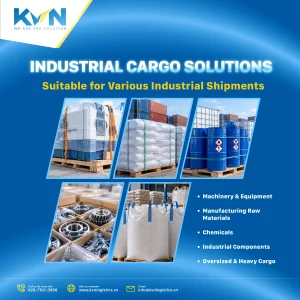
4. Supporting Machinery and Industrial Cargo
Industrial machinery often requires more detailed planning than standard consumer cargo.
Depending on the shipment, the logistics plan may require:
- Standard dry containers
- Open-top containers
- Flat-rack containers
- Heavy-duty trucks or trailers
- Cranes and lifting equipment
- Cargo lashing and securing
- Route surveys
- Special permits for oversized transport
- Delivery in multiple phases
- Coordination with installation teams
For oversized, overweight or specialised industrial equipment, businesses should consider a dedicated Heavy Lift and Project Cargo transportation solution.
KVN ProjectCargo covers technical assessment, route planning, specialised transport equipment, port handling, project-site coordination and final delivery for production lines, industrial machinery, energy equipment and infrastructure cargo.
What Does a Door-to-Door Logistics Service Include?
The exact scope varies according to the cargo, origin, destination and Incoterms. However, a complete manufacturing logistics solution normally includes the following stages.
1. Shipment Information Collection
The logistics provider first collects detailed cargo information, including:
- Commodity name and intended use
- Estimated HS code
- Number of packages
- Cargo dimensions
- Gross and net weight
- Total CBM
- Packaging method
- Cargo value
- Pickup and delivery addresses
- Required delivery date
- Incoterms
- Storage or handling requirements
For machinery and industrial equipment, manufacturers should also provide:
- Technical drawings
- Cargo photographs
- Packing diagrams
- Centre-of-gravity information
- Lifting points
- Lashing instructions
- Installation priorities
Accurate information at this stage helps prevent incorrect equipment selection, transport restrictions and unexpected costs.
2. Feasibility Assessment and Route Planning
After reviewing the shipment, the logistics provider evaluates the most suitable transport solution.
The assessment may cover:
- FCL or LCL shipping
- 20-foot or 40-foot containers
- Standard, open-top or flat-rack equipment
- Sea, air, rail or road transportation
- Direct or transshipment services
- Factory loading or warehouse consolidation
- Full-container delivery or cargo deconsolidation
- Temporary storage or phased distribution
Manufacturers should compare more than freight rates. The selected solution must also match the production deadline, cargo risk, loading capacity and receiving conditions.
3. Booking and Equipment Preparation
Once the shipping method is confirmed, the logistics provider arranges space and suitable equipment.
Important booking information includes:
- Estimated time of departure
- Estimated time of arrival
- Cargo closing time
- Documentation cut-off
- VGM cut-off
- Empty-container pickup location
- Container free time
- Booking amendment conditions
- Alternative routes in case of delay or cargo rollover
For production-critical cargo, a backup route may be necessary even when the primary booking has already been confirmed.
4. Factory Pickup and Inland Trucking
Inland trucking connects the factory with the seaport, airport, railway terminal or consolidation warehouse.
Depending on the shipment, the process may include:
- Truck allocation
- Empty-container positioning
- Container condition inspection
- Factory loading coordination
- Container sealing
- VGM arrangement
- Delivery to the export terminal
- Import-container pickup
- Final delivery to the consignee
KVN Logistics provides Inland Trucking services connecting ports, warehouses, factories and industrial zones across northern, central and southern Vietnam. The service also includes inland transport solutions for heavy equipment and project cargo.
5. Export Documentation and Customs Clearance
Before the customs declaration is submitted, the shipping documents should be reviewed for consistency.
Common issues include:
- Incorrect cargo descriptions
- Mismatched package quantities
- Inconsistent weights
- Incorrect shipper or consignee information
- Missing licences or certificates
- Unclear HS-code classification
- Differences between the invoice, packing list and shipping instructions
Once the documents are ready, the customs process may include:
- Electronic customs declaration
- Document submission
- Physical inspection coordination
- Specialised inspection procedures
- Customs release
- Export-terminal coordination
Businesses requiring support can refer to KVN Logistics’ Customs & Docs services, which cover customs brokerage, import-document review and import–export documentation.
6. International Transportation
The main transport mode should be selected according to cargo volume, required lead time, cost and handling requirements.
Sea Freight
Sea Freight is generally suitable for:
- Full-container-load cargo
- Less-than-container-load cargo
- Raw materials
- Finished products
- Industrial machinery
- Bulk cargo
- Oversized and project cargo
KVN Logistics’ current Sea Freight portfolio includes FCL, LCL, Master Consolidation, bulk cargo and Project Cargo solutions.
Air Freight
Air Freight may be more suitable for:
- Urgent spare parts
- Production-critical components
- Samples
- High-value goods
- Time-sensitive deliveries
- Cargo where delay could interrupt production
Air freight is more expensive per unit than sea freight, but it may still be economically justified when the cost of a production stoppage is higher than the additional freight expense.
KVN Logistics provides time-critical air freight solutions connecting origin and destination through major airline networks.
Railway and Multimodal Freight
Railway Freight can be considered for domestic and cross-border industrial shipments requiring relatively stable schedules and balanced transport costs.
A multimodal solution may combine:
- Rail and road
- Sea and road
- Rail and sea
- Air and road
KVN Logistics currently provides domestic and international rail services as well as multimodal combinations designed to balance cost, transit time and route flexibility.
7. Import Customs Clearance and Destination Handling
Import procedures should be reviewed before the shipment departs from the origin country.
Waiting until the cargo arrives may result in:
- Port storage
- Container demurrage
- Container detention
- Delayed production
- Additional inspections
- Documentation amendment fees
Destination handling may include:
- Arrival notice management
- Import-document review
- Customs declaration
- Duties and tax coordination
- Delivery order collection
- Port or terminal handling
- Specialised inspection
- Container release
- Destination trucking
The importer, exporter, freight forwarder and destination customs broker should agree on responsibilities before shipment departure.
8. Final Delivery and Shipment Completion
After customs release, the cargo is transported to the agreed delivery point.
Final delivery may involve:
- Factory delivery appointments
- Warehouse receiving schedules
- Local truck restrictions
- Crane and forklift arrangements
- Full-container delivery
- Container unloading
- Empty-container return
- Proof of delivery
- Cargo-condition reporting
- Cost reconciliation
For industrial projects, final delivery may need to follow the installation sequence rather than the order in which the containers arrive.
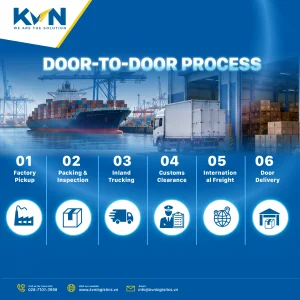
Standard Door-to-Door Logistics Process
A typical door-to-door shipment can be organised into eight steps.
Step 1: Define the Shipping Requirements
The shipper provides cargo specifications, pickup and delivery locations, Incoterms, required delivery time and special handling requirements.
Step 2: Review Feasibility
The logistics provider assesses the route, transport mode, equipment requirements, customs conditions and expected lead time.
Step 3: Prepare a Complete Quotation
The quotation should show:
- Origin costs
- Main international freight
- Destination costs
- Customs-clearance scope
- Inland trucking
- Warehousing
- Included and excluded charges
Step 4: Confirm Booking and Prepare Documents
Booking arrangements and document preparation should be completed in parallel to prevent cargo from being ready before the shipment can legally proceed.
Step 5: Collect Cargo and Complete Export Customs Procedures
The truck or container is sent to the factory, the cargo is loaded and sealed, customs procedures are completed and the shipment is delivered to the export terminal.
Step 6: Track the International Movement
The manufacturer should receive updates on:
- Actual departure
- Estimated arrival
- Transshipment
- Schedule changes
- Port congestion
- Possible delays
- Required destination documents
Step 7: Complete Import Clearance and Final Delivery
The destination agent coordinates customs release, container pickup and delivery to the warehouse, factory or project site.
Step 8: Confirm Delivery and Review Performance
After delivery, the parties review:
- Proof of delivery
- Actual lead time
- Additional costs
- Cargo condition
- Empty-container return
- Opportunities for future optimisation
Documents Commonly Required for Door-to-Door Shipping
The exact documentation depends on the commodity, origin, destination and applicable regulations.
| Document category | Common documents | Main purpose |
|---|---|---|
| Commercial documents | Sales Contract, Purchase Order, Commercial Invoice | Confirm transaction details, value and trade terms |
| Packing documents | Packing List, package breakdown | Show quantity, dimensions, weight and packaging |
| Transport documents | Bill of Lading, Sea Waybill, Air Waybill | Confirm cargo receipt and transportation |
| Origin documents | Certificate of Origin | Support origin verification and tariff treatment |
| Customs documents | Customs declaration, HS code information, import or export licence | Support customs procedures |
| Technical documents | Catalogue, datasheet, model and product photographs | Explain cargo specifications and intended use |
| Specialised documents | MSDS, dangerous goods declaration, quarantine certificate | Support regulated or special cargo |
| Container documents | VGM, seal number, loading report | Confirm container weight and loading status |
| Insurance documents | Insurance Certificate or Policy | Confirm cargo-insurance coverage |
| Delivery documents | Delivery Order and Proof of Delivery | Support cargo release and final-delivery confirmation |
The cargo name, model, package quantity, weight, shipper and consignee details should be consistent across the commercial invoice, packing list, customs declaration and transport document.
The Role of Trucking in Door-to-Door Logistics
Trucking may represent only a small part of the shipment’s total distance, but it often determines whether the cargo meets the vessel, flight or rail cut-off.
Export-Side Trucking
The transport plan must coordinate:
- Empty-container pickup
- Factory loading time
- Loading equipment availability
- Export customs clearance
- Terminal opening hours
- Container cut-off
- Road weight restrictions
- Driver waiting time
If the truck arrives too early, waiting charges may arise. If it arrives too late, the shipment may miss the planned departure.
Import-Side Trucking
At destination, the logistics provider must consider:
- Customs-release timing
- Delivery order availability
- Container free time
- Warehouse receiving capacity
- Unloading time
- Empty-container return deadlines
- Local delivery restrictions
For industrial machinery, destination trucking may also require specialist trailers, cranes, lifting teams and coordination with the factory’s engineering department.
Customs and Documentation: A Critical Part of Lead-Time Control
A successful door-to-door solution requires more than transport capacity. It also requires early customs and document preparation.
Before shipping, businesses should review:
- Estimated HS-code classification
- Product import and export policies
- Applicable duties and taxes
- Certificate-of-origin requirements
- Import licences
- Quality inspection requirements
- Quarantine procedures
- Labelling regulations
- Dangerous goods requirements
- Rules for used machinery
- Product-specific permits
Early review allows missing documents or compliance issues to be resolved before the cargo reaches the port.
Industrial Cargo Case: Coordinating 160 Containers of Machinery
For a project involving dozens or hundreds of machinery containers, the main challenge is not simply securing enough vessel space.
The logistics provider must coordinate:
- Supplier production schedules
- Cargo-readiness dates
- Container allocation
- Booking schedules
- Shipment batches
- Customs documents
- Container and seal numbers
- Vessel departures
- Port arrivals
- Factory delivery schedules
- Installation priorities
- Empty-container returns
- Centralised status reporting
In the project KVN Logistics Handles 160 Containers of Industrial Machinery Cargo on the China–Vietnam Route, the value of the logistics solution was not limited to moving individual containers. It depended on coordinating multiple shipment stages as one overall industrial logistics plan. The project is also listed among KVN Logistics’ current English content and operational cases.
Several principles are particularly important for large industrial shipments.
Divide the Project Into Delivery Phases
All equipment should not arrive at the same time when the project site lacks sufficient storage, unloading or installation capacity.
Delivery batches should follow the construction and installation schedule.
Link Containers to Equipment Categories
Each container should be connected to:
- An equipment list
- An installation area
- A production line
- A project phase
- An unloading priority
This reduces the risk of equipment being delivered or unloaded in the wrong sequence.
Confirm Factory Receiving Capacity
Before containers leave the port, the project team should confirm:
- Truck arrival times
- Crane availability
- Unloading personnel
- Temporary storage areas
- Engineering supervision
- Installation sequence
Control Free Time and Empty-Container Returns
Large container volumes can generate significant demurrage and detention costs when the receiving site cannot unload and return containers on schedule.
Maintain a Central Shipment Report
The report should show the status of every container, such as:
- Cargo ready
- Container loaded
- Export customs cleared
- Vessel departed
- In transit
- Arrived at destination port
- Import customs cleared
- Delivered to factory
- Container unloaded
- Empty container returned
Benefits of Door-to-Door Logistics for Manufacturers
One Point of Contact
The manufacturer works with one primary logistics coordinator instead of managing every service provider independently.
Better Lead-Time Visibility
Factory pickup, customs clearance, international freight and final delivery are incorporated into one shipment timeline.
Greater Cost Transparency
The business can evaluate the total cost from the pickup point to the final delivery point rather than focusing only on international freight.
Lower Risk of Storage and Container Charges
Better coordination between transport schedules, documents and receiving capacity helps reduce avoidable port storage, demurrage and detention.
Flexibility Across Cargo Types
Door-to-door logistics can be designed for:
- LCL shipments
- FCL shipments
- Air cargo
- Railway cargo
- Machinery and equipment
- Project cargo
- Oversized cargo
- Warehouse and distribution requirements
Easier Market Expansion
Manufacturers do not need to build their own complete logistics network in every export market. A forwarder’s destination network can support local customs, transportation and final-delivery coordination.
Costs to Clarify in a Door-to-Door Quotation
A transparent quotation should separate costs by shipment stage.
Origin Costs
- Factory pickup
- Empty-container positioning
- Truck waiting time
- Container loading
- Lifting and handling
- Export customs clearance
- Export documentation
- Terminal handling
- Specialised inspection
Main Freight
- Ocean freight
- Air freight
- Railway freight
- Fuel surcharges
- Peak-season surcharges
- Special-equipment charges
- Cargo insurance
Destination Costs
- Delivery order
- Destination terminal handling
- Destination-agent handling
- Import customs clearance
- Duties and VAT
- Specialised inspection
- Port or warehouse charges
- Final inland trucking
- Scheduled-delivery charges
- Unloading equipment
Possible Additional Charges
- Demurrage
- Detention
- Storage
- Document amendments
- Customs inspection
- Cargo scanning
- Truck waiting time
- Failed delivery
- Booking changes
- Route changes
The best door-to-door quotation is not always the cheapest quotation. It is the quotation that clearly defines the service scope, responsibilities, conditions and potential additional costs.
How to Choose a Door-to-Door Logistics Provider
Manufacturing companies should evaluate a logistics partner based on more than freight rates.
Understanding of the Cargo
The provider should understand the commodity, packaging, technical requirements and production impact of the shipment.
Multimodal Capability
The logistics company should be able to evaluate sea, air, road and rail options rather than offering only one fixed transport method.
Customs and Documentation Expertise
Customs capability is particularly important for machinery, chemicals, raw materials, equipment and regulated products.
Destination Network
A reliable overseas agent network helps support import customs clearance, local delivery and communication with the consignee.
Cost Transparency
The provider should clearly explain local charges, container free time, customs scope and exclusions at both origin and destination.
Communication and Reporting
Before shipment, the business should understand:
- Who manages the shipment
- How often updates will be provided
- How schedule changes are communicated
- How urgent issues are escalated
- How quickly the provider responds to disruptions
Industrial and Project Cargo Experience
For machinery and large projects, the provider’s ability to plan equipment, routes, lifting, documentation and phased delivery may be more valuable than a short-term reduction in freight rates.
KVN Logistics’ Door-to-Door Solutions for Manufacturing Companies
KVN Logistics provides integrated logistics solutions designed around the actual requirements of each business and shipment.
The service scope can connect:
- Factory pickup
- Inland trucking
- Container positioning
- Customs clearance
- Import–export documentation
- Sea freight
- Air freight
- Railway freight
- Warehousing
- Cargo tracking
- Destination coordination
- Final delivery
KVN Logistics’ service system currently connects international freight, inland transport, customs procedures, warehousing and final delivery under its Door-to-Door model.
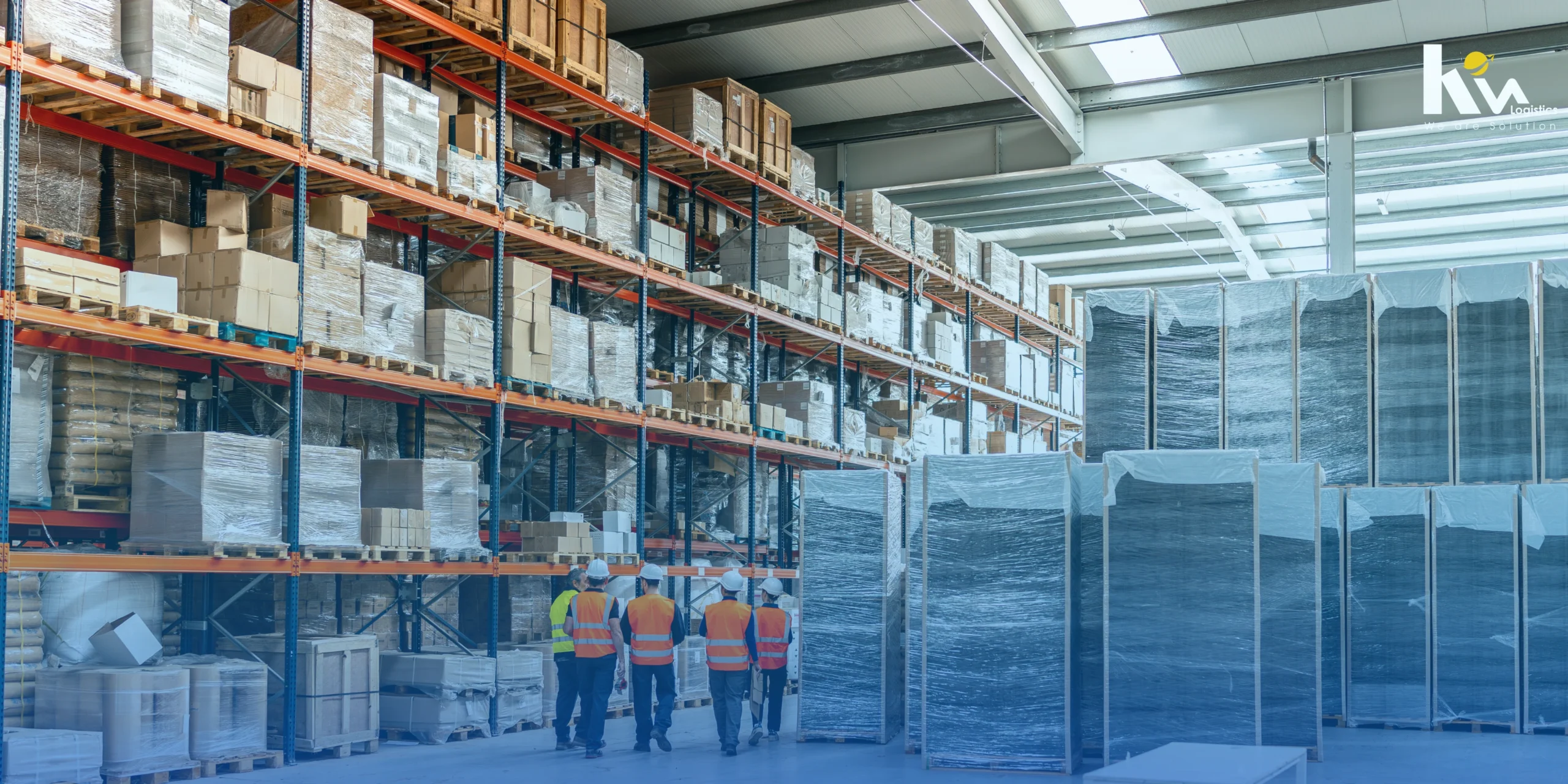
For businesses requiring temporary storage, inventory management, cargo separation, packaging or distribution, KVN Logistics also provides Warehousing & Supply Chain solutions.
The current warehousing portfolio includes an 18,000-square-metre dry warehouse, cargo management and distribution, cargo insurance and tracking, and value-added warehousing services.
Rather than offering only an individual transport stage, KVN Logistics works with manufacturers to develop an integrated logistics plan based on cargo characteristics, production schedules, destination markets and total logistics budgets.
KVN Logistics – We are the Solution.
Hotline: (+84) 28 7101 3998
Email: info@kvnlogistics.vn
Frequently Asked Questions About Door-to-Door Logistics
What is door-to-door logistics?
Door-to-door logistics is an end-to-end service that transports cargo from the shipper’s premises to the consignee’s final delivery location. It may include factory pickup, trucking, customs clearance, international freight, warehousing and final delivery.
Does door-to-door shipping include customs clearance?
It can include customs clearance, but the scope must be confirmed in the quotation. Some services cover export clearance only, while others include both export and import customs coordination.
Are import duties included in door-to-door shipping?
Not automatically. Duties, VAT and destination taxes depend on the agreed Incoterms and quotation. They are more likely to fall under the seller’s responsibility in a DDP transaction than in a DAP transaction.
What cargo is suitable for door-to-door logistics?
Door-to-door logistics can be used for raw materials, components, finished products, machinery, industrial equipment, LCL cargo, full containers, air cargo and project shipments.
How is the cost of door-to-door logistics calculated?
The cost may include inland trucking, customs clearance, documentation, international freight, origin and destination local charges, warehousing, insurance and final delivery.
Is door-to-door transit time the same as port-to-port transit time?
No. Port-to-port transit time covers only the main international movement between ports.
Door-to-door lead time also includes factory pickup, loading, export clearance, waiting before departure, destination handling, import clearance and final inland delivery. KVN Logistics’ guide to Sea Freight to Europe explains why complete door-to-door lead time is normally longer than the published port-to-port schedule.
What information is required for a door-to-door quotation?
The minimum information normally includes:
- Commodity name
- Cargo quantity
- Package dimensions
- Gross weight
- Total CBM
- Pickup address
- Delivery address
- Required delivery date
- Incoterms
- Preferred transport mode
For machinery and industrial equipment, the shipper should also provide photographs, technical catalogues, drawings and lifting or handling requirements.