

Data updated through August 27, 2026
Vietnam is approaching the 2026 Independence Day holiday amid continued volatility across the global logistics market. Ocean freight rates are moving differently across major trade lanes, global vessel schedule reliability has weakened, weather conditions may affect marine and inland operations, and ports, terminals, warehouses, trucking providers and other logistics stakeholders are preparing individual operating schedules for the holiday period.
For public employees and civil servants, Vietnam’s Independence Day holiday will run for five consecutive days from August 29 through September 2, 2026. The working day of Monday, August 31 was exchanged for Saturday, August 22. Private-sector holiday arrangements may vary depending on each company’s working schedule.
Importantly, Vietnam Customs has confirmed that customs units will maintain duty teams throughout the holiday to support customs procedures, cargo clearance and system-related issues. However, continuous customs coverage does not mean every part of the logistics chain will operate at normal capacity.
For importers, exporters and manufacturers with shipments moving between August 29 and the first week of September, the key question is therefore not simply whether ports or Customs are open.
Businesses need to manage the entire sequence:
Cargo Ready → Trucking → Customs → CY/CFS Cut-off → Vessel Schedule → Holiday Operations → Delivery
A delay at just one point may result in a missed sailing, additional storage, demurrage or detention, truck waiting time, documentation amendments or delivery disruption.
Key Logistics Conditions Businesses Should Watch Before the Holiday
As of August 27, several developments deserve particular attention.
First, the five-day holiday creates an extended period during which staffing levels and operating hours may differ across factories, warehouses, CFS facilities, trucking companies, shipping-line offices, depots and consignees.
Second, Vietnam Customs will maintain operational coverage throughout the holiday, but businesses should still complete customs documentation early, particularly for shipments involving physical inspection, specialized permits, certificates or regulated cargo.
Third, Tan Cang – Cat Lai has already introduced an early container gate-in arrangement for dry export containers linked to vessels arriving during the holiday period. Vessels with ETA from August 29–31 may receive early gate-in from August 26, while vessels with ETA from September 1–3 may receive early gate-in from August 27.
Fourth, global container shipping schedules have become less predictable. Sea-Intelligence reported on August 26 that global schedule reliability fell to 56.4% in July 2026, the lowest level recorded so far this year, while late vessels arrived an average of 6.06 days behind schedule.
Fifth, ocean freight rates remain volatile and increasingly trade-lane specific. Drewry’s World Container Index increased 4% to USD 4,526 per 40-foot container on August 20, primarily driven by higher Transpacific rates.
Finally, marine weather remains another factor to monitor. Vietnam’s National Center for Hydro-Meteorological Forecasting expects wave heights of approximately 3–5 meters across parts of the northern and central East Sea, including the Hoang Sa area, from August 30 through September 5.
Together, these conditions suggest that the holiday should be treated as an operational planning period, rather than simply a five-day business closure.
Ocean Freight Market Update: Rates Are Moving in Different Directions
The container freight market entered late August with a clear divergence between major trade lanes.
According to Drewry’s August 20 assessment, the World Container Index rose for a third consecutive week to USD 4,526 per 40-foot container.
The increase was mainly driven by Transpacific services. Shanghai–New York spot rates increased 9% to USD 9,507 per 40-foot container, while Shanghai–Los Angeles also increased 9% to USD 6,802.
Drewry noted that Transpacific demand remained resilient while carriers continued to manage capacity through blank sailings and capacity reductions.
This does not mean that ocean freight rates are rising uniformly worldwide.
Some Asia–Europe services have shown softer pricing pressure, while U.S.-bound capacity remains more constrained. Intra-Asia freight also requires close monitoring, with Drewry’s Intra-Asia Container Index rising 6% during the same week.
For Vietnamese exporters, the practical conclusion is straightforward:
There is currently no single “global freight-rate trend.”
Rates must be evaluated by:
POL → POD → Carrier → Service → Equipment → Cargo Ready Date → Space Availability
Businesses should therefore avoid delaying bookings purely in expectation of lower rates.
A cheaper quotation may create little value if the selected sailing has weak schedule reliability, multiple transshipment points or insufficient free time.
For Europe-bound cargo, businesses may also refer to KVN Logistics’ guide on Sea Freight to Europe: Transit Time, Costs and Risks when comparing routing, transit time and operational risks.
Schedule Reliability May Be a Bigger Risk Than Freight Rates
One of the most important market developments immediately before the holiday is the deterioration in global liner schedule performance.
Sea-Intelligence’s Global Liner Performance report, released on August 26, showed that global schedule reliability fell by 6.1 percentage points month-on-month to 56.4% in July 2026.
This was not only the lowest level recorded in 2026 but also the lowest level since February 2025.
At the same time, the average delay for late vessel arrivals increased by 0.59 days to 6.06 days, the highest level seen since January 2024.
This matters particularly for shipments with ETDs close to the Independence Day holiday.
If a vessel is delayed by one or two days, the impact may extend beyond the ocean schedule itself.
A shipment may require a new trucking arrangement. Container free time may need to be recalculated. Shipping instructions or Bill of Lading details may require amendment. LCL cargo may miss a consolidation window. A transshipment connection may become tighter. The consignee’s receiving schedule may also need to change.
For time-sensitive shipments, businesses should therefore compare more than ocean freight.
A stronger booking decision should consider:
Freight Rate + ETD + Cut-off + Routing + Transshipment + Reliability + Free Time + Alternative Sailing
The cheapest rate is not always the lowest-cost shipment.
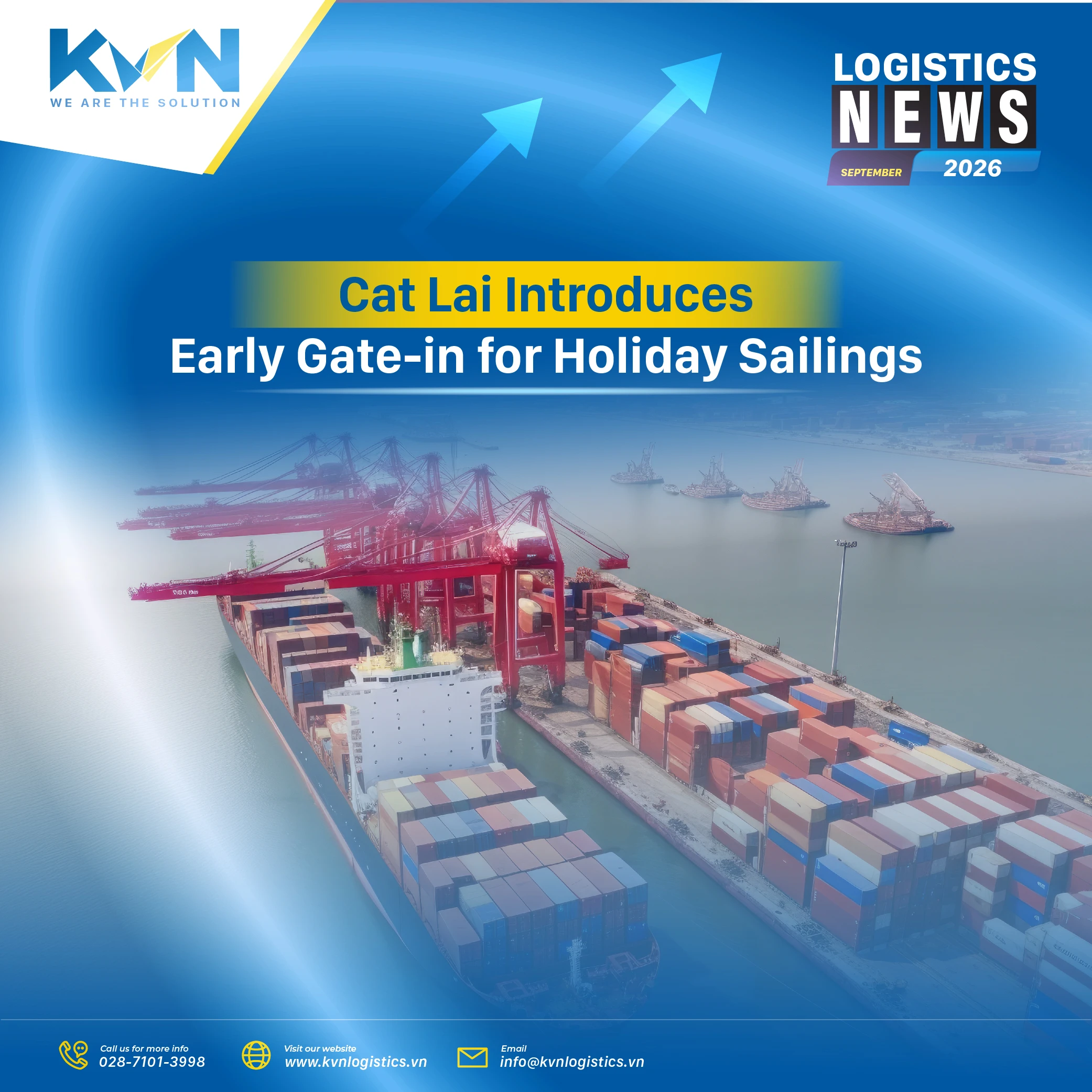
Cat Lai Introduces Early Gate-in for Holiday Sailings
Tan Cang – Cat Lai has announced special cargo-handling arrangements ahead of the Independence Day holiday.
For dry export containers, the terminal is allowing earlier gate-in for vessels with ETA between August 29 and September 3.
Containers linked to vessels with ETA from August 29–31 may enter from August 26, while containers linked to vessels with ETA from September 1–3 may enter from August 27. Early gate-in charges remain subject to terminal regulations.
This creates an important planning opportunity for exporters whose cargo and documentation are already ready.
Instead of keeping containers at the factory until immediately before CY closing, businesses may consider completing loading, customs clearance and terminal gate-in before the holiday begins.
The decision should still be based on the actual vessel schedule, terminal opening time, container free time and total cost.
Businesses should confirm directly:
CY opening → CY closing → VGM cut-off → Customs cut-off → SI cut-off → Vessel ETD
rather than relying only on the scheduled departure date.
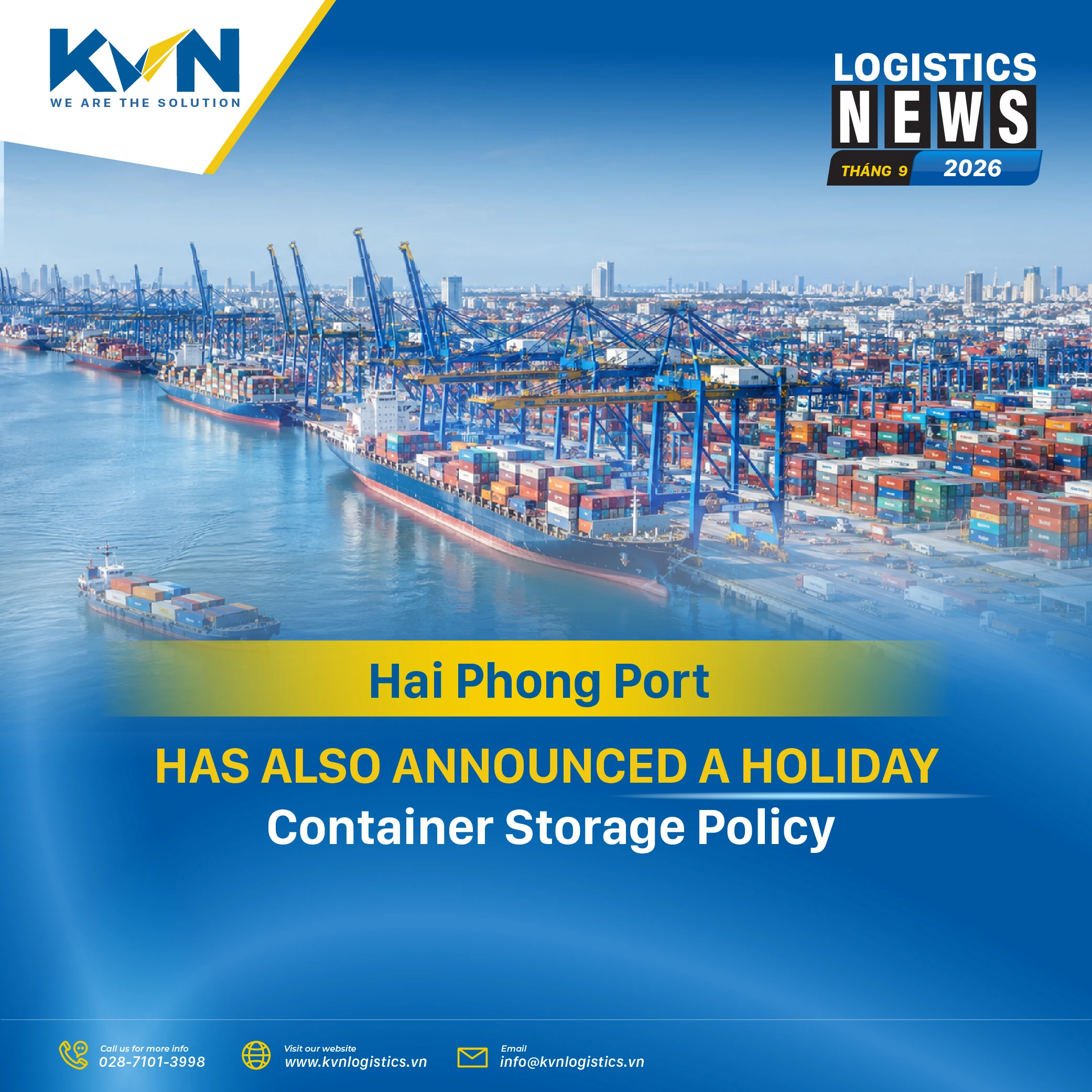
Hai Phong Port Has Also Announced a Holiday Container Storage Policy
In Northern Vietnam, Hai Phong Port published an Independence Day container-storage exemption policy on August 19.
The announcement is another indication that ports are preparing specific operational arrangements for the extended holiday period.
However, businesses shipping through Hai Phong should not assume that all terminals, depots, carriers and warehouses will follow identical operating schedules.
For each shipment, exporters and importers should reconfirm the actual terminal, CY opening and closing times, empty-container arrangements, depot schedules, VGM and documentation deadlines, container storage conditions and local trucking availability.
This is particularly important for cargo moving between industrial zones in Northern Vietnam and the Hai Phong port cluster.
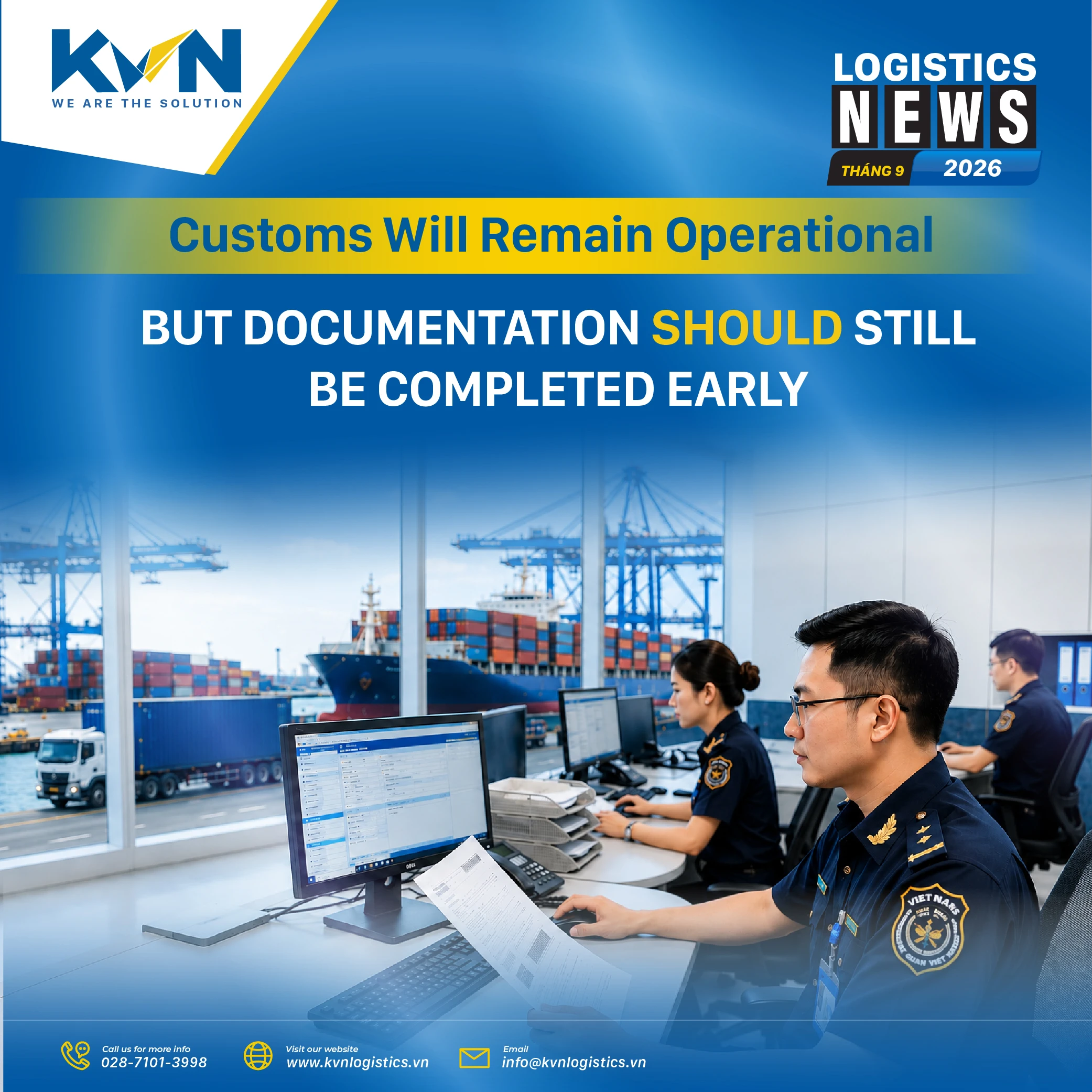
Customs Will Remain Operational — But Documentation Should Still Be Completed Early
Vietnam Customs has instructed relevant customs units to arrange duty teams throughout the five-day holiday.
The objective is to maintain cargo clearance, handle customs procedures, resolve unexpected situations and provide technical support if customs IT systems experience problems.
This is positive for Vietnam’s import-export operations, especially for cargo arriving or departing during the holiday.
However, businesses should not interpret “24/7 Customs duty” as a reason to postpone documentation until September 1 or 2.
Cargo involving specialized inspection, licensing, certificates, complex HS classification, chemicals, machinery, cosmetics ingredients, medical equipment or other regulated products may still depend on additional authorities or supporting documents.
Commercial Invoice, Packing List, HS Code, Certificate of Origin, permits and technical documentation should therefore be reviewed before the holiday wherever possible.
KVN Logistics’ Customs & Documentation team can support businesses in coordinating documentation and customs-clearance requirements alongside the transportation plan, reducing the risk of a shipment being ready physically while documentation remains incomplete.
Inland Trucking Could Become One of the Main Bottlenecks
Holiday logistics risks are not limited to ocean transportation.
Vietnam’s Traffic Police Department has warned that road traffic is expected to increase significantly before, during and after the five-day holiday, particularly on expressways, national highways, ring roads and major gateways around large cities.
For cargo logistics, heavier traffic can reduce trucking schedule accuracy.
The risk becomes more significant when a shipment follows a very tight operating sequence:
Truck arrives at factory → Container loading → Customs → Direct transfer to port → CY closing
Under normal conditions this may be workable.
During a major holiday period, one traffic incident, late production release, delayed loading process or driver shortage may be enough to cause a missed cut-off.
Businesses should therefore build a realistic time buffer into trucking plans.
This is particularly relevant for port–factory connections around Hai Phong, Hanoi and Northern industrial zones, as well as Cat Lai, Ho Chi Minh City, Dong Nai, Ba Ria–Vung Tau and major Southern industrial clusters.
For manufacturers requiring coordinated port–warehouse–factory movements, KVN Logistics can integrate inland transportation with ocean schedules rather than treating trucking as a separate final step.

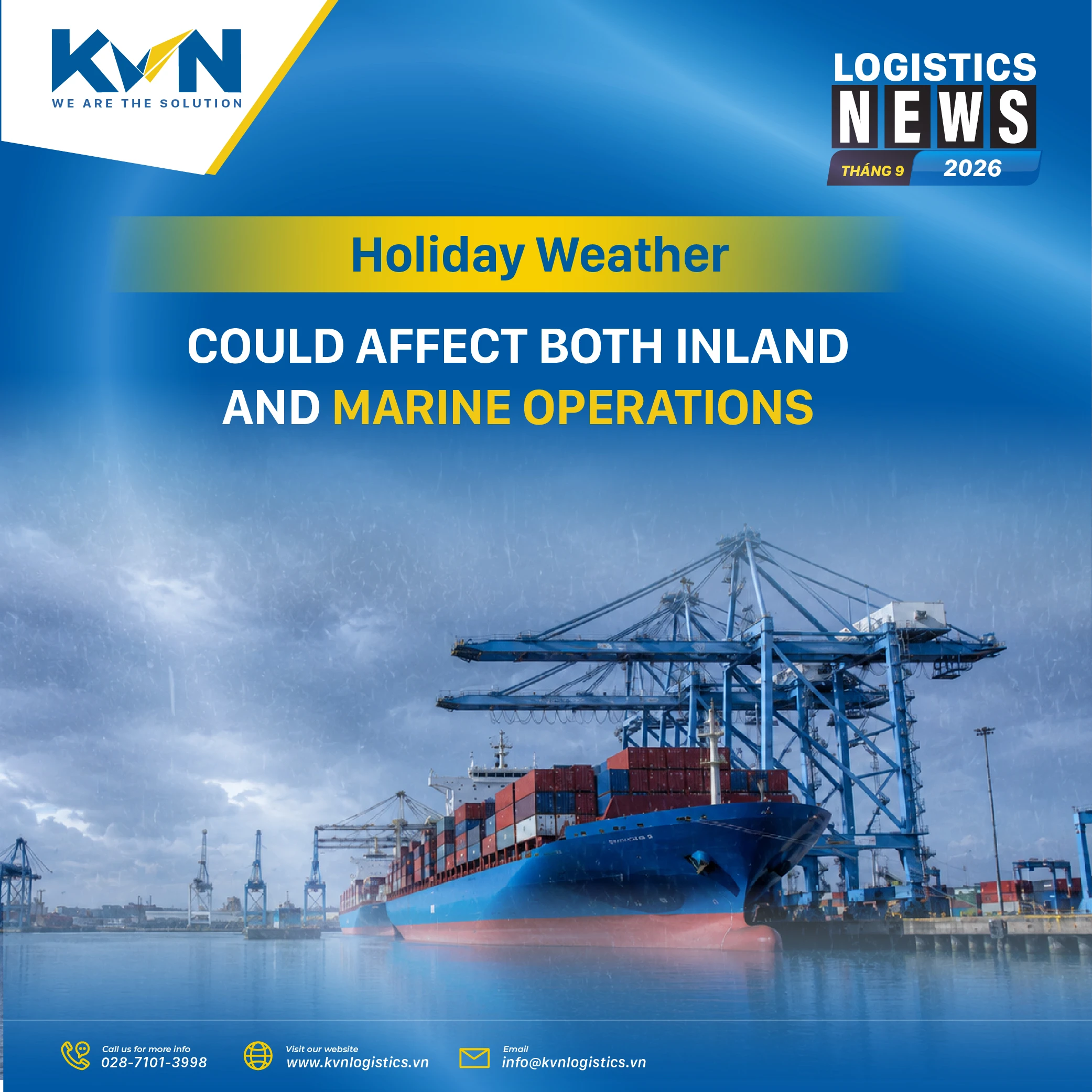
Holiday Weather Could Affect Both Inland and Marine Operations
Weather is another variable that should be incorporated into logistics planning for the August 29–September 2 period.
For Northern Vietnam and Thanh Hoa, the National Center for Hydro-Meteorological Forecasting expects scattered showers and thunderstorms, with moderate rain and locally heavy rain possible from the night of August 29 through August 31.
For logistics operations, heavy rain may affect road speeds, outdoor stuffing and stripping activities, cargo moisture exposure, warehouse handling and loading safety.
From Nghe An to Quang Tri, daytime conditions are expected to remain generally sunny, but moderate rain and locally heavy thunderstorms may occur around the night of August 30 through September 1.
In the Central Highlands and Southern Vietnam, scattered showers and thunderstorms are expected mainly during the late afternoon and evening.
Companies handling moisture-sensitive cargo should pay particular attention to container condition, packaging, tarpaulin protection and loading procedures.
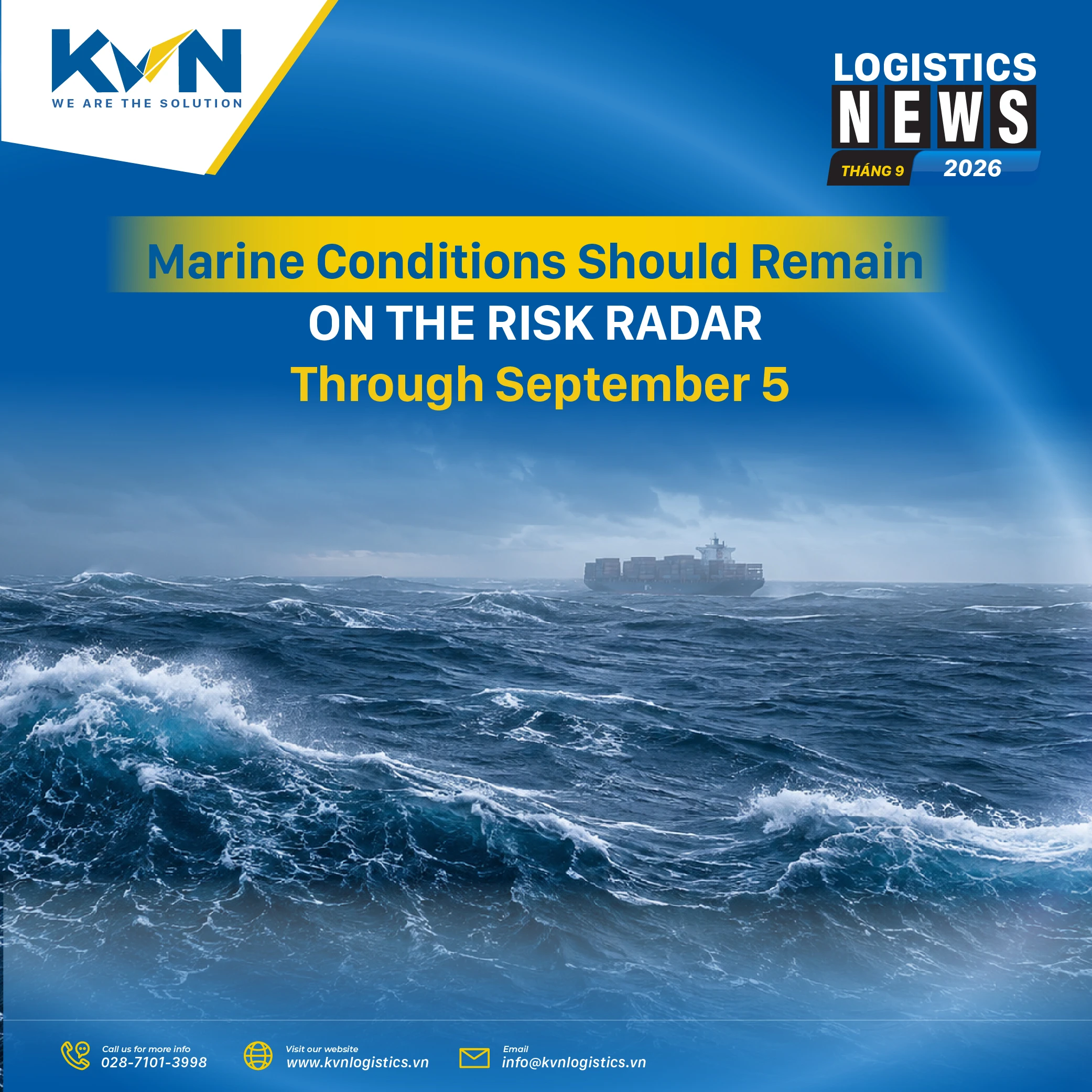
Marine Conditions Should Remain on the Risk Radar Through September 5
The latest wave forecast issued on the morning of August 27 indicates potentially challenging conditions in several offshore areas.
From August 27–29, waves are forecast at approximately 1.5–2.5 meters in the southern Gulf of Tonkin and Gulf of Thailand, 2–3 meters from southern Quang Tri to Quang Ngai and around Hoang Sa, and 2–4 meters across several areas of the East Sea.
From August 30 through September 5, wave heights may reach 3–5 meters in the northern and central East Sea and around Hoang Sa.
This does not automatically mean that container vessels will be delayed.
Large liner vessels operate under different weather thresholds and routing strategies.
However, weather should be treated as an additional source of uncertainty, especially when combined with the current decline in global schedule reliability.
Feeder services, port approaches, short-sea services and transshipment connections may be more sensitive to changing marine conditions.
Businesses with critical shipments should therefore monitor actual vessel movement rather than relying solely on the original ETA and ETD shown on the booking confirmation.
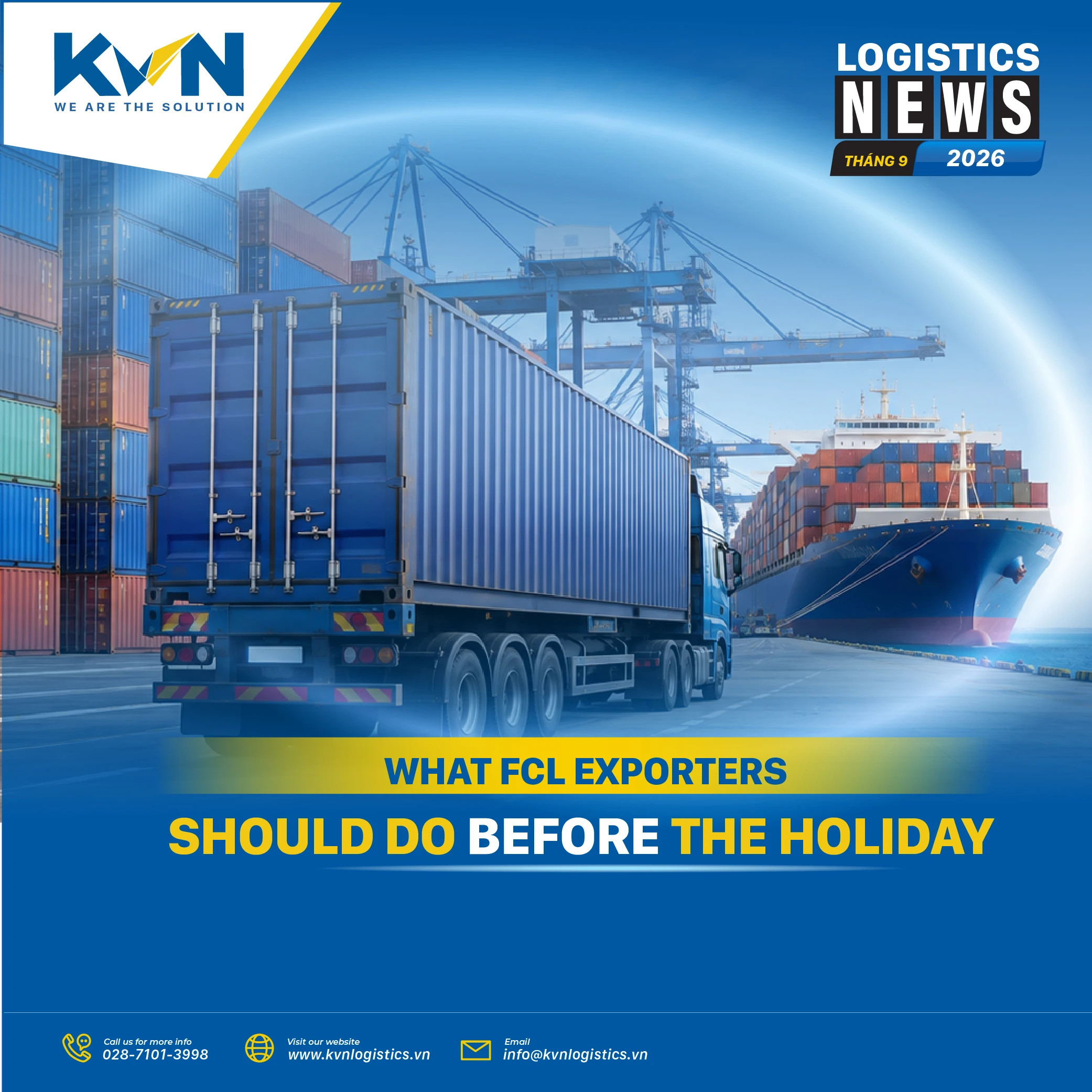
What FCL Exporters Should Do Before the Holiday
For Full Container Load shipments, the most important objective is to avoid creating a shipment that depends on every operational milestone going perfectly.
When cargo is already available, exporters should evaluate whether container pickup, stuffing, customs clearance, VGM submission and terminal gate-in can be completed before the holiday.
Where early gate-in is available and commercially reasonable, moving the container into the terminal earlier may reduce exposure to holiday trucking constraints and factory operating schedules.
Container selection should also be confirmed early for machinery, oversized cargo, moisture-sensitive products or cargo requiring special equipment.
Businesses can review KVN Logistics’ Common Shipping Container Types: Sizes, Uses & Selection Guide when deciding between Dry Container, High Cube, Open Top, Flat Rack and other equipment.
If the cargo is not genuinely ready, however, forcing the shipment onto the final pre-holiday sailing may create more risk than value.
In some cases, proactively moving to the first suitable post-holiday sailing may generate a lower total logistics cost than paying for truck waiting time, container storage, documentation amendments or rolled cargo.
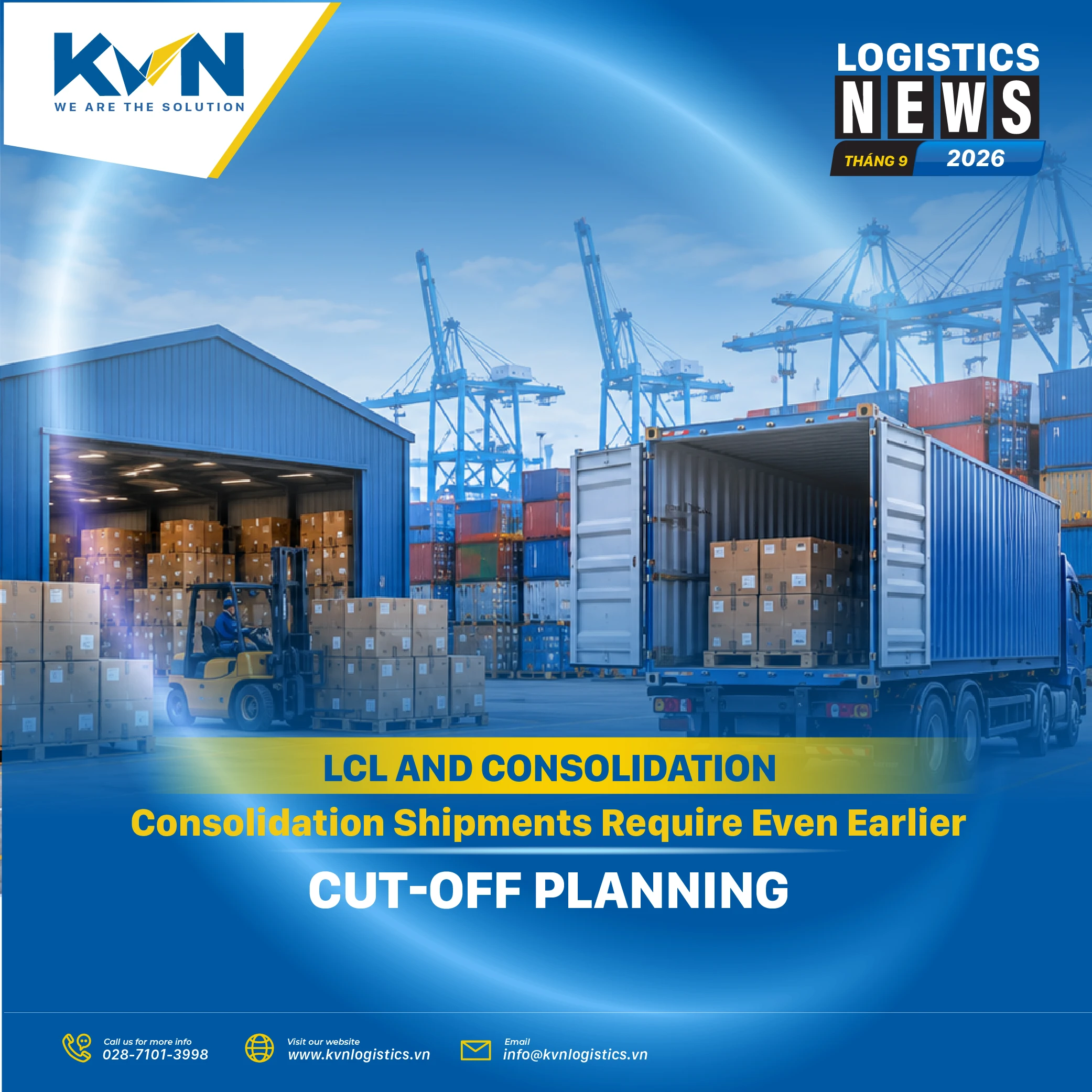
LCL and Consolidation Shipments Require Even Earlier Cut-off Planning
LCL cargo requires a different planning approach.
An FCL container normally revolves around CY opening and closing times.
LCL cargo depends on additional milestones including CFS receiving time, cargo measurement, warehouse operations, consolidation planning, stuffing schedules and documentation cut-offs.
For this reason, a vessel departing on September 3 or 4 does not automatically mean that cargo can be delivered to the CFS on September 2 or 3.
The CFS cut-off may fall several days earlier.
Shippers should therefore confirm the actual consolidation schedule rather than working backward only from the vessel ETD.
For businesses using LCL, Direct Consol or Co-load services, KVN Logistics’ Master Consolidation, Direct Consol & Co-load Guide explains how CFS cut-off, consolidation schedules, routing and destination deconsolidation can affect transit performance.
For LCL cargo moving immediately before or after the holiday, CFS cut-off may be more operationally important than ETD itself.
Import Shipments Arriving During the Holiday Need Destination Planning Too
Importers with ETA between August 29 and the first few days of September should prepare destination procedures before the vessel arrives.
Customs may remain available, and terminals may continue cargo operations, but a shipment cannot be delivered successfully if the receiving warehouse is closed or the trucking company has insufficient capacity.
Importers should review documentation, duty arrangements, delivery-order procedures, consignee availability, warehouse receiving hours, container free time and trucking before the holiday.
For production-critical materials, the receiving plan should be confirmed with the factory before August 29.
For non-urgent cargo, businesses may compare available free time and port storage policies against the cost of arranging holiday delivery.
Again, the correct decision should be based on total logistics cost and production requirements, not on one isolated charge.
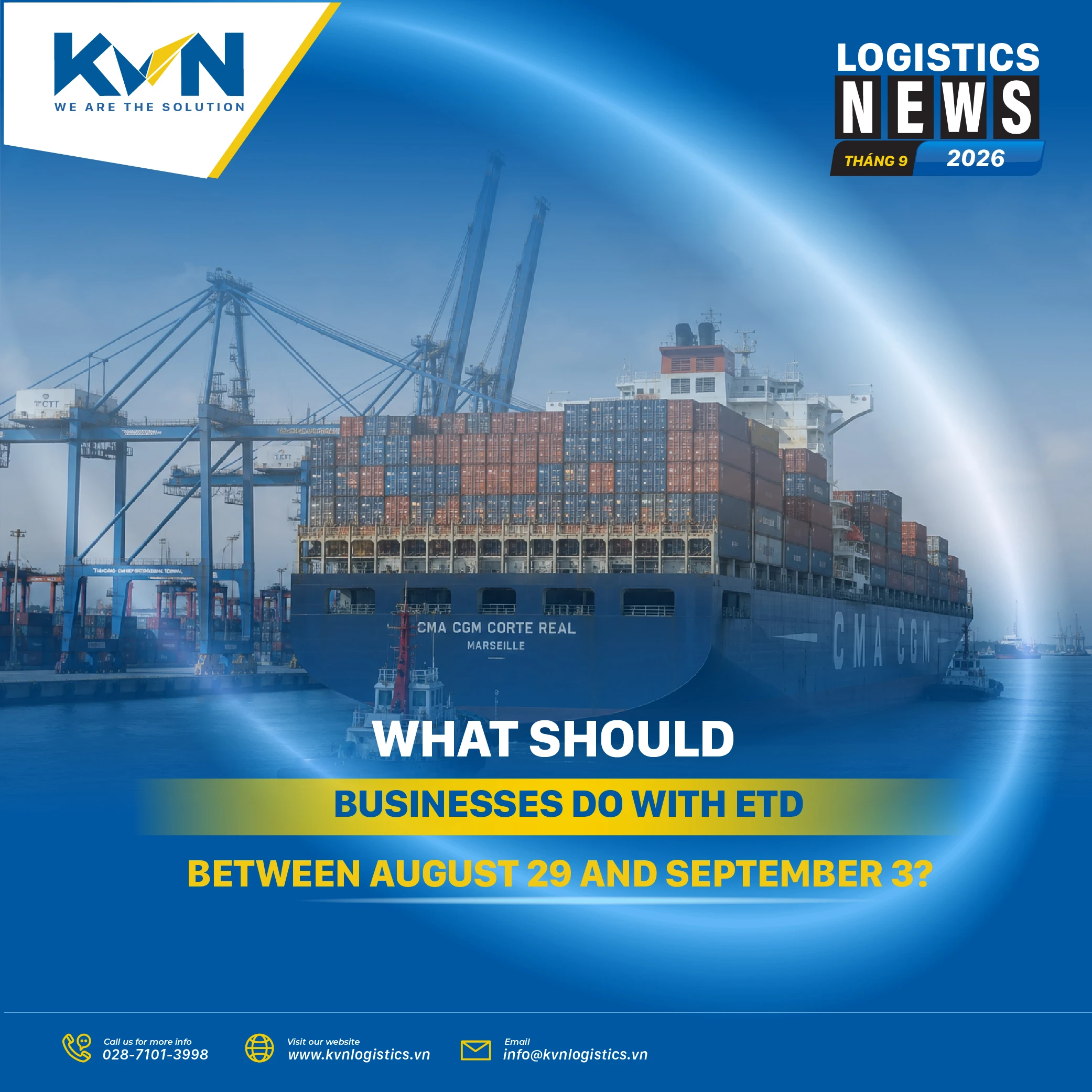
What Should Businesses Do With ETD Between August 29 and September 3?
If cargo is already ready, businesses should prioritize the sequence:
Booking → Empty Container → Stuffing → Documentation → Customs → VGM → Terminal Gate-in
as early as operationally possible.
If cargo is not yet ready, businesses should compare the final pre-holiday sailing against the first suitable post-holiday option rather than automatically attempting to meet the earlier vessel.
If a shipment is extremely time-sensitive, alternative solutions may include a more direct ocean service, another carrier, a suitable Direct Consol program, air freight for smaller high-value cargo, or multimodal transportation where operationally viable.
The objective should not be to use the fastest mode at any cost.
The objective is to identify the transportation plan that best balances:
Deadline → Reliability → Cost → Cargo Characteristics → Delivery Requirement
Independence Day Logistics Checklist for Importers and Exporters
Before August 29, businesses with active shipments should confirm:
-
Cargo Ready Date and factory holiday schedule
-
Latest vessel ETD and ETA
-
Carrier, voyage and terminal
-
Blank sailing, rollover or schedule-change risk
-
Empty-container release and depot opening hours
-
CY opening and CY closing
-
CFS cut-off for LCL cargo
-
VGM, Shipping Instruction and documentation deadlines
-
Customs declaration and supporting documents
-
Specialized inspection or licensing requirements
-
Trucking availability and driver schedule
-
Warehouse or consignee receiving hours
-
Container free time
-
Storage, demurrage and detention exposure
-
Transshipment details
-
Alternative sailing for critical shipments
-
Emergency contact points during the holiday
For manufacturing companies, these activities are easier to control when trucking, customs documentation, international freight and final delivery are managed as one connected process.
KVN Logistics discusses this approach in Door-to-Door Logistics for Manufacturing Companies: From Factory Pickup to Final Delivery.
Outlook for September 3–10: The Pressure May Shift From Pre-Holiday to Post-Holiday
September 3 should not automatically be considered the point at which the logistics market immediately returns to normal.
Cargo accumulated during the holiday may begin moving simultaneously once factories, warehouses and offices reopen.
This may create temporary pressure on trucking capacity, container pickup and return, warehouse receiving appointments, documentation teams and customs-related operations during the first several working days after the holiday.
At the international level, vessel schedules are also unlikely to normalize simply because Vietnam’s holiday has ended.
With July global schedule reliability at only 56.4% and late vessels averaging more than six days behind schedule, carrier updates should continue to be monitored closely.
Marine weather also remains a factor through at least September 5 in several East Sea areas.
For shipments with strict buyer deadlines, KVN Logistics recommends tracking actual vessel status again immediately after the holiday instead of relying on pre-holiday ETD and ETA information.
September 2026 Logistics Outlook: Do Not Expect One Single Freight Trend
Current market indicators suggest that September may continue to show significant differences between individual trade lanes.
Transpacific services could remain under rate and space pressure if resilient demand continues while carriers manage available capacity through blank sailings.
Asia–Europe pricing may behave differently, but lower freight rates do not automatically eliminate congestion, transshipment or schedule risks.
Intra-Asia services should also be monitored closely as regional capacity and feeder connectivity can directly affect Vietnamese exports and imports.
For businesses, the more useful question is no longer:
“Which forwarder has the cheapest freight rate?”
A better question is:
“Which option gives this shipment the best total logistics cost while still meeting the required delivery date?”
This requires evaluating not only freight but also transit time, schedule reliability, cut-off flexibility, free time, local transportation and destination handling.
KVN Logistics Recommendation: Manage the Shipment End-to-End
Holiday periods demonstrate why logistics processes should not be managed as completely separate activities.
A container may have a confirmed vessel booking but no truck.
A truck may arrive on time but the documentation may not be ready.
The cargo may clear Customs but miss CY closing.
The vessel may sail but the consignee may be unavailable at destination.
When multiple parties independently manage each stage, one schedule change can create a chain reaction across the entire shipment.
KVN Logistics therefore recommends planning time-sensitive shipments around an integrated structure:
Cargo → Inland Trucking → Customs & Documentation → Port/CFS → International Freight → Destination Coordination → Final Delivery
For ocean freight shipments, KVN Logistics provides FCL, LCL, Master Consolidation and project-cargo solutions supported by inland transportation and customs-documentation coordination.
For shipments with ETD or ETA between August 29 and the first week of September, businesses should provide their logistics team with the commodity, number of packages, gross weight, CBM, container type, POL, POD, Cargo Ready Date, current booking, expected ETD/ETA, buyer deadline and delivery requirements as early as possible.
The goal is not simply to secure space.
It is to identify operational risks before the shipment enters the holiday period.
Frequently Asked Questions
Will Vietnam Customs be closed throughout the Independence Day holiday?
No. Vietnam Customs has instructed relevant units to maintain duty teams throughout the holiday to support clearance procedures and system operations. Businesses should nevertheless prepare documentation early, especially for cargo involving specialized requirements.
Will Vietnamese ports continue operating from August 29 to September 2?
Operations depend on the individual port, terminal and service. Major container terminals may continue cargo operations, but warehouse, CFS, documentation, depot and administrative schedules can differ. Businesses should confirm the exact terminal arrangements for each shipment.
Can an exporter deliver LCL cargo on September 2 for a vessel departing September 3?
Not necessarily. LCL cargo follows a CFS cut-off and consolidation schedule, which may occur several days before vessel departure. The consolidator’s actual cargo receiving schedule should always be checked.
Should exporters gate containers into the terminal before the holiday?
Where cargo is ready, documentation has been completed, terminal opening is available and additional cost is reasonable, early gate-in can reduce trucking and cut-off risk. Tan Cang – Cat Lai has specifically announced early gate-in arrangements for selected holiday-period sailings.
Are ocean freight rates currently increasing?
Not across every trade lane. Drewry’s global WCI increased 4% on August 20, driven mainly by higher Transpacific rates. Different routes continue to show different capacity and pricing conditions.
Will logistics operations return to normal immediately on September 3?
Not necessarily. Post-holiday cargo accumulation may temporarily increase demand for trucking, terminal services, warehousing and documentation, while international vessel schedules may remain volatile.
What is the most important factor for holiday-period shipments?
Businesses should avoid focusing on freight rates alone.
The complete shipment needs to be controlled across:
Booking → Cut-off → Trucking → Customs → Terminal → Vessel Schedule → Free Time → Destination → Backup Plan
A lower freight rate is valuable only when the shipment can still reach its destination within the required operational and commercial timeline.
Data Sources
This market update is based on information available through August 27, 2026, including official announcements from Vietnam’s Ministry of Home Affairs and Government Portal regarding the Independence Day holiday schedule; Vietnam Customs regarding holiday clearance arrangements; Saigon Newport Corporation regarding Cat Lai holiday operations; Hai Phong Port regarding its container-storage policy; the National Center for Hydro-Meteorological Forecasting regarding holiday weather and marine conditions; Drewry’s World Container Index; and Sea-Intelligence’s Global Liner Performance report.
Market indices are used to illustrate general international shipping trends and should not be treated as direct quotations for Vietnam-origin shipments. Actual freight rates, vessel schedules, terminal cut-offs, free time and operational conditions should always be reconfirmed for each individual shipment at the time of booking.
KVN Logistics – We are the Solution.