

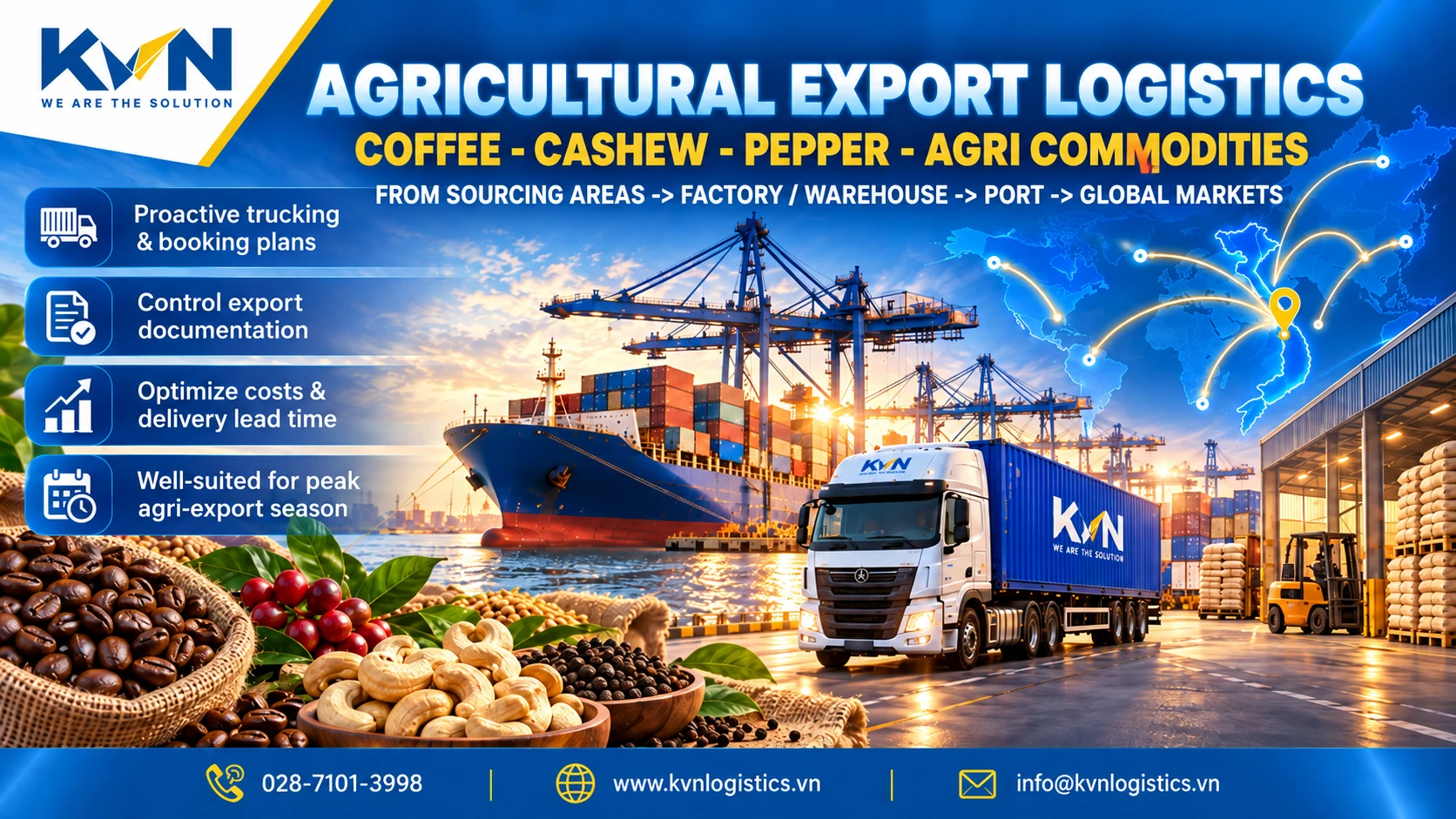
Vietnam’s agricultural exports are entering an important year-end shipping period, with coffee, cashew, pepper and other agricultural commodities continuing to generate significant cargo volumes for international markets.
For exporters, however, the challenge is no longer simply to secure a competitive ocean freight rate.
Agricultural export logistics requires coordination across the entire shipment:
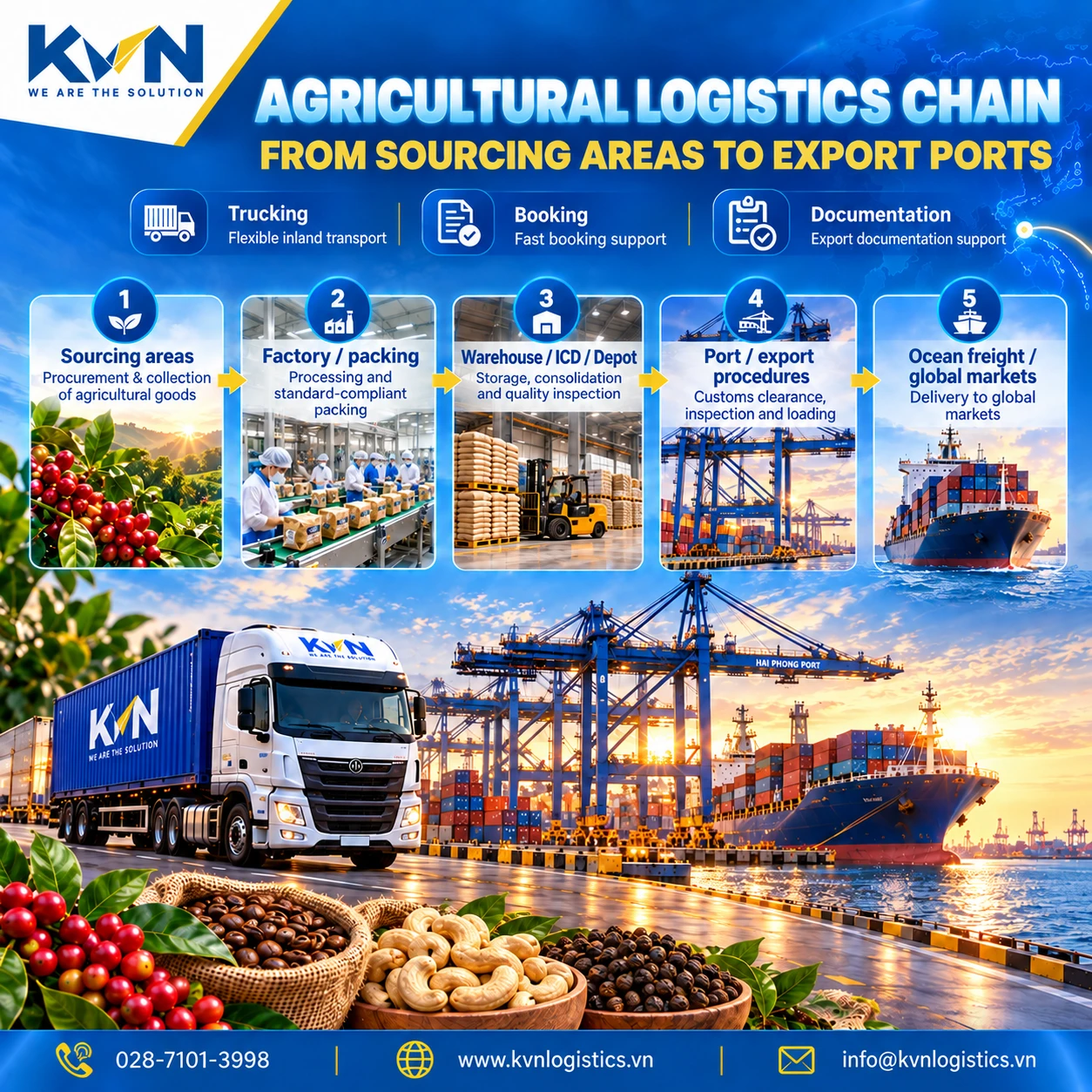
Sourcing Area → Factory → Warehouse → Inland Trucking → Customs Documentation → Export Port → Ocean Freight → International Market
As export volumes increase and container shipping remains exposed to congestion, schedule changes and capacity constraints, businesses need to manage logistics earlier and more systematically.
This is particularly important for commodities such as coffee and cashew, where product quality, container condition, moisture exposure, transit time and shipping schedules can directly affect both commercial performance and buyer satisfaction.
Vietnam’s Agricultural Exports Remain Strong in 2026
Vietnam’s agricultural sector continued to record strong international trade performance during the first nine months of 2026.
Agricultural exports reached approximately USD 29.3 billion, up 3.1% year-on-year. Asia remained the largest regional market, accounting for 49.4% of agricultural, forestry and fishery exports, followed by the Americas and Europe. vietnamnews.vn
Among individual commodities, coffee remains one of Vietnam’s most important agricultural export products.
In September 2026 alone, Vietnam exported an estimated 114,200 tonnes of coffee, worth approximately USD 511.8 million.
During the first nine months of 2026, coffee exports reached approximately:
- 1.4 million tonnes
- USD 6.54 billion in export value
- 15.4% growth in export volume
- 7.3% decline in export value
- USD 4,537.3 per tonne average export price
The decline in export value was largely linked to a nearly 20% decrease in average export prices compared with the same period in 2025. Quân đội Nhân dân
Germany, Italy and Japan were among the largest destinations for Vietnamese coffee during the period. DTiNews
This creates an important logistics implication:
When commodity prices decline while export volumes increase, logistics cost per tonne becomes even more important to exporters.
Freight, trucking, storage, container detention, schedule delays or additional handling costs can have a greater impact on margins when the value per tonne of cargo is under pressure.
Coffee Logistics Is Becoming Increasingly Connected to Global Supply Chains
Recent trade promotion activities also show that logistics is becoming an increasingly important part of Vietnam’s coffee export strategy.
At the end of September 2026, the Vietnam Trade Office in Germany, together with the Vietnam Coffee and Cocoa Association and participating exporters, organized trade and logistics connection activities at the Port of Hamburg.
The program focused not only on commercial opportunities but also on integrating Vietnamese coffee more deeply into international supply chains. Bộ Công Thương
For exporters, this reinforces an important point:
Export competitiveness is not determined only by product quality and selling price. Logistics performance is increasingly part of the value proposition.
Cashew Exports Continue to Generate Significant Cargo Volumes
Cashew is another important commodity for Vietnam’s agricultural export logistics.
According to customs-record data reviewed by Le Duong Cashew, Vietnam’s cashew trade in September 2026 reached approximately:
USD 500.8 million in trade value, with around 68,957 tonnes of measurable weight-based shipments.
Across the first nine months of 2026, the database recorded approximately:
USD 4.16 billion in value and around 585,078 tonnes of measurable weight-based cargo. Lê Dương Hạt Điều
Vietnam’s cashew supply chain is particularly interesting from a logistics perspective because the country operates on both sides of the trade flow.
Vietnam imports large quantities of raw cashew nuts for processing and later exports processed cashew kernels to international markets.
A typical supply chain may therefore involve:
Raw Cashew Import → Factory Processing → Packing → Warehouse → Export Container → Seaport → International Buyer
This creates a strong requirement for synchronization between inbound logistics, production schedules and outbound export transportation.
Coffee, Cashew and Pepper Create Different Logistics Requirements
Agricultural products are often classified operationally as general or dry cargo.
However, this does not mean they should be handled in the same way as standard industrial cargo.
Coffee, cashew, pepper and similar agricultural commodities can be sensitive to:
Humidity
Odor contamination
Container cleanliness
Transit time
Packaging integrity
Temperature variation
Condensation
Shipping delays
A technically available container is not automatically a suitable container.
For agricultural exports, container quality can directly affect cargo quality.
1. Humidity and Container Rain
Moisture is one of the most common risks in agricultural container shipping.
During an international voyage, temperature changes can cause condensation to form inside a container.
This phenomenon is commonly known as container rain.
Condensation can lead to:
- wet bags or cartons;
- mold development;
- packaging damage;
- deterioration in cargo quality;
- buyer claims;
- cargo rejection in severe cases.
Before stuffing, exporters should check whether the container is:
Clean + Dry + Odor-Free + Structurally Sound
Depending on the commodity, packaging and destination, businesses may also need to evaluate appropriate moisture-control solutions.
2. Odor Contamination
Coffee, cashew and other food-related agricultural products can absorb odors.
A container previously used for strongly scented or contaminating cargo may therefore be unsuitable even if it appears physically intact.
Container inspection should cover not only:
floor + walls + doors + roof
but also:
smell + cleanliness + moisture + contamination history where relevant.
This is especially important for food-grade and high-value agricultural shipments.
3. Vessel Schedule and Transit Time
The cheapest freight rate is not always the best logistics solution.
For agricultural products, businesses should compare:
Ocean Freight + Routing + Transit Time + Schedule Reliability + Transshipment Risk
A lower rate may involve:
- additional transshipment;
- longer transit time;
- less reliable connections;
- tighter cut-offs;
- increased risk of vessel rolling;
- higher exposure to moisture inside the container.
KVN Logistics provides a detailed overview of current regional routes in its guide to Sea Freight from Vietnam to Asia: Routes & Transit Times.
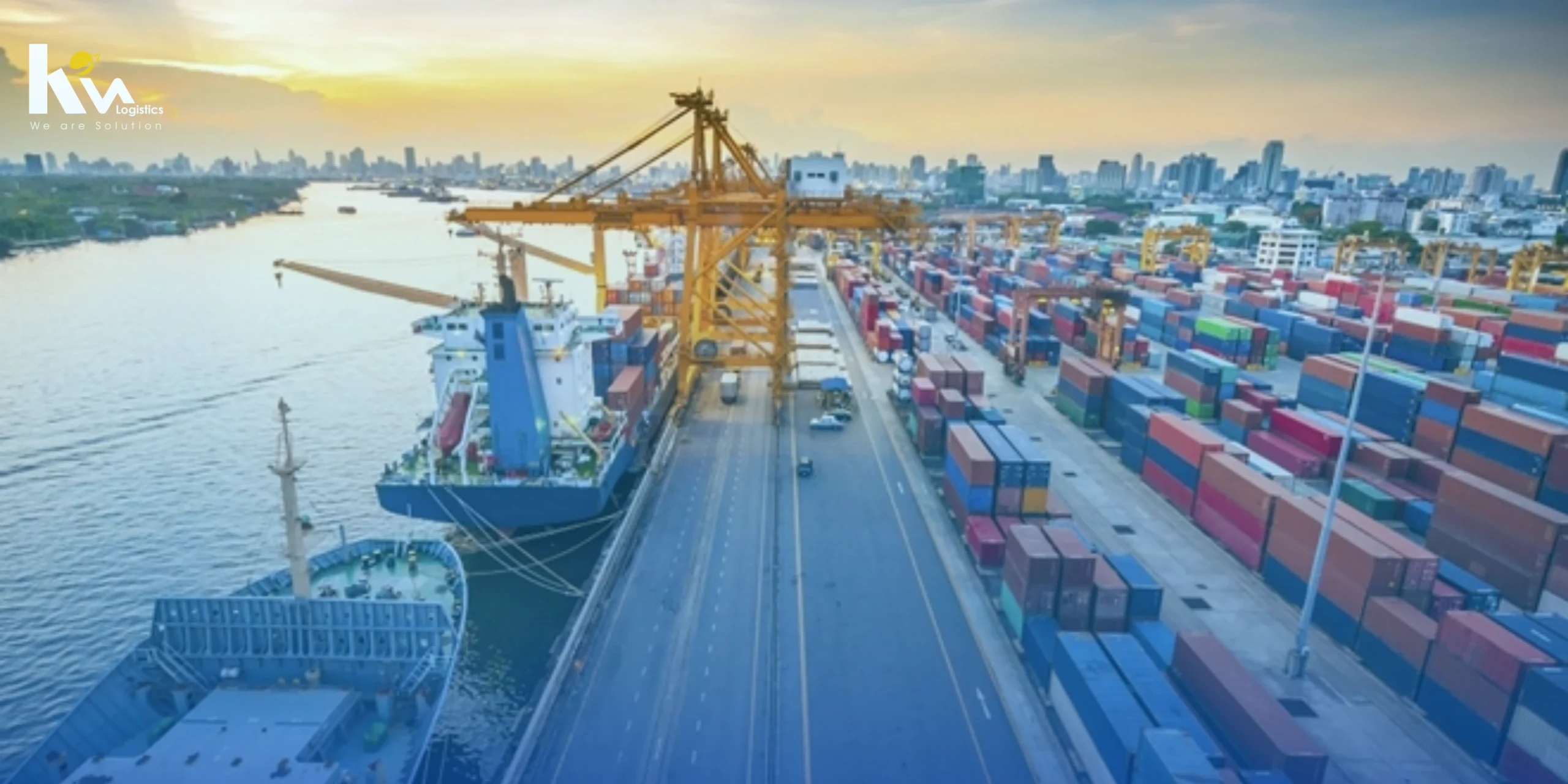
From Vietnam’s key gateways including Hai Phong, Ho Chi Minh City and Cai Mep, exporters can access multiple direct and transshipment services to regional and international markets. KVN Logistics
Container Freight Conditions Remain Volatile in Early October
The global shipping market remains a factor exporters should monitor.
According to Drewry, the World Container Index fell 1% to USD 4,434 per 40-foot container on 1 October 2026. Drewry
At the same time, Drewry’s Intra-Asia Container Index increased 2% to USD 1,518 per 40-foot container, reaching an all-time high for the sixth consecutive week.
Drewry attributed the pressure to factors including:
- typhoon disruption;
- port congestion;
- tighter effective capacity;
- blank sailings;
- port omissions;
- higher operating costs. Drewry
For Vietnamese agricultural exporters, this means space and schedule planning should not be left until cargo is fully ready.
Why Peak-Season Agricultural Cargo Should Be Booked Early
When export volumes increase toward the final quarter, multiple pressures can occur simultaneously:
**More cargo
- tighter vessel space
- limited equipment
- port congestion
- factory production deadlines
- buyer delivery deadlines**
A shipment may be commercially ready but still fail operationally if the transport plan is not prepared early enough.
Businesses should therefore work backward from the required delivery date.
A typical planning sequence is:
Required Delivery Date
← ETA
← Transit Time
← ETD
← CY Cut-Off
← Customs Clearance
← VGM
← Stuffing
← Empty Container Pickup
← Cargo Ready Date
This is far more reliable than waiting for the cargo to be completed before searching for a vessel.
Trucking Must Be Planned Around the Vessel Cut-Off
Inland trucking is a critical part of agricultural export logistics.
An export container may need to move through:
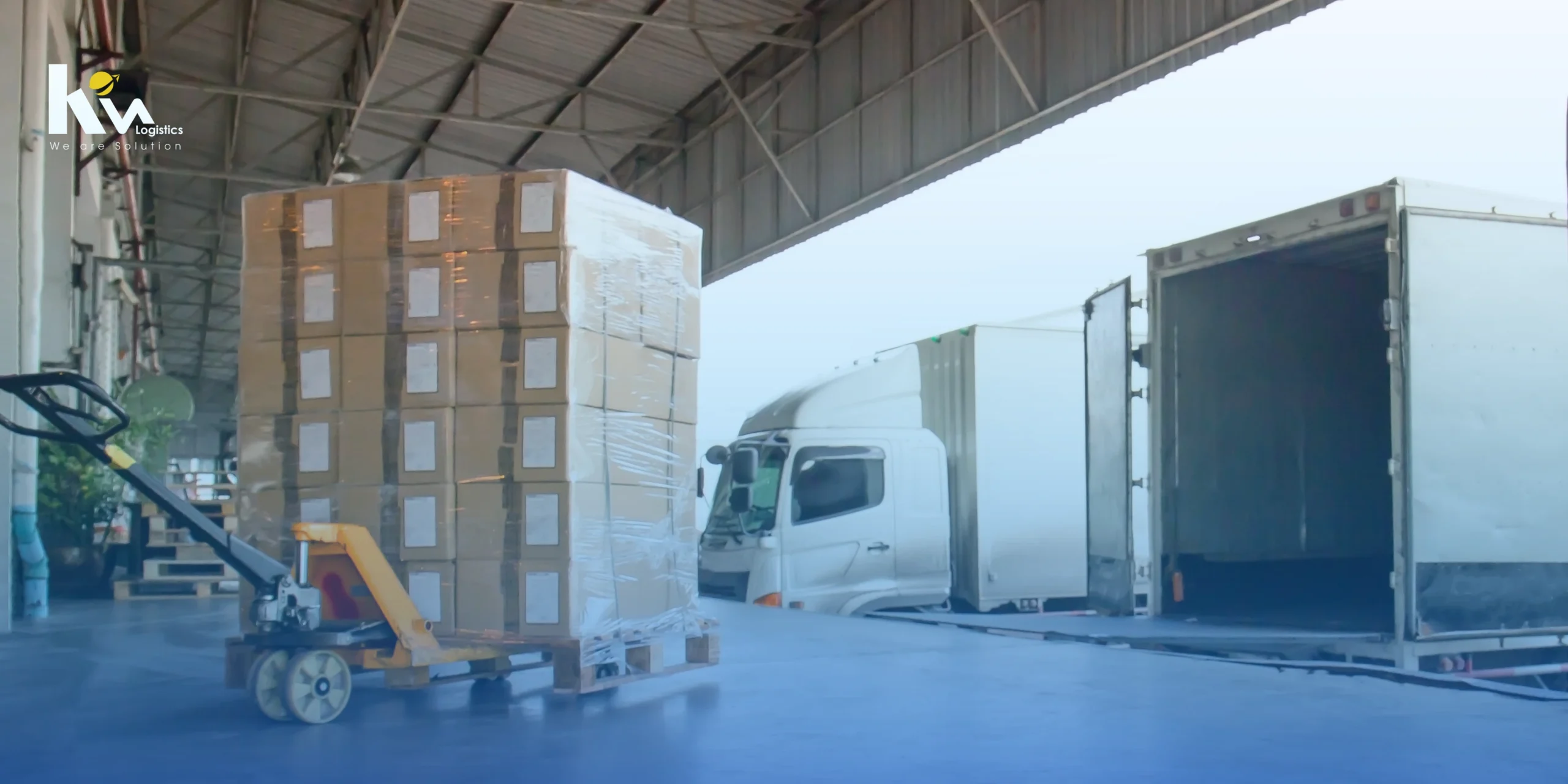
Empty Depot → Factory → Stuffing → Seal → Customs → Port → CY Gate-In
If trucking is arranged too late, the container may miss the CY cut-off even when cargo production is completed on time.
KVN Logistics explains this process in more detail in its guide to Domestic Container Trucking in Vietnam: Port–Factory–Warehouse Process.
The principle is simple:
Trucking should be planned backward from the CY cut-off, not forward from the expected loading time.
This coordination becomes even more important when factories are located far from major ports. KVN Logistics
Export Documentation Should Run in Parallel With Physical Operations
Another common mistake is treating documentation as a separate activity that can be completed after cargo has moved.
In reality, agricultural exports may involve multiple documentation requirements depending on the commodity and destination.
Typical documents may include:
- Commercial Invoice;
- Packing List;
- Shipping Instruction;
- Bill of Lading instructions;
- customs declaration;
- Certificate of Origin;
- phytosanitary certificate, where applicable;
- fumigation certificate, where applicable;
- quality or buyer-required certificates;
- product-specific regulatory documentation.
The correct operating model is:
Physical Logistics Timeline + Documentation Timeline
running in parallel.
For example:
Truck movement should follow CY cut-off
while:
SI and VGM must follow their own documentation cut-offs.
KVN Logistics explains the full workflow in Sea Freight Booking Process: Cut-Off, SI, VGM & CY/CFS.
A confirmed booking alone does not guarantee that a container will be loaded.
The shipment still needs to meet operational and documentation requirements before departure. KVN Logistics
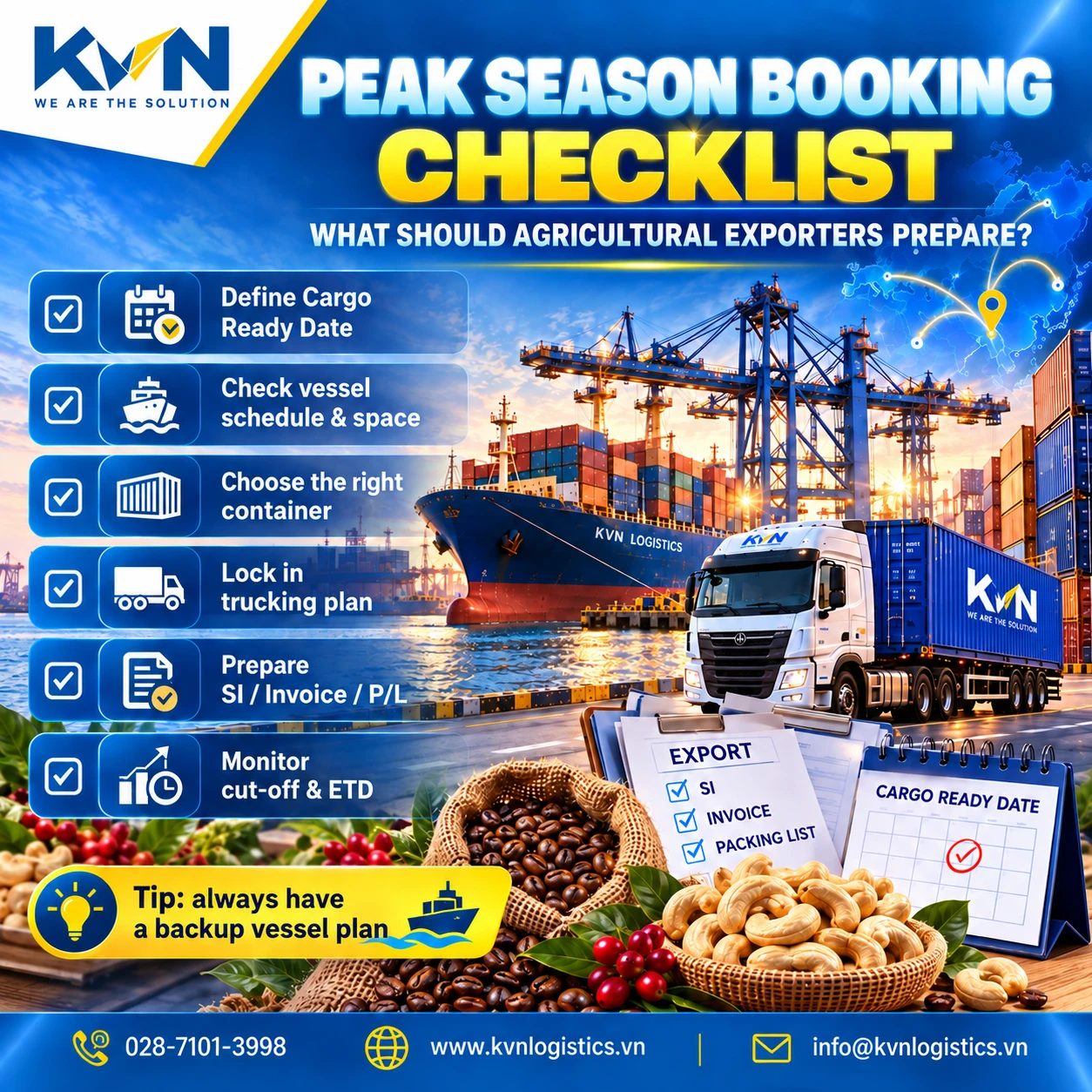
Agricultural Export Booking Checklist
Before confirming an export shipment, agricultural businesses should prepare the following information.
1. Define the Cargo Ready Date
The Cargo Ready Date should represent the actual date when the goods can be physically prepared for container loading.
Avoid relying on general estimates such as:
“Production should finish around next week.”
A clear cargo-ready milestone is essential for vessel planning.
2. Confirm POL, POD and Final Destination
The shipment should define:
Port of Loading
Port of Discharge
Final Destination
Required Delivery Date
This information determines routing, transit time and required ETD.
3. Select the Right Container
Container selection should consider:
- cargo weight;
- cargo volume;
- bag dimensions;
- palletization;
- floor loading;
- payload limits;
- moisture risk;
- loading method.
For example, agricultural products with high density may reach payload limits before fully utilizing the cubic capacity of a larger container.
Container choice should therefore be based on the actual cargo profile rather than freight rate alone.
4. Compare Vessel Options
Evaluate:
Direct vs Transshipment
Transit Time
Cut-Off
Frequency
Available Equipment
Space
Schedule Reliability
Where possible, prepare at least one backup sailing.
5. Lock the Trucking Plan
Once the booking is confirmed, the trucking schedule should be coordinated with:
Empty pickup
Factory loading slot
Stuffing duration
Customs processing
VGM
CY gate-in
The truck should not be scheduled only according to ETD.
6. Prepare Export Documents
Prepare documentation before the relevant cut-offs.
Typical initial documents may include:
SI + Invoice + Packing List + Customs Information
Additional documents should be confirmed according to commodity and destination requirements.
7. Monitor Cut-Off and On-Board Status
Important shipment milestones include:
SI Cut-Off
VGM Cut-Off
CY/CFS Cut-Off
ETD
On-Board Confirmation
Actual Departure
A container being accepted at the terminal does not automatically mean that it has sailed.
FCL or LCL for Agricultural Exports?
For commercial coffee, cashew and pepper shipments, FCL – Full Container Load is often operationally attractive because the exporter has greater control over:
- container selection;
- stuffing;
- cargo compatibility;
- moisture management;
- sealing;
- handling frequency.
LCL can still be suitable for:
- samples;
- trial orders;
- smaller shipments;
- new-market testing.
However, agricultural exporters using LCL should consider the compatibility of cargo consolidated in the same container.
Potential risks include:
Odor + Moisture + Cross-Contamination + Additional Handling
For businesses evaluating consolidated shipments, KVN Logistics’ sea freight booking guide also highlights the importance of CFS cut-offs and cargo receiving requirements for LCL shipments. KVN Logistics
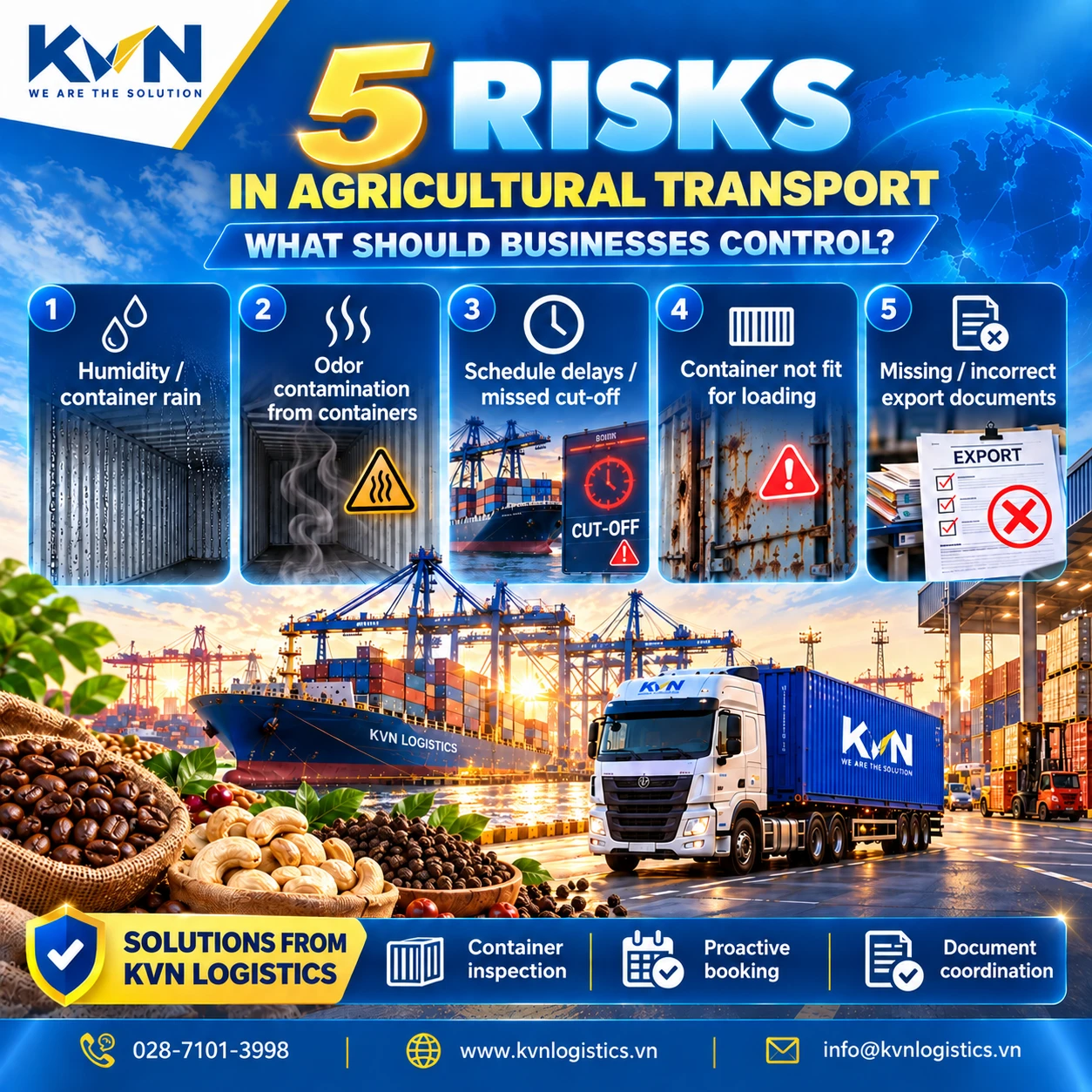
Five Major Risks in Agricultural Export Transportation
For exporters of coffee, cashew and other agricultural goods, five risks deserve particular attention.
1. Humidity and Container Rain
Condensation may damage cargo and packaging during long transit.
2. Odor Contamination
A container unsuitable for food or agricultural cargo can affect product quality.
3. Schedule Delays and Missed Cut-Offs
Late trucking, customs delays or incorrect operational planning may cause the shipment to miss the intended vessel.
4. Unsuitable Container Condition
Rust, holes, contamination, wet flooring or structural damage may create cargo-quality risks.
5. Missing or Incorrect Documentation
Documentation issues may delay customs clearance, Bill of Lading issuance or cargo acceptance.
The key solution is not to manage these issues individually.
Businesses should connect:
Container Inspection + Booking + Trucking + Documentation + Port Operation
into one coordinated shipment plan.
Why an Integrated Logistics Model Matters for Agricultural Exporters
A traditional shipment may involve multiple separate providers:
**Trucking Company
- Customs/Documentation Provider
- Freight Forwarder
- Warehouse
- Shipping Line**
When each party works independently, information can become fragmented.
For example:
The forwarder knows the vessel cut-off.
The trucker knows the factory loading time.
The documentation team knows customs status.
But no one is actively coordinating all three.
For seasonal agricultural exports, this creates unnecessary operational risk.
A more effective approach is to manage the shipment as one connected logistics chain.
KVN Logistics’ Approach to Agricultural Export Transportation
KVN Logistics focuses on three core operational capabilities:
Sea Freight
Planning and coordinating:
- FCL;
- LCL;
- sailing schedules;
- routing;
- container equipment;
- cut-offs;
- ocean freight;
- transit time;
- alternative sailing options.
Inland Trucking
Connecting:
Port → Depot → ICD → Factory → Warehouse
with trucking schedules aligned to cargo readiness and vessel cut-offs.
Customs & Documentation Support
Coordinating import-export documentation with the physical shipment timeline.
Together, these capabilities support an integrated movement:
Factory → Trucking → Customs → Port → Ocean Freight → International Market
For agricultural exporters, this model can help improve visibility, reduce missed operational milestones and maintain better control over total logistics cost.
Why Total Logistics Cost Matters More Than Ocean Freight Alone
Exporters often begin with one question:
“What is the ocean freight rate?”
However, the better question is:
“What is the total logistics cost and operational risk of this shipment?”
The real cost may include:
**Ocean Freight
- Inland Trucking
- THC
- Documentation
- Customs Handling
- Storage
- Detention
- Demurrage
- Waiting Time
- Re-booking
- Late Delivery Risk**
A cheaper ocean freight option may become more expensive if it creates:
- long transshipment;
- unstable schedules;
- tighter cut-offs;
- additional truck waiting;
- storage costs;
- buyer delivery delays.
For agricultural cargo, cargo-quality risk should also be included in the decision.
Outlook for Agricultural Export Logistics in Q4 2026
The beginning of October points to an interesting combination of market conditions.
Vietnam continues to move large volumes of agricultural products into global markets.
Coffee export volume has increased significantly despite lower average prices. Quân đội Nhân dân
Cashew continues to generate substantial international cargo flows. Lê Dương Hạt Điều
At the same time, container freight markets remain volatile, with elevated intra-Asia rates and continuing schedule disruption. Drewry
For exporters, the implication is clear:
2026 year-end agricultural logistics should be planned earlier and managed more tightly.
The focus should move from:
“Find a container when the cargo is ready.”
to:
“Build the logistics plan before the cargo becomes ready.”
FAQ: Agricultural Export Logistics from Vietnam
What container is commonly used for coffee exports?
Vietnamese green coffee is commonly transported in dry containers, including 20-foot and 40-foot equipment depending on cargo weight, packaging, loading method and buyer requirements.
The container should be clean, dry, odor-free and suitable for food-related agricultural cargo.
Can cashew nuts be shipped in dry containers?
Yes.
Processed cashew kernels are commonly transported in dry containers.
However, moisture, container cleanliness, packaging and transit conditions should be carefully controlled.
Is FCL better than LCL for coffee and cashew?
For large commercial shipments, FCL generally offers greater control over container condition, cargo compatibility and handling.
LCL may be appropriate for smaller quantities or samples, provided that cargo compatibility and consolidation conditions are carefully checked.
How early should agricultural exporters book ocean freight?
There is no universal booking lead time.
Booking timing depends on:
- route;
- season;
- container availability;
- carrier capacity;
- cargo type;
- destination;
- vessel frequency.
During peak season or periods of tight capacity, exporters should plan earlier and prepare alternative sailings.
Is the lowest ocean freight rate always the best option?
No.
Exporters should compare:
Freight + Routing + Transit Time + Cut-Off Feasibility + Reliability + Total Logistics Cost
rather than freight alone.
What logistics services does KVN Logistics provide for agricultural exporters?
KVN Logistics focuses on Sea Freight, Inland Trucking and Customs & Documentation, enabling businesses to coordinate container transportation from factory or warehouse to port and onward to international markets.
Agricultural Export Logistics With KVN Logistics
For coffee, cashew, pepper and other agricultural commodities, reliable transportation requires more than booking space on a vessel.
A successful shipment should connect:
Cargo Ready
→ Container
→ Trucking
→ Customs Documentation
→ Cut-Off
→ Port
→ Vessel
→ International Delivery
KVN Logistics supports exporters by connecting these operational stages into a coordinated logistics plan.
Instead of managing each logistics activity separately, businesses can evaluate the complete shipment according to:
Cost + Timing + Routing + Container Condition + Documentation + Delivery Requirements
This is especially important during agricultural peak seasons, when cargo volumes increase and shipping capacity becomes less predictable.
KVN Logistics – We are the Solution.