

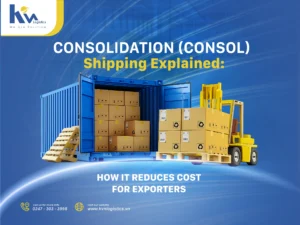
Consolidation is not just cargo grouping — it’s a strategic decision
In real-world logistics operations, very few exporters can consistently ship full containers (FCL). Most businesses — especially SMEs — face a familiar dilemma:
“Our cargo isn’t enough to fill a container, but waiting means missing business opportunities.”
This is exactly where Consolidation (Consol) becomes more than just a shipping method — it becomes a strategy.
At its core, consolidation means combining multiple smaller shipments from different shippers into one container.
But in practice, it goes far beyond that.
It is a way to reallocate logistics costs intelligently, allowing each business to pay only for the space they actually use — without sacrificing speed.
Why consolidation is becoming increasingly important
If we look at how global trade is evolving, a clear pattern emerges:
- Shipment sizes are getting smaller
- Speed is becoming more important than scale
- Market volatility makes “waiting to fill a container” risky
In this context, consolidation is no longer just an alternative — it is becoming a standard operating model for many exporters.
At KVN Logistics, working with clients shipping to India, Japan, China and other markets, we’ve observed one key insight:
👉 The most successful exporters are not the ones shipping the largest volumes —
they are the ones who optimize their cargo flow effectively.
How consolidation works in real operations
To truly understand consolidation, it helps to shift perspective:
A container is no longer “owned” by a single shipper — it becomes a shared logistics space.
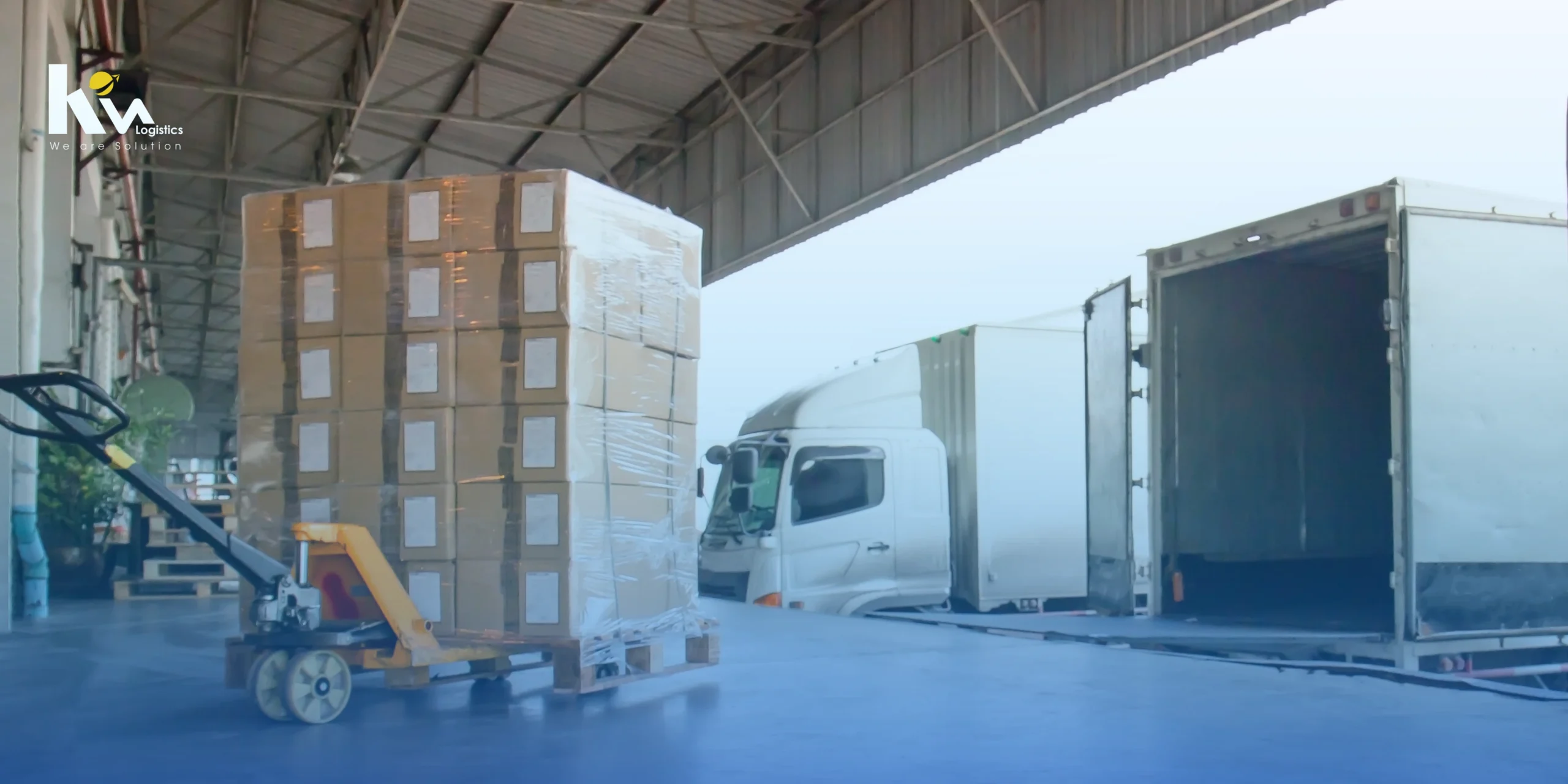
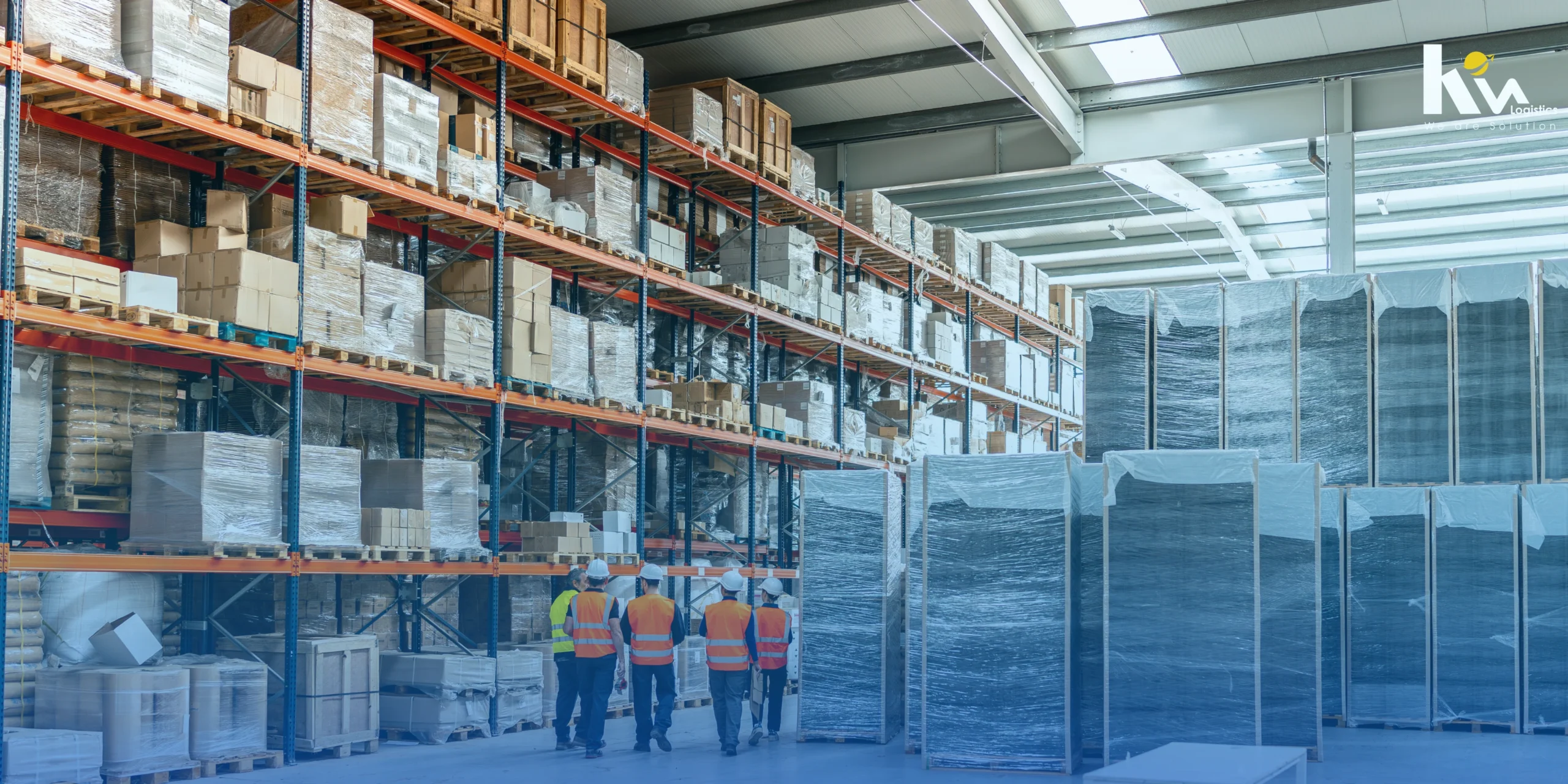
Cargo from multiple customers is collected at a CFS warehouse, then inspected, sorted, and carefully arranged to maximize space efficiency. Once loaded, the container moves exactly like a standard FCL shipment — but inside, it carries multiple businesses’ cargo.
The key factor here is control:
👉 Whoever controls the consolidation process controls cost, reliability, and customer experience.
This is why not all consolidation services in the market are created equal.
How consolidation actually reduces cost
Many people assume consolidation simply means “splitting container costs.”
That’s true — but it’s only part of the story.
1. Cost optimization per CBM
Instead of paying for unused container space, businesses only pay for actual cargo volume.
This is especially critical for shipments in the range of 3–15 CBM, where FCL would result in significant cost inefficiency.
2. No need to wait — reducing opportunity cost
In business, the biggest cost is often not logistics — it’s delay.
- Waiting for full cargo → delayed shipments
- Delayed shipments → lost customers
- Lost customers → lost market share
Consolidation allows businesses to shift from
“waiting to fill” → “shipping when needed.”
3. Lower inventory pressure and improved cash flow
By shipping more frequently and in smaller volumes, businesses can:
- Reduce inventory holding time
- Improve cash flow cycles
- Respond faster to market demand
This benefit is often underestimated — until companies start using consolidation regularly.
4. Simplified internal operations
With consolidation, businesses no longer need to:
- Manage container utilization
- Optimize cargo loading themselves
- Handle complex logistics planning
This allows them to focus on what actually drives revenue — sales and growth.
Are there any downsides to consolidation?
Yes — and this is where many articles tend to oversimplify.
Potential transit delays
If there is no fixed schedule, shipments may be delayed while waiting for consolidation.
Dependence on forwarder capability
A weak consolidation service can lead to:
- Delays
- Documentation errors
- Inconsistent service quality
Cargo compatibility risks
Different types of cargo sharing one container may affect each other if not properly managed.
What defines a high-quality consolidation service?
From KVN Logistics’ experience, a reliable consolidation service is defined by four key factors:
1. Fixed sailing schedules
Not dependent on “waiting for enough cargo”
2. Strong cargo volume
Ensures stability and continuity of routes
3. Centralized document control
Reduces errors across multiple shipments
4. Strong destination network
Ensures smooth deconsolidation and final delivery
When should businesses use consolidation?
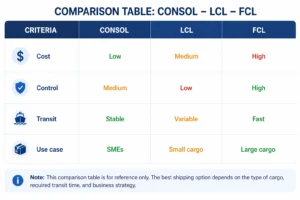
Consolidation is ideal when:
- Shipment volume is under 15 CBM
- Shipments are frequent but small
- Cost optimization is a priority
- Stable consolidation routes are available
For large, sensitive, or high-control shipments, FCL may still be the better choice.
KVN Logistics perspective
KVN Logistics currently operates strong consolidation routes across:
- Vietnam → India
- Vietnam → Japan
- Vietnam → China
With consistent schedules and a network of 80+ global agents, we don’t just provide transportation — we provide a solution that helps clients:
👉 Gain control over shipping plans
👉 Optimize long-term logistics costs
👉 Build a more stable supply chain
Conclusion: Consolidation is not just about saving cost — it’s about smarter logistics
If FCL is about scale,
then consolidation is about efficiency, flexibility, and timing.
In today’s competitive market, the ability to
ship at the right time, at the right cost
is one of the strongest advantages a business can have.
And that is exactly what consolidation delivers.
If your business is facing challenges such as:
- Not enough cargo for full containers
- High logistics costs
- Unstable shipping schedules
📞 Contact KVN Logistics for a tailored solution
🌐 www.kvnlogistics.vn
👉 We are the Solution.