

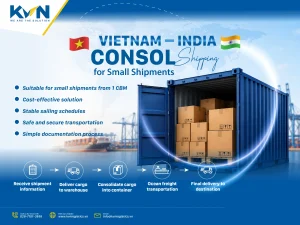
As trade between Vietnam and India continues to expand, not every business has enough cargo volume to fill a full container. For small shipments, sample orders, trial shipments or regular orders with unstable volume, Vietnam–India consol shipping is becoming a flexible and cost-effective logistics solution.
Instead of waiting until there is enough cargo to book a full container, businesses can use consolidation shipping to move goods in a shared container with other shipments. This helps reduce logistics costs, improve shipment flexibility and support market expansion with lower risk.
With its sea freight network, consolidation capability and end-to-end logistics services, KVN Logistics supports businesses in optimizing small shipments from Vietnam to India through practical, transparent and route-focused solutions.
For broader sea freight solutions, businesses can also refer to KVN Logistics’ Sea Freight service.
What is Vietnam–India consol shipping?
Vietnam–India consol shipping is a logistics solution where multiple small shipments from different exporters are consolidated into one container and shipped by sea from Vietnam to India.
These shipments may belong to different businesses, but they are handled through a consolidator or freight forwarder who manages the cargo receiving, CFS coordination, container loading, shipping documentation and transport arrangement.
In practice, consol shipping is suitable for businesses that:
Have cargo volume that is not enough for a full container.
Need to ship samples, trial orders or small commercial shipments.
Want to maintain regular shipments without committing to FCL volume.
Need to optimize freight cost based on CBM instead of paying for an entire container.
Want to reduce inventory pressure and ship according to actual customer demand in India.
For a basic explanation of this shipping model, businesses may refer to: What is Consol Shipping? How is it Different from LCL?
Why is the Vietnam–India route suitable for consol shipping?
India is one of the largest markets in South Asia, with strong demand for industrial goods, raw materials, packaging products, machinery, consumer goods and manufacturing inputs.
For many Vietnamese exporters, India offers strong potential but also requires a careful market-entry strategy. Businesses often start with smaller orders, test market response, evaluate buyer demand and then increase shipment volume gradually.
This is where consol shipping becomes highly practical. Instead of waiting for enough cargo to load a full container, businesses can ship smaller volumes more frequently and control logistics costs more effectively.
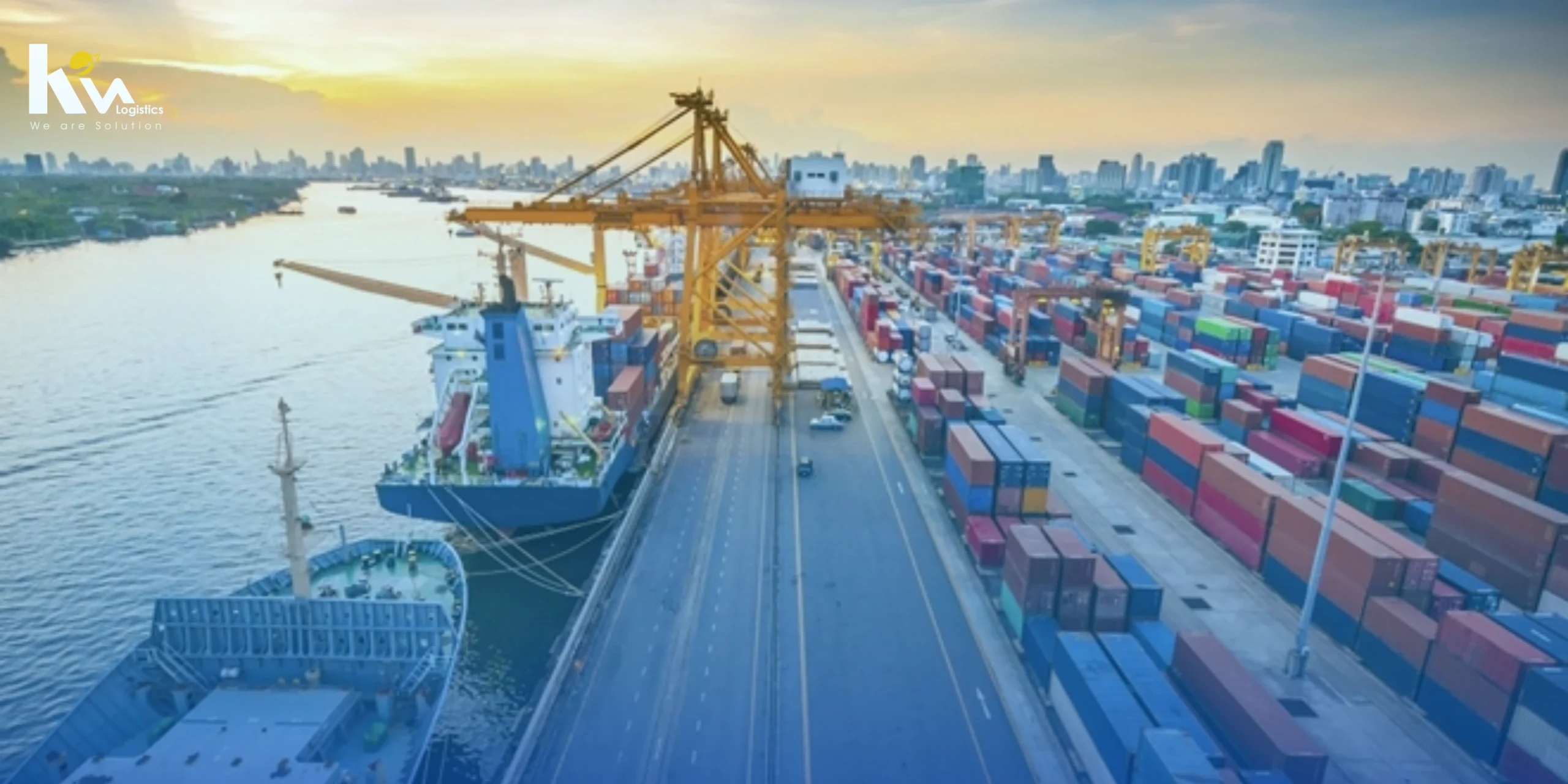
KVN Logistics currently supports weekly consol shipping to India from key locations in Vietnam, connecting to major Indian ports such as Nhava Sheva, Chennai, Kolkata and Mundra.
Businesses can learn more about this route here: Consol Shipping to India: Why Vietnamese Exporters Are Moving Toward Consolidation Solutions
Cargo types suitable for Vietnam–India consol shipping
Not every shipment should move by consol, but this model works well for cargo with small to medium volume, stable packaging and clear handling requirements.
Common cargo types suitable for Vietnam–India consol shipping include:
Commercial and consumer goods
Products packed in cartons, small commercial orders, accessories, wholesale goods or buyer-specific shipments can be suitable for consol shipping if they are properly packed and easy to handle.
Industrial goods
Machinery parts, spare parts, production components and technical items with clear packaging specifications are often suitable for LCL or consol movement.
Plastic and packaging products
Plastic products, packaging materials, industrial plastic items and other cargo that can be calculated by CBM may benefit from shared-container shipping.
Small machinery and equipment
Machinery or equipment that is not oversized or overweight can be moved by consol if it is packed safely in pallets, wooden crates or reinforced packaging.
General chemical cargo
For chemical-related cargo, businesses should provide MSDS, HS code, product details and safety information in advance. Dangerous goods, sensitive cargo or restricted items must be checked carefully before acceptance.
For special cargo, exporters should provide cargo name, HS code, MSDS if applicable, package dimensions, gross weight, photos and destination requirements so that the freight forwarder can check feasibility before booking.
When should businesses choose consol instead of FCL?
Businesses should consider consol shipping instead of FCL when:
The shipment volume is too small for a 20-foot or 40-foot container.
The India order is still in trial stage.
The buyer wants to receive goods in smaller batches.
The exporter wants to reduce inventory pressure.
The business wants to optimize logistics cost by CBM.
The shipment does not require a dedicated container.
However, FCL may be more suitable when the shipment volume is large, the cargo needs dedicated container control, the goods require special handling, or the business wants to reduce cargo mixing risk.
KVN Logistics can advise on FCL, LCL and consol options so businesses can choose the most suitable solution for each shipment.
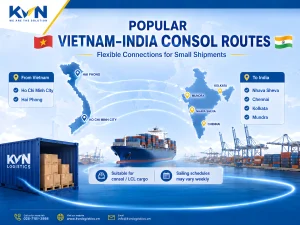
Popular Vietnam–India consol shipping routes
Depending on cargo location, sailing schedule, CFS cut-off and destination requirements, businesses can choose suitable routes from Northern or Southern Vietnam.
Main origins in Vietnam
Ho Chi Minh City: suitable for cargo from Ho Chi Minh City, Binh Duong, Dong Nai, Long An and industrial zones in Southern Vietnam.
Hai Phong: suitable for cargo from Hai Phong, Hanoi, Bac Ninh, Hai Duong, Hung Yen, Thai Nguyen and Northern Vietnam.
Common destinations in India
Nhava Sheva: a major gateway for Mumbai and Western India.
Chennai: suitable for cargo to Southern India and many industrial zones.
Kolkata: suitable for cargo to Eastern and Northeastern India.
Mundra: an important port for commercial and industrial cargo in Western India.
Because sailing schedules, CFS cut-off times and transit times may change weekly, businesses should check the latest information on KVN Logistics’ Sea Freight Schedule or contact the KVN team directly for updated routing advice.
Vietnam–India consol shipping process
A typical consol shipment from Vietnam to India usually includes the following steps:
Step 1: Provide shipment information
The exporter provides basic cargo details including commodity name, HS code, number of packages, dimensions, gross weight, origin, destination, Incoterms and required shipping timeline.
For chemical cargo, battery-related items, fragile goods, machinery or special cargo, additional documents such as MSDS, technical specifications, product photos or packing instructions may be required.
Step 2: Check route availability and consol schedule
The freight forwarder checks the available consol route, CFS cut-off, estimated sailing schedule, transit time, local charges and handling requirements.
At this stage, businesses should compare not only ocean freight but also CFS charges, documentation fees, local charges and possible surcharges.
To avoid unexpected costs, exporters can refer to: Common Logistics Surcharges Businesses Often Overlook
Step 3: Deliver cargo to CFS
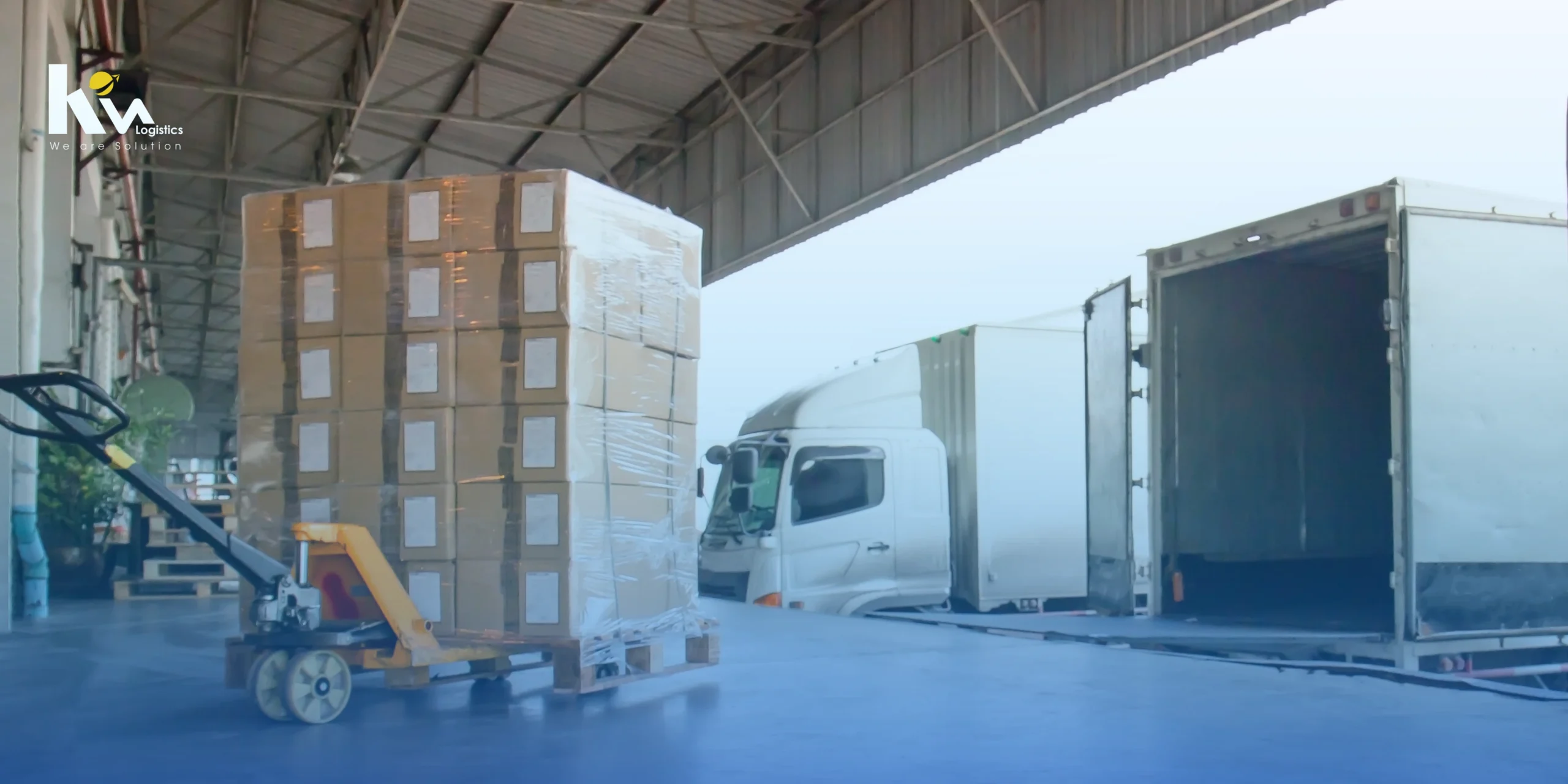
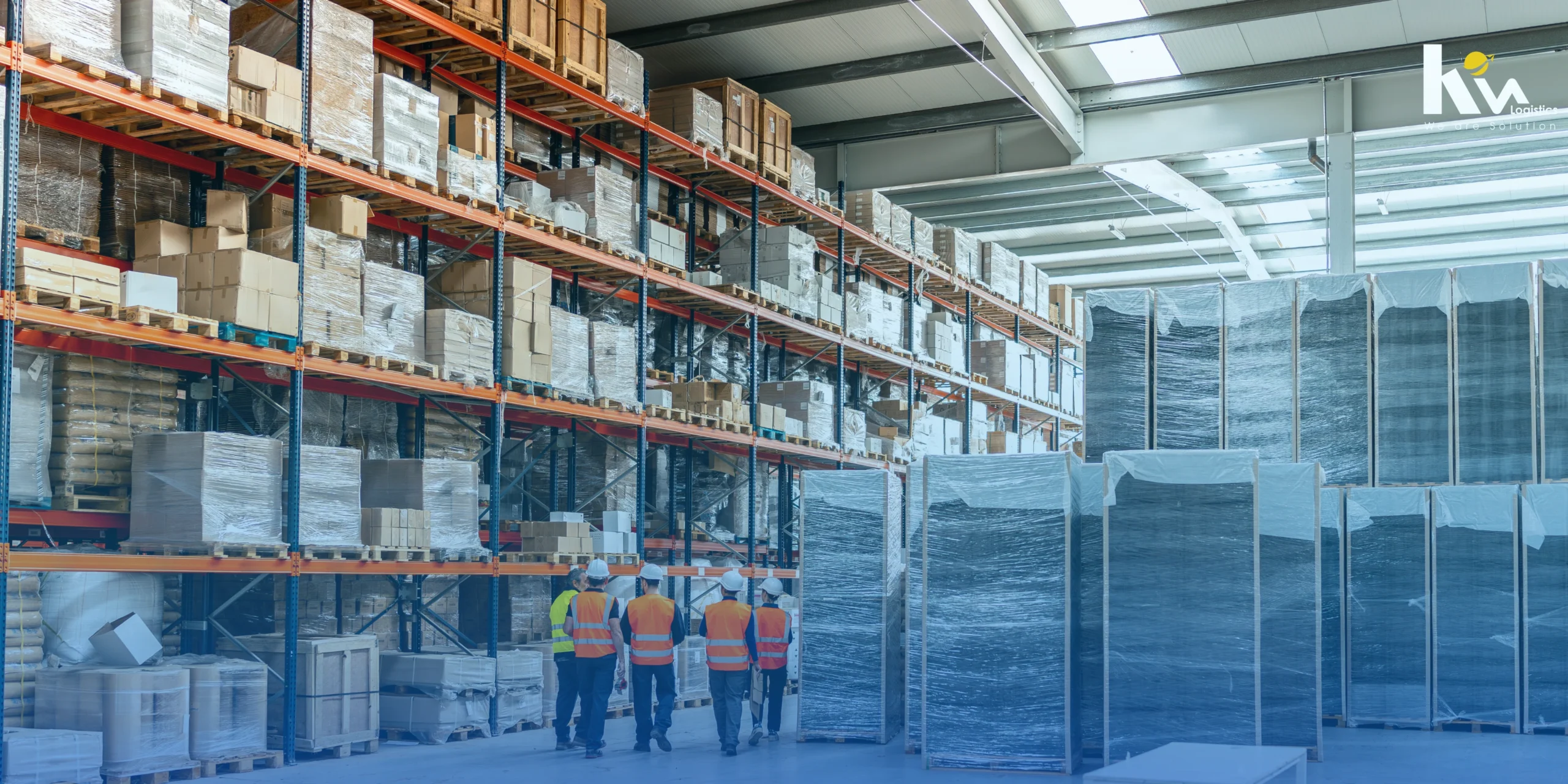
For consol shipments, cargo is delivered to the CFS before the cut-off time. At the CFS, goods are checked, sorted and loaded into a shared container with other shipments on the same route.
If the business needs trucking support from factory, warehouse or industrial zone to CFS, KVN Logistics can combine this with Inland Transportation to optimize the first-mile process.
Step 4: Complete export documents
The required export documents may include commercial invoice, packing list, sales contract or purchase order, shipping instruction, shipper and consignee details, HS code, certificate of origin if required and other product-specific documents.
For customs declaration and export documentation support, businesses can refer to KVN Logistics’ Customs Clearance & Documentation service.
Step 5: Track shipment and coordinate destination handling
After the container is loaded on board, the freight forwarder monitors ETD, ETA and shipment status. At destination, the agent in India coordinates cargo deconsolidation, arrival notice, cargo release and consignee support.
Required documents for consol shipping from Vietnam to India
To ensure smooth cargo movement, exporters should prepare documents early and avoid last-minute amendments near the CFS cut-off.
A basic document set may include:
Commercial Invoice.
Packing List.
Sales Contract or Purchase Order if available.
Shipping Instruction.
Shipper, consignee and notify party information.
HS code.
Certificate of Origin if required.
MSDS for chemical or safety-sensitive cargo.
Catalogue, product photos or technical documents if needed.
For shipments to India, exporters should also coordinate with the consignee to confirm import-side documentation requirements. This helps prevent situations where the export documents are acceptable in Vietnam but incomplete for customs clearance in India.
Key notes to avoid additional costs
Consol shipping can help businesses optimize freight costs, but poor preparation may still lead to extra charges or delays. Exporters should pay attention to the following points:
Declare dimensions and weight accurately
Consol freight is often calculated based on CBM or chargeable weight. If the actual cargo measurement differs from the declared information, the final cost may change.
Use proper sea freight packaging
Cargo should be packed in strong cartons, pallets, wooden crates or reinforced packaging suitable for handling, storage and ocean transport.
Check CFS cut-off carefully
Late cargo delivery may cause the shipment to miss the planned sailing. This can lead to waiting time, storage costs or rescheduling.
Clarify local charges from the beginning
Businesses should request a transparent quotation that includes origin charges, destination charges, CFS fees, documentation fees and related surcharges.
Confirm destination requirements in India
Some product categories may require import licenses, additional certificates, technical documents or importer registration at destination.
Monitor sailing updates
Schedules may change due to weather, port congestion, carrier adjustment or market conditions. Working with a responsive freight forwarder helps businesses manage changes more proactively.
How KVN Logistics supports Vietnam–India consol shipping
KVN Logistics does not only provide freight quotations. The team supports businesses across the entire shipment process, from route consultation and document checking to booking, CFS coordination, inland trucking, shipment tracking and destination coordination.
For businesses that want to understand the role of a logistics partner, see: What Does a Freight Forwarder Do in B2B Trade?
For the Vietnam–India route, KVN Logistics focuses on:
Advising between FCL, LCL and consol options.
Updating weekly consol schedules to India.
Supporting export documents and customs procedures.
Coordinating inland trucking from factory or warehouse to CFS.
Monitoring shipment status throughout the journey.
Working with destination agents in India.
Helping businesses optimize cost and reduce unexpected charges.
With a solution-driven mindset, KVN Logistics helps exporters build a more flexible and cost-effective shipping plan for small shipments to India.
Conclusion
Vietnam–India consol shipping is a suitable logistics solution for businesses with small shipments, trial orders, unstable volume or cost-sensitive export plans. Instead of waiting for enough cargo to fill a full container, businesses can ship through a consolidated container, reduce inventory pressure and stay flexible in serving customers in India.
To make the shipment effective, exporters should prepare accurate cargo information, check CFS cut-off, complete documents early and clarify all costs before booking.
With experience in consol shipping to India, international agent coordination and integrated sea freight, customs and inland transport services, KVN Logistics can support businesses from shipment planning to delivery coordination.
KVN Logistics – We are the Solution.
FAQ
What is Vietnam–India consol shipping?
Vietnam–India consol shipping is a logistics solution where multiple small shipments are consolidated into one container and shipped by sea from Vietnam to India.
Is consol shipping suitable for small shipments to India?
Yes. Consol shipping is suitable for small shipments, sample orders, trial shipments and cargo volumes that are not enough for a full container.
What cargo can be shipped by consol from Vietnam to India?
Common cargo includes commercial goods, industrial parts, plastic products, packaging materials, small machinery, equipment and general cargo with proper packaging.
What documents are required for consol shipping to India?
The basic documents usually include commercial invoice, packing list, shipping instruction, HS code, shipper and consignee details, C/O if required and MSDS for chemical-related cargo.
Does consol shipping require CFS delivery?
Yes. Consol cargo is usually delivered to a CFS before the cut-off time, where it is checked, sorted and loaded into a shared container.
Which Indian ports are common for consol shipping from Vietnam?
Common destinations include Nhava Sheva, Chennai, Kolkata and Mundra, depending on route availability and cargo requirements.
Can KVN Logistics support door-to-door consol shipping to India?
Yes. Depending on the shipment, KVN Logistics can combine inland trucking, CFS handling, sea freight, customs documentation and destination coordination to build a suitable solution.