

1. Market Overview: Vietnam – Middle East Trade Lane
The Middle East is increasingly becoming a strategic export market for Vietnamese businesses, especially in sectors such as:
- Plastic resins & plastic products
- Agricultural commodities (pepper, coffee, cashew, etc.)
- Construction materials
- Consumer goods
However, this region comes with several operational challenges:
- Long shipping distance
- Geopolitical volatility
- Unstable logistics costs
👉 Therefore, businesses need a clear understanding of the logistics structure to optimize costs and minimize risks.
2. What Does Shipping Cost to the Middle East Include?
Shipping cost is not just ocean freight. A typical shipment includes:
Core Costs
- Ocean Freight
- Terminal Handling Charges (THC)
- Documentation fees
- Origin & destination local charges
Hidden Costs (Often Overlooked)
- Demurrage & Detention (DEM/DET)
- Transshipment fees
- Peak Season Surcharge (PSS)
- Bunker Adjustment Factor (BAF)
👉 KVN Insight:
Many businesses choose the lowest freight rate but end up paying more due to hidden charges not clarified upfront.
3. Transit Time from Vietnam to the Middle East
Common Routes
- Hai Phong / Ho Chi Minh → Dubai (UAE)
- Hai Phong / Ho Chi Minh → Jeddah (Saudi Arabia)
- Hai Phong / Ho Chi Minh → Doha (Qatar)
Estimated Transit Time
- Direct shipment: 18 – 25 days
- Transshipment: 25 – 35 days
👉 However, actual transit time may vary depending on:
- Congestion at transshipment hubs (Singapore, Colombo, etc.)
- Carrier schedule adjustments
- Geopolitical factors (e.g., Red Sea situation)
4. Common Risks When Shipping to the Middle East
1. Shipment Delays
- Dependency on transshipment ports
- Frequent carrier schedule changes
2. Payment Risks
- Higher credit risk in certain markets
- Potential disputes related to documentation
3. Uncontrolled Cost Increases
- Sudden surcharge adjustments
- Lack of pricing transparency
5. Optimized Solutions from KVN Logistics
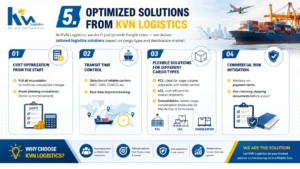
At KVN Logistics, we don’t just provide freight rates — we deliver tailored logistics solutions based on cargo type and destination market.
1. Cost Optimization from the Start
- Full all-in quotation to minimize unexpected charges
- Route planning consultation (direct vs transshipment)
2. Transit Time Control
- Selection of reliable carriers: MSC, CMA, COSCO, etc.
- Real-time shipment tracking
3. Flexible Solutions for Different Cargo Types
- FCL: ideal for large-volume shipments with better control
- LCL: cost-efficient for smaller shipments
- Consolidation: weekly cargo consolidation (especially for Middle East & India lanes)
4. Commercial Risk Mitigation
- Advisory on payment terms
- Pre-checking shipping documents before export
6. When Should You Work with a Freight Forwarder?
You should consider working with a forwarder when:
- You lack experience in Middle East trade lanes
- You need to optimize both cost and transit time
- You want to reduce operational and commercial risks
👉 A strong forwarder doesn’t just move your cargo —
they help you sell better by ensuring reliable logistics performance.
7. Conclusion
Shipping from Vietnam to the Middle East is not complicated — but it can easily go wrong without the right expertise.
- Costs must be evaluated holistically, not just freight rates
- Transit time depends heavily on routing and carrier selection
- The optimal solution lies in choosing the right logistics partner
👉 With hands-on experience in Middle East routes, KVN Logistics helps businesses:
- Optimize costs
- Control risks
- Ensure stable operations
Contact KVN Logistics today to receive a tailored shipping solution that fits your product and target market.