

Sea Freight vs Rail Freight to Europe: More Than Just a Cost Comparison
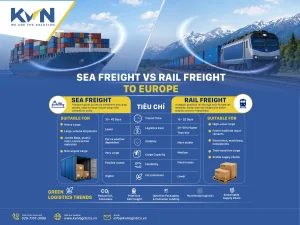
When shipping goods internationally to Europe, businesses often consider two common logistics options: Sea Freight and Rail Freight.
Sea Freight is widely known for its cost efficiency and ability to handle large cargo volumes. Rail Freight, on the other hand, offers faster transit times than ocean shipping and can be a suitable alternative for businesses that need better control over delivery schedules.
However, choosing the right transportation mode is not only about freight rates. Businesses also need to consider delivery deadlines, cargo characteristics, inventory costs, customs requirements, route stability, supply chain risks, and sustainability expectations in the European market.
In today’s global logistics environment, where shipping routes, port operations, fuel costs, and geopolitical factors can change quickly, understanding the differences between Sea Freight and Rail Freight helps businesses build a more resilient and flexible supply chain.
What Is Sea Freight?
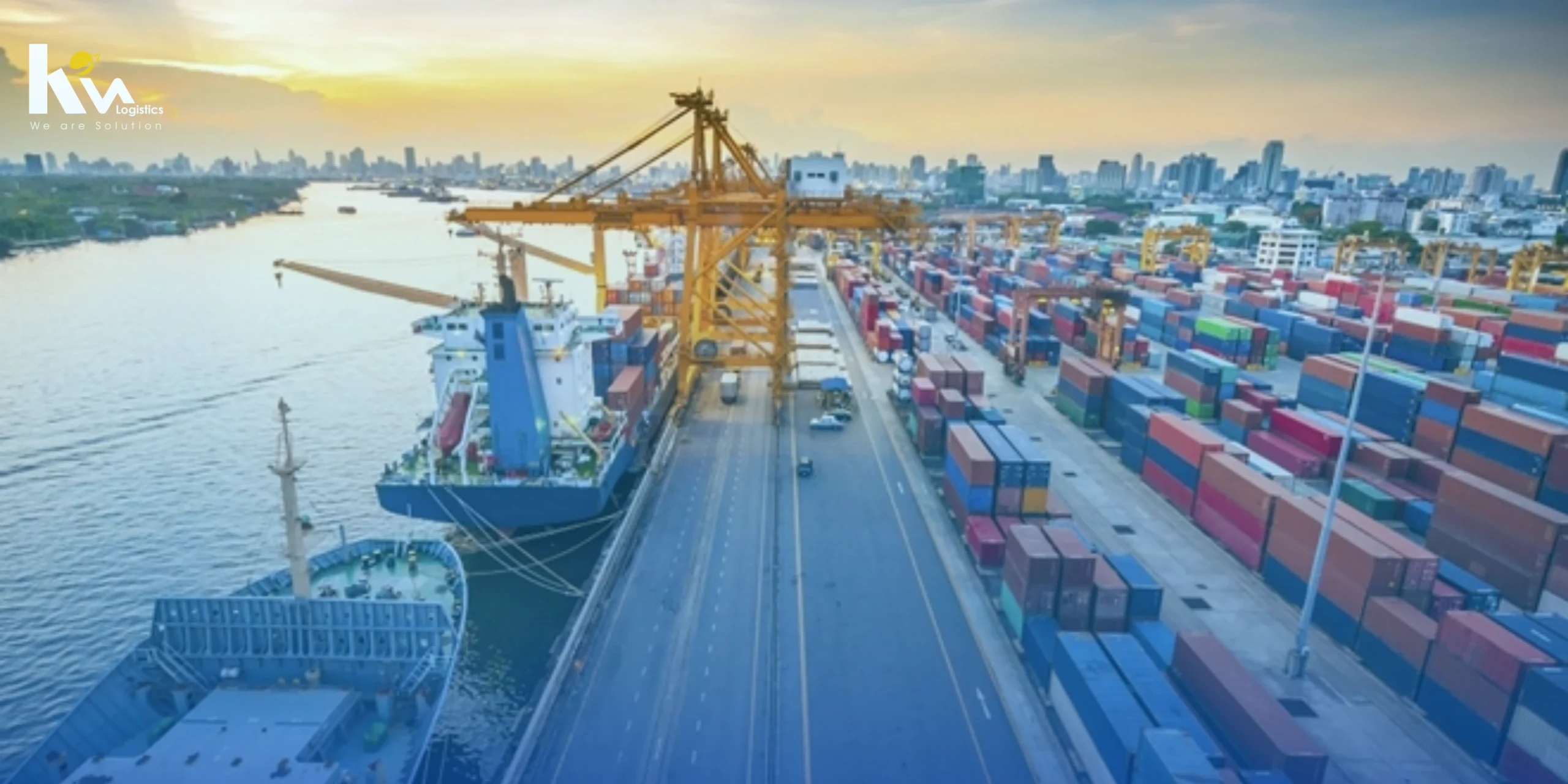
Sea Freight is the transportation of goods by ocean vessel, usually in containers, from the port of origin to the port of destination. It is one of the most widely used modes of international transportation and plays a key role in global trade.
For shipments from Asia to Europe, Sea Freight is commonly used for both FCL, which means Full Container Load, and LCL, which means Less than Container Load. Goods may be shipped from Vietnam through regional transshipment ports before arriving at major European ports such as Rotterdam, Hamburg, Antwerp, Felixstowe, or other destinations depending on the shipping route.
The biggest advantage of Sea Freight is its cost efficiency per unit of cargo, especially for large-volume shipments. It is suitable for businesses that have stable production plans, regular export schedules, and enough lead time for delivery.
However, Sea Freight can be affected by port congestion, vessel schedule changes, container shortages, peak season surcharges, bad weather, and adjustments to shipping routes. In some cases, disruptions on major maritime routes may extend transit time and create additional planning challenges for exporters.
What Is Rail Freight?
Rail Freight is the transportation of goods by train, often through cross-border railway corridors connecting Asia and Europe. For Asia–Europe trade, Rail Freight is usually considered a middle option between Sea Freight and Air Freight.
It is generally faster than ocean shipping and more cost-effective than air transportation. This makes it suitable for businesses that need shorter lead times but do not necessarily require the speed or high cost of Air Freight.
Rail Freight is often considered for products such as components, machinery, industrial equipment, consumer goods, e-commerce products, seasonal items, or cargo that requires better inventory control.
Depending on the origin, destination, route, border procedures, and logistics hub capacity, Rail Freight between Asia and Europe can offer significantly shorter transit times compared with Sea Freight. However, it may still require road transportation at the first mile or last mile, especially when the factory or final delivery point is not directly connected to a railway terminal.
Rail Freight can also be affected by border handling, customs clearance, railway hub capacity, policy changes, and operational differences across transit countries.
Transit Time Comparison: Sea Freight vs Rail Freight to Europe
In terms of transit time, Rail Freight usually has a clear advantage over Sea Freight.
Sea Freight to Europe depends heavily on the port of loading, port of discharge, vessel schedule, transshipment route, port congestion, and real-time shipping conditions. Under normal conditions, ocean shipping may take several weeks. When rerouting, congestion, or equipment shortages occur, transit time can increase significantly.
Rail Freight is often selected when businesses need a faster alternative to Sea Freight. On many Asia–Europe routes, rail transportation can shorten the logistics lead time and help businesses bring goods to market more quickly.
A simplified comparison can be seen below:
| Criteria | Sea Freight | Rail Freight |
|---|---|---|
| Speed | Slower | Faster than Sea Freight |
| Suitable for | Non-urgent cargo | Cargo requiring better schedule control |
| Transit risk | Affected by ports, vessels, maritime routes | Affected by borders, railway hubs, terminal capacity |
| Flexibility | Strong for large-volume planning | Good for time-sensitive shipments |
In general, Sea Freight is suitable for businesses with long-term shipping plans and stable inventory strategies. Rail Freight is more suitable when businesses need to shorten lead time without choosing Air Freight.
Cost Comparison: Sea Freight vs Rail Freight
In most cases, Sea Freight is more cost-effective than Rail Freight, especially for heavy cargo, bulky cargo, or full container shipments. Ocean vessels can carry very large volumes, which helps reduce the cost per unit of cargo.
Rail Freight usually costs more than Sea Freight but less than Air Freight. Therefore, businesses should not compare only the freight rate. They should also consider the total logistics cost, including:
- Inventory holding cost.
- Cost of delayed delivery.
- Seasonal sales opportunity loss.
- Warehouse and storage cost.
- Demurrage, detention, or terminal-related charges.
- Capital tied up in goods during transit.
- Potential loss of sales due to late arrival.
For high-value goods, seasonal products, or items with shorter sales cycles, Rail Freight may help reduce opportunity costs even if the freight rate is higher. For raw materials, packaging products, industrial goods, or non-urgent shipments, Sea Freight is often the more cost-efficient choice.
Stability And Logistics Risk Comparison
Both Sea Freight and Rail Freight have their own operational risks.
Sea Freight may be affected by:
- Port congestion.
- Vessel delays.
- Transshipment delays.
- Rolling of containers.
- Peak season surcharges.
- Maritime route changes.
- Weather conditions.
- Equipment shortages.
Rail Freight may be affected by:
- Border control procedures.
- Railway hub congestion.
- Customs clearance at transit points.
- First-mile and last-mile trucking.
- Operational differences between countries.
- Policy changes along transit corridors.
The key difference is that Sea Freight is often better for long-term planning and large-volume shipments, while Rail Freight is more suitable for businesses that need shorter and more predictable lead times.
However, neither option should be selected without proper planning. Businesses should monitor schedules closely, prepare documents early, and build backup logistics scenarios when shipping to Europe.
What Types Of Cargo Are Suitable For Sea Freight?
Sea Freight is suitable for cargo with the following characteristics:
Large-volume or full-container shipments
Sea Freight is ideal for goods such as packaging products, plastic resins, raw materials, consumer goods, industrial products, machinery, and other large-volume shipments.
Non-urgent cargo
If the business can plan production, export, and inventory in advance, Sea Freight offers a practical and cost-effective solution.
Cargo that requires cost optimization
For products with medium or low unit value, ocean shipping helps businesses keep logistics costs under control.
Regular export shipments
Companies with monthly or quarterly export schedules often benefit from Sea Freight because they can plan bookings, container loading, and delivery timelines in advance.
What Types Of Cargo Are Suitable For Rail Freight?
Rail Freight is suitable for businesses that need to balance speed and cost.
Cargo that needs faster delivery than Sea Freight
Rail Freight can be considered for goods that need to arrive sooner, such as seasonal products, replenishment cargo, urgent production materials, or delayed orders.
Higher-value cargo or inventory-sensitive products
When inventory cost or late-delivery risk is higher than the additional freight cost, Rail Freight may become a reasonable solution.
Components, equipment, e-commerce goods, and short-cycle products
These products often require faster market access and better lead-time control.
Medium-sized shipments that do not require Air Freight
Rail Freight can be a practical middle solution for cargo that is not suitable for long ocean transit but also does not justify the cost of air transportation.
Green Logistics Trends In Europe And Their Impact On Freight Choices
Europe is placing increasing emphasis on sustainability, carbon reduction, and responsible supply chain management. As a result, businesses exporting to Europe are no longer looking only at price and transit time. They are also paying more attention to emissions, ESG reporting, transport modes, and supply chain optimization.
Rail Freight is often viewed as a strong option in green logistics strategies, especially when compared with road transportation or Air Freight on certain routes. Sea Freight, meanwhile, remains highly efficient for moving large volumes of goods over long distances.
For many businesses, the optimal solution is not necessarily choosing only one mode. A multimodal logistics strategy that combines Sea Freight, Rail Freight, trucking, warehousing, and customs solutions may help businesses balance cost, time, reliability, and environmental impact.
Should Businesses Choose Sea Freight Or Rail Freight To Europe?
There is no single answer for every shipment. The best choice depends on cargo characteristics, delivery requirements, cost structure, and supply chain priorities.
Businesses should choose Sea Freight when:
- The shipment volume is large.
- Cost optimization is the main priority.
- Delivery is not extremely urgent.
- Production and export plans are stable.
- The cargo is suitable for containerized ocean shipping.
Businesses should choose Rail Freight when:
- Faster delivery than Sea Freight is required.
- Air Freight is too expensive.
- The cargo has higher value.
- Inventory control is important.
- The shipment needs to reach Europe within a tighter timeline.
- The business needs to replenish stock quickly.
In many cases, companies can use both solutions together. Sea Freight can be used for regular large-volume shipments, while Rail Freight can be used for urgent replenishment, seasonal cargo, or shipments that require shorter lead times.
Quick Comparison Table: Sea Freight vs Rail Freight To Europe
| Criteria | Sea Freight | Rail Freight |
|---|---|---|
| Cost | Usually lower | Higher than Sea Freight, lower than Air Freight |
| Transit time | Longer | Faster than ocean shipping |
| Cargo volume | Very suitable for FCL/LCL and large-volume cargo | Suitable for medium to large shipments |
| Flexibility | Strong for long-term shipping plans | Good for shorter lead-time requirements |
| Main risks | Port congestion, vessel delays, maritime route changes | Border handling, railway hub capacity, first-mile and last-mile connection |
| Suitable cargo | Raw materials, packaging, industrial goods, large-volume consumer goods | Components, equipment, seasonal goods, time-sensitive cargo |
| Main objective | Cost optimization | Balance between speed and cost |
| Green logistics potential | Efficient for large-volume long-distance shipping | Strong potential in multimodal and lower-emission logistics strategies |
KVN Logistics Supports Businesses In Shipping To Europe
Shipping goods to Europe is not only about choosing between Sea Freight and Rail Freight. It is a complete logistics decision involving route planning, transit time, freight cost, customs documents, Incoterms, cargo safety, delivery deadlines, and risk management.
As a new-generation logistics solution partner, KVN Logistics supports businesses in analyzing each shipment and selecting the most suitable transportation plan, including Sea Freight, Rail Freight, Air Freight, trucking, customs brokerage, and multimodal logistics solutions.
Instead of simply providing a freight quotation, KVN Logistics focuses on helping businesses answer a more important question:
Which logistics solution is the most efficient for this shipment in terms of cost, time, and operational reliability?
With practical experience, global connections, and a solution-oriented mindset, KVN Logistics accompanies Vietnamese businesses on their journey to connect with the European market.
Frequently Asked Questions About Sea Freight And Rail Freight To Europe
What is the difference between Sea Freight and Rail Freight?
Sea Freight transports goods by ocean vessel, while Rail Freight transports goods by train through railway networks. Sea Freight is usually more cost-effective for large-volume cargo, while Rail Freight is often faster and suitable for shipments that require shorter lead times.
Is Rail Freight faster than Sea Freight to Europe?
Yes. Rail Freight is generally faster than Sea Freight on many Asia–Europe routes. However, actual transit time depends on the origin, destination, border procedures, railway hub capacity, customs clearance, and first-mile or last-mile transportation.
Is Sea Freight cheaper than Rail Freight?
In most cases, Sea Freight is cheaper than Rail Freight, especially for full-container or large-volume shipments. However, businesses should also consider inventory costs, delayed delivery risks, and opportunity costs when comparing total logistics expenses.
When should a business choose Rail Freight instead of Sea Freight?
Rail Freight should be considered when goods need to arrive faster than ocean shipping, when Air Freight is too expensive, or when the cargo has higher value and requires better inventory control.
Can businesses combine Sea Freight and Rail Freight?
Yes. Many businesses use Sea Freight for regular large-volume shipments and Rail Freight for urgent replenishment, seasonal demand, or shipments that require shorter delivery timelines.
Conclusion
Sea Freight and Rail Freight both play important roles in shipping goods to Europe. Sea Freight is suitable for businesses that prioritize cost efficiency and large-volume transportation. Rail Freight is suitable for businesses that need shorter transit time, better schedule control, and a balance between speed and cost.
Choosing the right transportation mode can help businesses reduce logistics costs, improve delivery reliability, manage supply chain risks, and better meet the expectations of the European market.
KVN Logistics – Your new-generation logistics solution partner, connecting Vietnamese businesses with Europe through smarter and more reliable supply chain solutions.