

According to MBS Securities, textiles, seafood, wood products, industrial real estate, and logistics are among the sectors most negatively affected by the new US tariff policy.
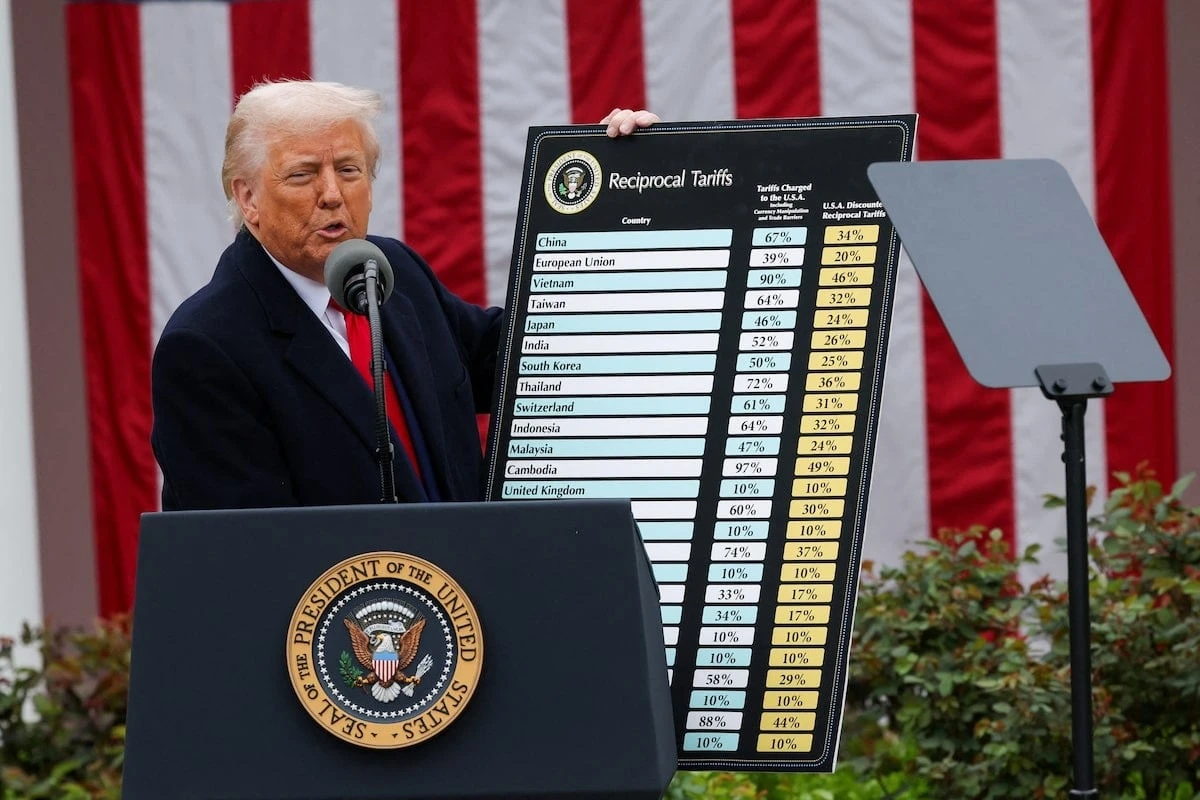
On April 2, President Donald Trump announced a new tariff plan applicable to countries worldwide. Under this plan, a 10% tariff will be imposed on all goods imported into the United States (effective April 5), while higher tariffs will apply to countries with large trade surpluses with the US, effective April 9.
President Trump has repeatedly emphasized that these tariffs reflect long-standing trade barriers imposed by other countries on US goods, as well as monetary factors. As a result, Vietnam is among the countries facing the highest import tariffs, with rates increasing to 46%.
According to MBS’s analysis, the sharp increase in tariffs will negatively affect three major aspects of the economy.
First, higher tariffs will reduce the competitiveness of Vietnam’s key export products in the US market, including machinery, electronic components, telephones, and footwear. These products will face direct competition from goods originating in countries such as China (34%), India (26%), and Thailand (37%), which are subject to comparatively lower tariffs.
Second, within Southeast Asia, Vietnam faces the highest countervailing duties, which may negatively impact foreign direct investment (FDI) flows into the manufacturing sector, particularly as companies reassess relocation strategies under the China +1 model.
Third, Vietnam’s exchange rate is likely to face additional pressure, as the country may need to increase imports from the US to narrow its trade surplus.
At present, detailed tariff rates by product category have not yet been officially announced. MBS believes that production activities across industries will vary depending on each sector’s export exposure to the US market and the competitive positioning of Vietnam’s rivals in the same segments.
In addition, some goods remain subject to tariffs imposed under the Vietnam–US Trade Agreement, which came into effect in December 2001.
As a result, the textile, seafood, wood products, industrial real estate, and logistics sectors are assessed to be the most adversely affected. The rubber, paper, and electrical cable industries are expected to experience a moderate impact due to their relatively low exposure to exports to the US market. Meanwhile, steel products are not affected and are therefore excluded from the list of goods subject to retaliatory tariffs.
Specifically, for textiles: Vietnam currently exports approximately USD 16.1 billion worth to the US, accounting for 43.6% of the sector’s total export value. Vietnamese textile products retain certain competitive advantages over peers such as Bangladesh, India, China, and Sri Lanka, which are subject to higher retaliatory tariffs. Nevertheless, textile enterprises with a high proportion of exports to the US market are still likely to be impacted, notably MSH (70%), TNG (50%), TCM (25%), and STK (10%).
Computers and Electronic Components: Exports to the US total USD 23.2 billion, representing 32% of total exports. This segment is dominated by US-based FDI enterprises such as Intel, HP, Dell, and Amkor. Facing the risk of higher countervailing duties, these companies may shift part of their final assembly and packaging operations to countries with lower tariffs, such as India and Indonesia, which could negatively affect Vietnam’s industrial park real estate and logistics services.
Machinery, Equipment, and Tools: Exports to the US amount to USD 22 billion, accounting for 42.3% of total exports. Enterprises in this group include US-based FDI firms such as Rockwell Automation and First Solar, along with some FDI enterprises from China and Hong Kong. Increased tariffs are expected to adversely affect supporting industries, particularly industrial real estate and logistics transportation.
Wood and Wood Products: Vietnam exports USD 9.1 billion worth of wood and wood products to the US, accounting for 56% of total exports. Previously, Vietnam ranked among the top three suppliers of wood products to the US due to cost advantages stemming from low labor costs and domestic raw material sourcing (approximately 70%). However, if retaliatory tariffs of up to 46% are imposed, Vietnamese wood products may lose price competitiveness, approaching cost levels similar to those of China, its largest regional competitor.
According to assessments, countries such as Canada (accounting for 46.4% of US wood imports), as well as regional suppliers like Indonesia (1.5%) and Malaysia (0.1%), may have opportunities to expand market share under lower tariff rates of 10–25%.
Footwear: Vietnam’s footwear exports to the US total USD 8.3 billion, accounting for 36.2% of total exports. Global footwear manufacturers are increasingly restructuring supply chains to reduce dependence on China. In recent years, many major brands have relocated production to Vietnam, including Nike (approximately 25% of production), UGG and HOKA (with Vietnam as the second-largest supplier), and VF Corporation (owner of Vans and Timberland, sourcing approximately 18% from Vietnam). Currently, there are no listed footwear manufacturing companies, though several enterprises are involved in industrial park real estate development supporting this sector.
Seafood Sector: Regarding seafood exports, total export value reached USD 1.5 billion, accounting for 18.2% of total export turnover. Currently, key seafood products such as shrimp and pangasius enjoy preferential export tax rates when entering the U.S. market. Therefore, the imposition of reciprocal tariffs is expected to have a significant negative impact on businesses in the seafood industry.
In the U.S. shrimp market, Vietnam’s total export value reached USD 691 million, accounting for 18% of Vietnam’s total shrimp exports in 2024. Vietnamese shrimp products are facing intense competition from suppliers such as Ecuador and India–countries with strong production scale and cost advantages–as well as Indonesia. Prior to the application of reciprocal tariffs, Vietnam’s shrimp exports benefited from tariff rates that were approximately 1–6 percentage points lower than those applied to India and Ecuador. The introduction of reciprocal tariffs is therefore expected to erode Vietnam’s existing competitive advantages in this niche market.
In the U.S. pangasius market, Vietnam’s total export value reached USD 345 million, representing 17% of Vietnam’s total pangasius exports in 2024. The United States is currently Vietnam’s second–largest pangasius export market, after China. At the same time, Indonesia is gradually increasing its pangasius export share in the U.S. market, intensifying competition for Vietnamese exporters.
Source: Electronic Magazine.